
Raman
Raman spectroscopy method reveals hidden metabolic defects in ageing egg cells and fertility
Nov 20 2025
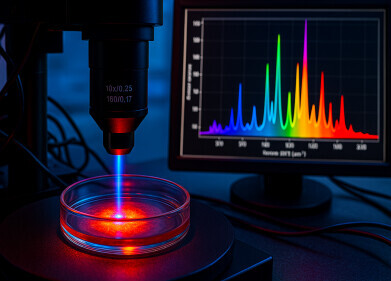
A study has shown that label-free single-cell Raman spectroscopy can track age-related metabolic defects in mouse oocytes, including loss of mitochondrial cytochrome c, and has pointed towards a non-invasive route to assess egg quality for assisted reproductive technologies
The quality of a woman’s egg cells – or oocytes – is an important determinant of fertility success and subsequent development of an embryo. As women grow older, oocyte quality undergoes a natural decline and leads to lower levels of fertility. Additionally, risk of chromosomal abnormalities can increase and there may be poorer outcomes in pregnancy. Until now, most approaches to study these age-related changes have relied on invasive techniques that require researchers to fix cells or introduce dyes, which limits their relevance for reproductive medicine because they cannot follow living oocytes in real time.
This study has now introduced a non-invasive way to measure how egg cell metabolism changes with age. The team, led by scientists at Peking Union Medical College Hospital, Dongcheng, Beijing, China and the University of Glasgow, Scotland, UK, has combined single-cell Raman spectroscopy with advanced computational analysis to track biochemical changes of oocytes in mouse models at single-cell resolution.
“Raman spectroscopy lets us capture a molecular fingerprint of living cells without labels or dyes,” said co-corresponding author Dr Jiabao Xu of the University of Glasgow.
“By applying trajectory analysis and high-resolution Raman imaging, we could follow how metabolism shifts during oocyte maturation and with age,” he said.
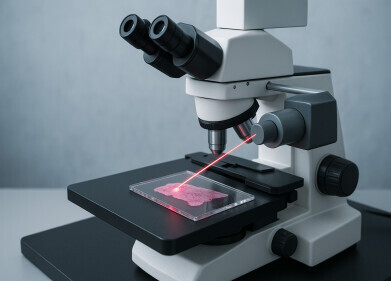
Raman spectroscopy measures how light scatters after interaction with molecules, which allows scientists to infer the presence and relative abundance of key biochemical components inside intact cells.
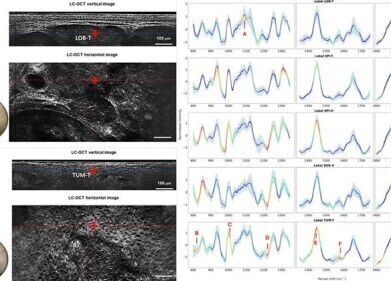
The researchers studied 166 live mouse oocytes at different developmental stages and ages and generated high-resolution spatial maps for a further nine oocytes. They reported that nuclear development in older oocytes often appeared normal under standard microscopic examination.
However, their metabolic maturation lagged behind that of younger cells. This developmental asynchrony coincided with a striking loss of cytochrome c in older oocytes, a molecule that is essential for mitochondrial energy production and for the controlled cell death pathways that help maintain cellular quality.
“These findings suggest that mitochondrial dysfunction is a central factor in the age-related decline of oocyte quality.
“It provides a biochemical explanation for why fertility declines with age,” said Dr Hanbi Wang, co-corresponding author at Peking Union Medical College Hospital.
The observation of altered cytochrome c distribution supports a model in which energy generation and redox balance in the oocyte deteriorate before gross structural defects become apparent.
In addition to age-dependent profiling, the study mapped the precise distribution of lipids, proteins and cytochrome c within individual oocytes. By uniting live metabolic profiling with detailed spatial imaging, the authors have proposed a framework to study reproductive ageing that retains the cell’s three-dimensional structure and preserves its viability for potential downstream use.
The platform, the authors argued, could in principle adapt to clinical workflows in assisted reproductive technologies where embryologists currently rely largely on morphology and limited molecular markers to select oocytes. Label-free Raman spectroscopy could offer an additional non-invasive metric of ‘metabolic fitness’ that supports more informed selection of eggs for fertilisation.
“This work highlights the potential of label-free Raman spectroscopy to transform how we assess egg cell health.
“Our approach could eventually guide fertility treatments by identifying oocytes with the highest developmental potential,” said Xu.
The study has therefore opened a path towards more precise and less damaging assessment of reproductive cells.
For further reading please visit: 10.1002/imm3.70008

Digital Edition
Lab Asia Dec 2025
December 2025
Chromatography Articles- Cutting-edge sample preparation tools help laboratories to stay ahead of the curveMass Spectrometry & Spectroscopy Articles- Unlocking the complexity of metabolomics: Pushi...
View all digital editions









Events
Jan 21 2026 Tokyo, Japan
Jan 28 2026 Tokyo, Japan
Jan 29 2026 New Delhi, India
Feb 07 2026 Boston, MA, USA
Asia Pharma Expo/Asia Lab Expo
Feb 12 2026 Dhaka, Bangladesh




