Research news
Colour-coded genetic method enables rapid sex separation to combat disease-carrying mosquitoes
Dec 31 2025
Researchers have reported a novel colour-coded genetic approach that has enabled male and female mosquitoes to be separated at a glance, a development that could remove a long-standing bottleneck in large-scale mosquito control programmes that rely on the release of sterile males
A research teams has reported a novel genetic method that allows male and female mosquitoes to be distinguished visually through colour, a development that could address one of the most persistent technical challenges in mosquito control strategies. The approach has relied on gene editing to produce dark-pigmented males and pale females, which has allowed rapid and reliable sex separation without complex equipment or labour-intensive handling.
The work, led by Doron Zaada and Professor Philippos Papathanos from the Department of Entomology at the Hebrew University of Jerusalem, focusses on the Asian tiger mosquito, Aedes albopictus. This species is a major vector of viral diseases, including dengue, Zika and chikungunya, and is a key target for population suppression programmes worldwide.
Many contemporary mosquito control strategies, including the Sterile Insect Technique, depend on the mass release of male mosquitoes that do not bite or transmit disease. The accidental release of females can undermine both safety and public acceptance, as female mosquitoes require blood meals and are therefore responsible for pathogen transmission. Existing sex-separation methods have relied largely on subtle size differences between male and female pupae. These approaches have demanded extensive manual labour, have proved difficult to scale, and have carried a persistent risk that females might pass undetected through sorting processes.
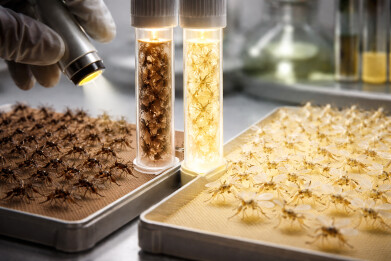
The study has presented a genetically-engineered genetic sexing strain of Aedes albopictus that has enabled automatic sex sorting on the basis of visible pigmentation. The researchers have used CRISPR gene editing to disrupt the mosquito yellow pigmentation gene, which resulted in albino-like individuals. They then restored dark pigmentation selectively in males by linking the yellow gene to ‘nix’, a gene described as a master regulator of sex determination that can convert genetic females into fertile males.
The outcome has been a stable mosquito strain in which all males displayed dark pigmentation, while all females remained pale. This clear visual distinction has allowed rapid and accurate sex separation at early developmental stages, without any requirement for specialised machinery or chemical treatments.
“This produces an engineered sex-linked trait in mosquitoes that uses the insect’s own genes,” said Professor Papathanos.
“By understanding and controlling the sex determination pathway, we were able to create a system where males and females are visually different at the genetic level,” he added.
Beyond visual sorting, the researchers have reported an additional safety feature that could prove important for field deployment. The pale females produced by this strain laid eggs that showed a pronounced sensitivity to desiccation. In contrast to wild mosquito eggs, which can remain viable for months under dry conditions, the eggs from this engineered strain died rapidly when exposed to drying.
“This acts as a built-in genetic containment mechanism.
“Even if some females are accidentally released, their eggs will not survive in the wild, which prevents any engineered strain that contains our system from establishing itself in the environment,” said Doron Zaada, the study’s lead author.
The study has also examined whether genetic manipulation affected the biological performance of the males intended for release. The researchers reported that genetically converted males closely resembled wild-type males in patterns of gene expression and reproductive behaviour. This finding has suggested that the approach does not compromise male fitness, a critical requirement for mosquito control programmes that depend on released males to compete successfully for mates in natural populations.
“Our approach provides a versatile platform for mosquito sex separation,” added Professor Papathanos.
“By combining advanced gene editing with classical genetics, we have created a scalable, safe and efficient system.
“The next step is to build on this platform to make females different in additional ways, for example in their ability to survive high temperatures or specific additives used in mosquito mass-rearing biofactories.
“This could finally overcome one of the biggest hurdles in genetic mosquito control,” he concluded.
The researchers argue that the colour-coded system could be adapted to other mosquito species of public health importance, offering a broadly applicable tool to support disease control efforts. As mosquito-borne diseases continue to expand their geographic reach under the influence of climate change and global travel, methods that allow precise, large-scale and safe population control have taken on increasing urgency.
For further reading please visit: 10.1038/s41467-025-66940-0




Digital Edition
Lab Asia Dec 2025
December 2025
Chromatography Articles- Cutting-edge sample preparation tools help laboratories to stay ahead of the curveMass Spectrometry & Spectroscopy Articles- Unlocking the complexity of metabolomics: Pushi...
View all digital editions










Events
Jan 21 2026 Tokyo, Japan
Jan 28 2026 Tokyo, Japan
Jan 29 2026 New Delhi, India
Feb 07 2026 Boston, MA, USA
Asia Pharma Expo/Asia Lab Expo
Feb 12 2026 Dhaka, Bangladesh




