News
Festive food safety risks rise as Food Standards Agency warns of Christmas kitchen mistakes
Dec 25 2025
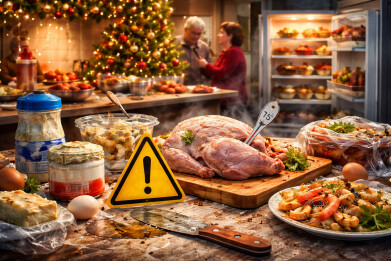
A recent UK Food Standards Agency survey has revealed widespread risky food practices in kitchens across the country during the Christmas period, with experts warning that avoidable mistakes could lead to serious food poisoning
Christmas is traditionally associated with celebration and shared meals, yet for many households the festive period has also brought an increased risk of food poisoning. Recent research has shown that large numbers of people in the UK have continued to take avoidable risks in their kitchens during Christmas, potentially exposing themselves, their families and their guests to serious illness.
The Food Standards Agency (FSA) has reported findings from a recent survey of more than 2,100 adults across the UK, which has highlighted widespread misunderstandings and unsafe habits related to food preparation, storage and cooking at Christmas. The Agency has said that these behaviours pose particular dangers for pregnant women, older people and individuals with weakened immune systems, for whom foodborne infections can cause severe complications.
The survey has revealed that unsafe defrosting practices remain common. Almost two thirds of respondents said they would defrost meat or poultry such as turkey or beef at room temperature, for example on a worktop, rather than in a fridge. The Agency has warned that this practice allows harmful bacteria to multiply rapidly, increasing the likelihood of food poisoning.
Use-by dates have also continued to be misunderstood. More than half of those surveyed said they would eat dairy products such as cream, soft cheese or desserts after the use-by date if the food appeared to look, smell and taste acceptable. The FSA has emphasised that dangerous bacteria, including Listeria monocytogenes, cannot be detected by sight, smell or taste and that use-by dates relate to safety rather than quality.
The research has further shown that more than a third of respondents would still eat food that had been left unrefrigerated for more than four hours. This extended exposure to room temperature provides conditions that allow bacteria to grow to hazardous levels. In addition, one in six people said they would fail to cool leftovers and place them in a fridge or freezer within one to two hours, further increasing the risk of bacterial growth.
Food allergies and dietary requirements have also emerged as an area of concern. Nearly a third of respondents said they would not ask guests about allergies or dietary needs before serving food, a proportion that has risen markedly compared with the previous year. The Agency has warned that this oversight could prove life-threatening for some individuals.
Risky cooking practices have also been reported. One in seven people said they would partially cook food such as turkey or stuffing in advance and then leave it at room temperature before completing the cooking process later. The FSA has advised that this approach creates ideal conditions for harmful bacteria to survive and multiply.
“Don’t let bad kitchen habits ruin Christmas. These common mistakes can lead to food poisoning, which can be serious for children, pregnant women, elderly people and anyone with a weakened immune system.
“The good news? A few simple food safety steps will keep everyone safe and let you enjoy the festivities,” said Rebecca Sudworth, Director of Policy at the FSA.
The survey has also identified a broader pattern of unsafe festive food habits. These have included failures to follow cooking instructions fully or to check that turkey is thoroughly cooked, reuse of utensils that have been in contact with raw meat without adequate cleaning, lack of awareness of whether fridges operate below 5°C, and storage of Christmas leftovers for more than two days.
Some respondents also said they would place hot leftovers directly into a fridge without first allowing them to cool, which can raise fridge temperatures and compromise food safety.
In light of the survey results, the FSA has reiterated a series of straightforward steps that it has said can significantly reduce the risk of food poisoning during the festive period. These include defrost meat and poultry in the fridge rather than at room temperature, respect use-by dates without exception, and cool leftovers promptly before refrigeration. The Agency has also advised hosts to ask guests about allergies and dietary requirements in advance, and to limit the time that buffet food remains unrefrigerated. And to always ensure that food is cooked thoroughly so that it is piping hot throughout – not just on the surface.
The FSA has said that greater awareness and adherence to these basic principles could help to ensure that Christmas celebrations remain memorable for the right reasons – not the wrong ones… merry Christmas everyone!
Further guidance on festive food safety is available from the Agency’s website at food.gov.uk



Digital Edition
Lab Asia Dec 2025
December 2025
Chromatography Articles- Cutting-edge sample preparation tools help laboratories to stay ahead of the curveMass Spectrometry & Spectroscopy Articles- Unlocking the complexity of metabolomics: Pushi...
View all digital editions









Events
Jan 21 2026 Tokyo, Japan
Jan 28 2026 Tokyo, Japan
Jan 29 2026 New Delhi, India
Feb 07 2026 Boston, MA, USA
Asia Pharma Expo/Asia Lab Expo
Feb 12 2026 Dhaka, Bangladesh




