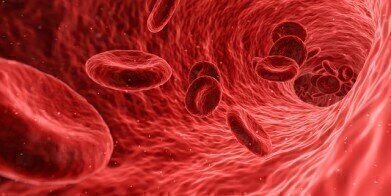
Blood
Could Resetting Blood Proteins Slow Ageing?
Dec 23 2016
The search for eternal youth is not a new concept, with modern scientists continually exploring new ways to reverse the ageing process. Now, a team of Californian researchers is claiming to be one step closer to finding a bona fide ‘elixir of life.’
After successfully trialling their theory on mice, the team is claiming that resetting blood proteins could be the key to slowing the ageing process, and preventing a host of age-related diseases. So how does it work? As humans age, levels of proteins become abnormally high in older blood, which hinders the body’s ability to grow and maintain healthy tissues.
With this pattern in mind, the researchers infused old blood cells with younger samples. The results were remarkable, with the researchers finding evidence that infusions of young blood can actively speed up the muscle repair process in older mice.
Teaching old blood new tricks
Or course, the study has also received its fair share of criticism from the scientific community. Irina Conboy, who led the project at Berkeley’s University of California admits that the anti-ageing improvements could be thanks to the dilution of old blood, as opposed to the fact that young blood contains rejuvenating properties. As a result, the team is also focussing on ways to manually reset the abnormal levels of proteins in old blood, without the need for young blood infusions.
“These proteins are made by all the tissues in your body every day,” Conboy explains. “When they are present at low levels, they are important, and you cannot live without them. But with ageing their levels become skewed. Some of them go up, and some go down. So the rational approach is not to give people young blood, but to normalise the levels of these key molecules.”
Human trails on the horizon
Now, the Berkeley team is working on developing a device that filters out proteins, and purifies old blood back to its youthful profile. While the concept is both radical and highly experimental, plans are already underway to launch a clinical trial in the next six months, and gain results within three years. Participants will sign up to have their blood passed through a machine that rebalances the abnormal protein levels that can materialise in older samples.
“If you can remove key inhibitor molecules from the blood of an old person and then return that blood into them, that could be immediately therapeutic,” says Conboy. “We are developing ideas for clinical trials to see what happens if you normalise levels of one key protein we think is inhibitory,” she added. “Right now our health declines after about seven decades. We are pretty much hoping to extend the productive plateau, where you’re not necessarily the world champion in swimming or running marathons, but you can continue for a few more decades without any critical illnesses.”
Coveted as a cure for diseases like Alzheimer’s, Parkinson’s and diabetes, the treatment could revolutionise modern medicine.
Meanwhile, other exciting new findings are taking place within the viral research sphere. For more information, ‘Clinical Evaluation of a Multiplex Real-time PCR Assay for the Detection and Quantification of Hepatitis E Virus’ spotlights the latest technology that could help more than 20 million individuals infected by the hepatitis E virus every year.
Digital Edition
Lab Asia Dec 2025
December 2025
Chromatography Articles- Cutting-edge sample preparation tools help laboratories to stay ahead of the curveMass Spectrometry & Spectroscopy Articles- Unlocking the complexity of metabolomics: Pushi...
View all digital editions









Events
Jan 21 2026 Tokyo, Japan
Jan 28 2026 Tokyo, Japan
Jan 29 2026 New Delhi, India
Feb 07 2026 Boston, MA, USA
Asia Pharma Expo/Asia Lab Expo
Feb 12 2026 Dhaka, Bangladesh




