-
-
 [From left] Co-senior author Dr. Georg Winter and co-first author Dr. Natalie Scholes. Credit: © 2026 Barbara Bachmann / CeMM
Research news
IDO1-targeting compounds could help the body break down an immune-suppressing enzyme, not just block it
Jan 08 2026
A collaboration led by CeMM, AITHYRA both in Vienna, Austria and the Max Planck Institute of Molecular Physiology in Dortmund, Germany has reported small molecules that both inhibit and accelerate the breakdown of indoleamine 2,3-dioxygenase 1 (IDO1), an immunosuppressive enzyme that has resisted straightforward drug strategies in oncology
Cells do not merely switch proteins off, they also label unwanted, damaged or surplus proteins for destruction and then dismantle them with dedicated recycling apparatus. This quality-control pathway – known as the ubiquitin–proteasome system – underpins cellular health because it prevents the accumulation of potentially harmful proteins and helps to control protein abundance in response to changing conditions. Drug developers have begun to exploit this machinery through targeted protein degradation, an approach that aims to remove a disease-linked protein from the cell rather than just block its activity.
Most medicines still act as inhibitors. They occupy an active site or interrupt an interaction and thereby reduce function. Targeted protein degradation takes a more decisive approach because it seeks to eliminate the protein itself. In many cases, that elimination relies on E3 ubiquitin ligases, which recognise proteins that require destruction and attach ubiquitin tags that send the marked proteins to the proteasome. Many strategies in the field have relied on bifunctional molecules that physically tether a target protein to an E3 ligase and force tagging and destruction.
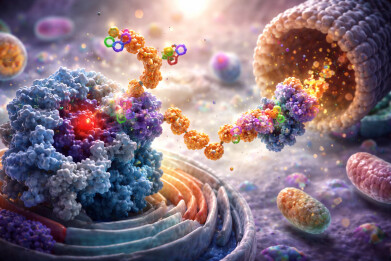
The team behind the latest work has described a different idea. Rather than to construct an artificial bridge between target and ligase, the researchers identified small molecules that appear to amplify a degradation route that already exists for the protein of interest. They termed the compounds ‘iDegs’ and reported that they accelerated the removal of indoleamine 2,3-dioxygenase 1 – also known as IDO1 – an immune-modulating enzyme with an established role in tumour immune evasion.
IDO1 metabolises the amino acid tryptophan into kynurenine. This pathway can suppress immune activity which tumours, and some viral infections, can exploit as a form of molecular camouflage. Despite that biological context, clinical efforts to treat cancer with IDO1 inhibitors have been disappointing. One likely reason is that inhibition blocks catalytic function but leaves the protein in place which can permit non-enzymatic signalling roles to persist. This limitation has helped to sustain interest in approaches that can remove IDO1 altogether.
According to the authors, iDegs bind to IDO1 in a manner that both impairs its function and increases its susceptibility to its native E3 ligase, KLHDC3. In other words, the compounds appear to press harder on a pre-existing cellular ‘dispose of this’ pathway rather than to invent a fresh route. The reported outcome was a more efficient reduction in IDO1 protein levels alongside suppression of enzymatic activity, which the authors argued could matter in cancer immunotherapy because it should reduce kynurenine production and also remove any additional immunosuppressive roles that IDO1 fulfils.
The molecules are pseudo-natural products derived from myrtanol, a naturally occurring compound. Using structural biology and biochemical experiments, the team reported that iDegs displaced IDO1’s haem cofactor and shifted the protein into a conformation that favoured degradation. KLHDC3, which the authors described as a regulator of baseline IDO1 turnover, then tagged the enzyme more efficiently for proteasomal destruction.
“iDegs highlight an entirely novel principle for drug discovery,” said co-first author Dr. Natalie Scholes, a former senior postdoctoral researcher at CeMM and now with The Netherlands Cancer Institute. She said the work showed that small molecules could tip the balance in favour of a protein’s natural destruction rather than to force an artificial route. She characterised this as both scientifically elegant and therapeutically powerful because it combined inhibition and elimination in a single step.
“With iDegs, we open the door to a novel generation of degraders,” said Dr. Georg Winter, director at the AITHYRA Institute for Biomedical AI, adjunct principal investigator at CeMM and co-senior author. He argued that the concept could extend beyond IDO1 because many proteins cycle between stable and unstable states and may have underappreciated native degradation circuits that chemists could amplify.
If the approach proves to be more generally applicable, it could widen the playbook for targeted protein degradation. Much of the field has centred on engineered proximity between target and ligase, often with relatively large bifunctional molecules. A strategy that strengthens an endogenous ligase–substrate relationship could, in principle, extend degradation approaches to targets that have resisted conventional design, while also offering a simpler molecular architecture that may prove easier to optimise for drug-like properties.
For further reading please visit: 10.1038/s41557-025-02021-5


Digital Edition
Lab Asia Dec 2025
December 2025
Chromatography Articles- Cutting-edge sample preparation tools help laboratories to stay ahead of the curveMass Spectrometry & Spectroscopy Articles- Unlocking the complexity of metabolomics: Pushi...
View all digital editions









Events
Jan 21 2026 Tokyo, Japan
Jan 28 2026 Tokyo, Japan
Jan 29 2026 New Delhi, India
Feb 07 2026 Boston, MA, USA
Asia Pharma Expo/Asia Lab Expo
Feb 12 2026 Dhaka, Bangladesh




