Chromatography
New buyer’s guide helps teams choose the right approach to nitrosamine testing
Jan 09 2026
Nitrosamines are becoming a regular topic across many industries. They have been studied and monitored for decades in areas such as food, rubber, packaging, and consumer products. More recently, the focus has intensified across a wider range of sectors, including pharmaceuticals and carbon capture. As awareness grows, more teams are being asked the same questions: could nitrosamines form in our process, how would we detect them, and what type of testing makes sense?
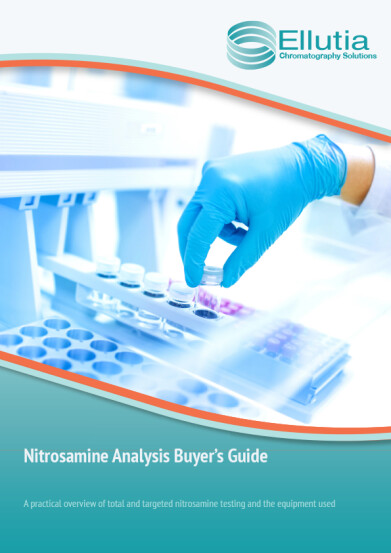
To help answer those questions, Ellutia has released a new Nitrosamine Analysis Buyer’s Guide. The guide takes a practical look at how nitrosamine testing is carried out in real laboratories, the analytical approaches available, and how teams decide which route fits their products, processes, and workload.
The guide explains:
- Where nitrosamines are most likely to form across products, processes, and storage
- The difference between screening techniques and fully speciated nitrosamine analysis
- When a single total value is sufficient and when individual nitrosamines must be identified
- How specialist TEA-based detectors support both screening and compound-specific workflows
- How TEA-based systems compare with conventional GC-MS or LC-MS approaches
- Practical considerations, including space, gases, staffing, and workflow integration
- How air monitoring complements product and process testing
The guide begins by explaining why nitrosamine testing matters. Nitrosamines can form when nitrite and amine groups interact under certain conditions. Heat, pH, raw materials, processing steps, and storage all influence the risk. In some sectors, limits and reporting requirements are already defined. In others, manufacturers are being asked to demonstrate awareness of potential formation routes and show that appropriate controls or testing are in place. In both cases, testing provides data that helps teams understand what is happening in their process and whether changes are having the intended effect.
A key focus of the guide is the distinction between screening and fully speciated nitrosamine analysis. These approaches answer different questions and play different roles in quality control.
Screening approaches are used to establish whether nitrosamines are present at all and whether formation is occurring. They measure the overall nitrosamine content and report a single combined value, without identifying individual compounds. This makes screening well suited to early investigations, routine monitoring, and trend tracking, as well as assessing the impact of changes to materials, equipment, or processing conditions.
Fully speciated analysis goes a step further by separating, identifying, and quantifying individual nitrosamines. This level of detail is required when limits apply to specific compounds, when confirmation is needed after screening, or when teams need to understand exactly which nitrosamines are present and how they behave during production or storage.
Rather than treating these approaches as alternatives, the guide explains how they are often used together. Screening highlights when there may be an issue. Fully speciated analysis then provides the detail needed to investigate further or support reporting.
The guide also explains how specialist detectors designed specifically for nitrosamine analysis fit into these workflows. In particular, it outlines the use of thermal energy analysers (TEA), which are selective and highly sensitive to the nitrogen oxide group common to all nitrosamines. This selectivity allows nitrosamines to be detected clearly even in complex sample matrices, with reduced interference from background compounds.
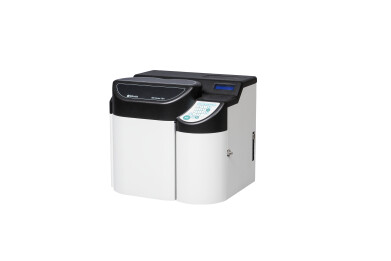
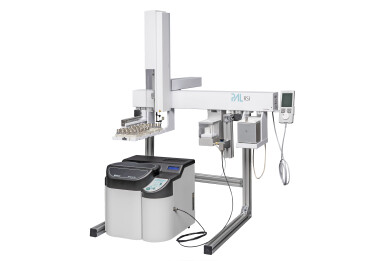
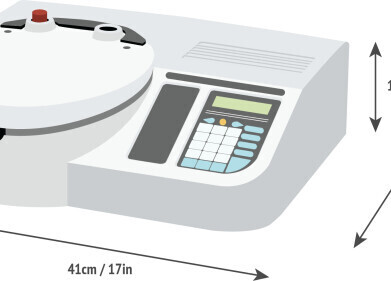
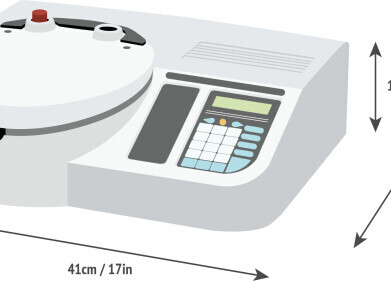
Using the Ellutia 800 Series TEA, the guide shows how the same detection technology can be applied to both analytical approaches. In screening workflows, the detector responds to all nitrosamines collectively, providing a single value that reflects overall formation. When combined with gas chromatography, the same detector supports fully speciated analysis, producing distinct peaks for individual nitrosamines.
By clearly setting this out, the guide presents an alternative to the conventional reliance on mass spectrometry. GC-MS and LC-MS remain powerful tools, particularly where structural confirmation is required. TEA-based systems offer a complementary option where selectivity for nitrosamines, sensitivity at low levels, and clear interpretation are priorities.
Download the buyer's guide now.
More information online

Digital Edition
Lab Asia Dec 2025
December 2025
Chromatography Articles- Cutting-edge sample preparation tools help laboratories to stay ahead of the curveMass Spectrometry & Spectroscopy Articles- Unlocking the complexity of metabolomics: Pushi...
View all digital editions









Events
Jan 21 2026 Tokyo, Japan
Jan 28 2026 Tokyo, Japan
Jan 29 2026 New Delhi, India
Feb 07 2026 Boston, MA, USA
Asia Pharma Expo/Asia Lab Expo
Feb 12 2026 Dhaka, Bangladesh




