-
-
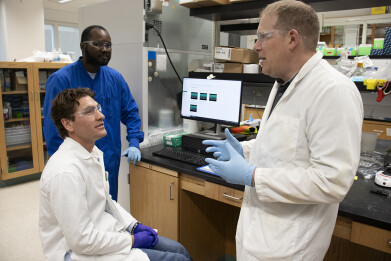 [From left] Utah State University biochemists Kadin Crosby, Bamidele Filani and Ryan Jackson report newly discovered functions of the bacterial immune system CRISPR-Cas12a3 in the Jan. 7, 2026 issue of the journal ‘Nature.’ The findings could lead to more efficient and safer rapid diagnostic tools for detecting COVID, influenza and RSV in human patients. Credit: M. Muffoletto
Research news
RNA-targeting CRISPR system could enable single-test for COVID-19, flu and RSV viruses
Jan 08 2026
Researchers at Utah State University have reported a previously unrecognised CRISPR immune response in which a bacterial defence system disables transfer RNA to halt viral replication, a finding that could inform the development of rapid multiplex diagnostics for respiratory infections
Across biological systems, immune defences have evolved to block viral invasion by preventing pathogens from replicating within host cells. In bacteria, one of the most effective of these defences is the CRISPR system, an adaptive immune mechanism that identifies and neutralises invading genetic material. Most characterised CRISPR systems target DNA, which they cut to disable viral genes and terminate infection before it becomes established.
Chemists at Utah State University have focused attention on two comparatively understudied CRISPR systems – Cas12a2 and Cas12a3 – which diverge from this canonical model. Rather than acting on DNA, both systems target RNA directly, a distinction that alters both their mechanism of action and their potential applications. The work has been led by Dr. Ryan Jackson, the R. Gaurth Hansen Associate Professor in the university’s Department of Chemistry and Biochemistry, together with doctoral candidate researcher Kadin Crosby and master’s student Bamidele Filani.
In contrast to the widely used CRISPR-Cas9 system, which relies on a guide RNA to locate and cleave a specific DNA sequence, Cas12a2 and Cas12a3 respond to RNA binding by undergoing a structural rearrangement that activates repeated cleavage of additional nucleic acid targets. This behaviour produces markedly different biological outcomes.
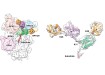
When activated, Cas12a2 cleaves DNA indiscriminately, which can eliminate viral genetic material but also leads to the destruction of the host cell. Cas12a3, by comparison, leaves host DNA intact and instead cleaves transfer RNAs, effectively shutting down viral protein synthesis.
The reported findings have identified the Cas12a3-mediated process as a previously unrecognised CRISPR immune response. The researchers showed that Cas12a3 disables transfer RNA by removing a specific structural region known as the tail, which carries the attached amino acid required for protein assembly. By severing this region, the system prevents translation to proceed, halting protein production and stopping viral replication without damaging the host genome.
“We’re very focused on the basic research of understanding the structure and function of the CRISPR systems we study and helping researchers around the world work through bottlenecks that enable them to pursue therapeutic applications,” said Jackson.
He added that transfer RNA occupies a central position in biology because it acts as the molecular adaptor that links the genetic code on RNA to the correct amino acids during protein synthesis.
“Cas12a3 can stop protein production in its tracks by chopping off a specific region of tRNA, called the ‘tail,’ which contains the amino acid.
“This is a very powerful and precise way to prevent a pathogen, including a virus, from replicating in a cell, without damaging the cell’s DNA,” Jackson said.
Beyond its biological significance, the work has implications for diagnostic technology. Because activation of Cas12a3 can be tightly coupled to the presence of specific RNA sequences, the system could form the basis of sensitive assays that detect viral pathogens rapidly and with high specificity.
The researchers suggested that such approaches might enable a single test to identify infections such as COVID-19, influenza and respiratory syncytial virus (RSV) in an individual patient, either separately or in combination.
“We think being able to stop an invading pathogen while leaving DNA unchanged could be a therapeutic breakthrough,” Jackson said. He noted that continued study of these systems has revealed a level of functional diversity in bacterial immune defences that remains underappreciated.
Jackson also acknowledged the central role played by Crosby and Filani in defining the molecular function of Cas12a3 and in demonstrating its potential utility as a diagnostic tool. Their work underscores the value of fundamental structural and mechanistic research in uncovering unexpected biological strategies that may later translate into clinical and technological applications.
For further reading please visit: 10.1038/s41586-025-09852-9


Digital Edition
Lab Asia Dec 2025
December 2025
Chromatography Articles- Cutting-edge sample preparation tools help laboratories to stay ahead of the curveMass Spectrometry & Spectroscopy Articles- Unlocking the complexity of metabolomics: Pushi...
View all digital editions









Events
Jan 21 2026 Tokyo, Japan
Jan 28 2026 Tokyo, Japan
Jan 29 2026 New Delhi, India
Feb 07 2026 Boston, MA, USA
Asia Pharma Expo/Asia Lab Expo
Feb 12 2026 Dhaka, Bangladesh




