
Laboratory events news
ELRIG 2025: Dual-view light-sheet imaging enables 4D glioblastoma spheroid assays for drug discovery
Dec 11 2025
A collaboration between the University of Edinburgh and Imperial College London has used a dual-view oblique plane light-sheet microscope and FUCCI reporters to deliver a live, four-dimensional glioblastoma spheroid assay that combines three-dimensional tumour biology with high-content screening performance
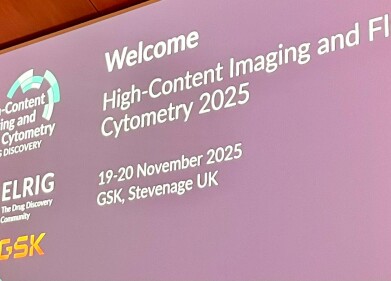
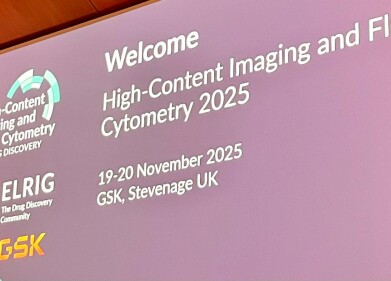
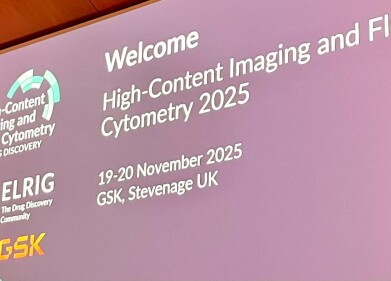
The drive to move beyond flat cell cultures and to capture the behaviour of complex tumour models in real time has taken a significant step forward, according to work presented at the ELRIG 2025 meeting on the GSK campus in Stevenage. Dr Jayne Culley, from the University of Edinburgh’s Institute of Genetics and Cancer, described how her team has developed a live, four-dimensional (4D) cell-cycle reporter assay in glioblastoma spheroids that runs on a dual-view oblique plane light-sheet microscope, in collaboration with physicists at Imperial College London. The platform has aimed to combine genuinely three-dimensional (3D) tumour biology with throughput, reproducibility and quantitative single-cell read-outs suitable for drug discovery.
Culley works within Professor Neil Carragher’s drug discovery group at the University of Edinburgh, a part of the Cancer Research UK (CRUK) Scotland Centre whose Brain Tumour Centre of Excellence has focused on high-content imaging of novel bioactive compounds and their downstream signalling effects. Previous projects have contributed to clinical candidates such as NXP900 – an oral small-molecule oncology drug candidate that inhibits the Src family of tyrosine kinases – which is now in phase 1b trials. The technique relies on phenotypic assays that extract rich morphological information from cells at scale, including cell painting. In that assay, multiple fluorescent stains mark distinct cellular compartments, so that image analysis pipelines can quantify hundreds of morphological and intensity features per cell.
Culley stressed, however, that such assays still rest on cells that grow as monolayers on plastic and on images that capture a single time point. These models do not reproduce the 3D structure of real tumours, gradients of oxygen and nutrients, stromal interactions or heterogeneous populations of cells in different states. When researchers use spheroids or organoids and then attempt to follow them across time, assays often lose throughput and standardisation, and the data become harder to analyse in robust, scalable ways. This tension between physiological relevance and industrial practicality formed the central problem that Culley’s project has sought to address.
The technical solution arose from collaboration with Imperial College physicists Professor Chris Dunsby and Dr. Hugh Sparks (now of The Crick Institute), who had developed an open-source oblique plane light-sheet microscope. In light-sheet microscopy, a thin sheet of light illuminates only a plane within the sample rather than the full volume, which reduces phototoxicity and suits extended live-cell imaging. Conventional light-sheet systems usually use one objective to deliver the light sheet and another to collect fluorescence. In oblique plane microscopy, both illumination and detection occur through the same objective at an oblique angle relative to the cover slip which simplifies the instrument and can increase imaging speed.
Dunsby and colleagues extended this concept into a dual-view oblique plane microscope by adding a prism to the optical path. The prism allows acquisition of views from two opposing directions of the same 3D structure, which improves resolution and coverage across the spheroid volume when the views are computationally fused. As she outlined the science behind the optics, Culley described herself several times as a ‘humble biologist’ to modestly emphasise that her specialism does not lie with the pure physics of the methodology developed at Imperial.
The dual-view system provides gentle illumination compatible with live spheroids, volumetric imaging at useful time intervals, and reconstructions of 3D structures with enhanced resolution. Its main constraint is a short working distance that requires samples to sit close to the lens and excludes many U-bottom spheroid plates or thicker plastic formats.
Culley then addressed the biological and methodological context. Glioblastoma, the focus of the work, is the most common and most aggressive primary brain tumour in adults, which currently has very few treatment options and a poor median survival rate. There have been no practice-changing therapies for more than a decade, and CRUK has classified glioblastoma as a disease of ‘considerable unmet need’. The University of Edinburgh has therefore invested in a panel of patient-derived glioblastoma stem-like cell lines under the leadership of Professor Steve Pollard.
For proof-of-principle experiments, Culley used a murine neural stem cell line engineered with driver alterations relevant to glioblastoma: knockout of NF1 and PTEN, together with overexpression of platelet-derived growth factor. These changes drive aggressive tumours in vivo and robust growth in vitro. A further advantage lay in an engineering contribution from Edinburgh colleague Dr. Alex Loftus, who had introduced a nuclear marker, H2B–Citrine, and a tri-colour fluorescent ubiquitination-based cell cycle indicator (FUCCI) reporter.
The FUCCI system has become a widely used tool to monitor cell-cycle status in live cells. In the variant that Culley used, CDT1 fused to a red fluorophore accumulates in G1 phase, whereas a Geminin-based construct fused to a green–yellow fluorophore accumulates in S, G2 and M phases. Cells in G1 therefore appear red, cells in G2 and M appear green, and cells in S phase show intermediate colours. Because these reporters degrade at defined transitions, fluorescence can fall during mitosis.
The H2B–Citrine nuclear marker maintained a nuclear signal throughout the cycle and allowed segmentation even when FUCCI intensity dipped. Culley showed a single-cell time-lapse sequence in which one cell traversed the cell cycle with its nucleus changing colour in step with each phase, as proof that the instrument could track individual nuclei in 3D over time.
To adapt the microscope for drug discovery, the Edinburgh team had to alter their 3D culture format. On conventional high-content confocal systems, such as Molecular Devices’ ImageXpress, they typically grow spheroids as large aggregates in ultra-low-attachment U-bottom plates and then acquire Z-stacks that they collapse into maximum-intensity projections. That approach effectively turns a 3D object into a 2D image, but it suits the optics and plastic geometry of standard plates. On the dual-view oblique plane microscope, there was too much light scatter produced with the plastic curved U-bottom, and the too-long working distance prevented effective illumination.
Culley switched to flat-bottom plates and embedded cells in a thin hydrogel layer near the objective. Her first experimental choice, Matrigel, in a spin-layer configuration failed because it had low stiffness which saw the glioma cells – with high motility – escape from the spheroid and spread as an unwanted monolayer. She then adopted VitroGel, a synthetic hydrogel with ‘tunable’ stiffness. At a stiffness rating of around 1.3 kilopascals, VitroGel supported compact spheroids that better resembled tumour tissue and suited the dual-view geometry. She seeded spheroids from single cells, in order to preserve heterogeneity from the parental line rather than to average it out through bulk aggregation.
Once it was established that the VitroGel protocol produced robust spheroids, the group applied drugs to the cells. Exposure to staurosporine and paclitaxel produced characteristic patterns of cell-cycle arrest and cell death, with FUCCI colours shifting as expected across time-lapse sequences. The rich volumetric datasets posed a computational challenge which the Imperial collaborators sought to address by writing MATLAB scripts to segment nuclei in 3D and to classify cells into G1, S or G2/M based on their FUCCI intensities.
To present these data in an assay format, Culley used a simple visual summary. Each spheroid appeared as a pie chart whose area reflected the total nuclear count and whose segments showed the percentage of cells in each cell-cycle phase. This approach removed the confounding effect of variable spheroid size and provided an intuitive view of population structure while still encapsulating data from hundreds to thousands of cells.
The team then assessed assay performance. They compared coefficients of variation for G1 and G2/M fractions in three formats: 2D FUCCI assays, traditional 3D spheroids on confocal, and VitroGel single-cell spheroids on the dual-view oblique plane microscope. In all cases, variability remained below 20% (acceptable for phenotypic imaging assays) and which reassured the group that dynamic 3D imaging can meet screening requirements.
A proof-of-principle screen with a 56-compound in-house bioactive library provided the first test for the platform. An initial bottleneck arose because the experimental microscope lacked an automated pre-find routine forcing Culley to locate tens of spheroids per well manually and to add compounds within the live chamber to avoid loss of coordinates. Dr. Sparks was able to write a script for the microscope to automatically pre-find cells which cut set-up time from more than four to just one hour and allowed the use of a D300 dispenser for accurate dosing before imaging.
The screen behaved as anticipated with the untreated spheroids growing steadily, while many compounds induced G1 arrest, visible as Culley’s red-dominated pie charts, and at higher doses saw spheroid collapse. Response patterns across 2D, conventional 3D and dual-view oblique plane 3D platforms showed no major qualitative discrepancies, which confirmed that the more complex 4D assay did not introduce obvious artefacts.
At the same time, the dual-view data exposed heterogeneity more clearly because each spheroid retained its own phase distribution and nuclear count. Culley and imaging specialist colleague, PhD candidate Matt Lee, now intend to exploit these data further to extract single-cell level insights into variable responses within and between spheroids.
Culley concluded that the project has shown how a live, 4D FUCCI-based glioblastoma spheroid assay can operate on a dual-view oblique plane light-sheet platform, with variability compatible with screening and integration into a high-content imaging strategy. In her view, the work has illustrated a practical route to bridging complex 3D tumour models in line with the throughput demands of discovery programmes, without loss of single-cell resolution.
For further reading please visit: 10.1016/j.slasd.2022.09.002
Digital Edition
Lab Asia Dec 2025
December 2025
Chromatography Articles- Cutting-edge sample preparation tools help laboratories to stay ahead of the curveMass Spectrometry & Spectroscopy Articles- Unlocking the complexity of metabolomics: Pushi...
View all digital editions









Events
Jan 21 2026 Tokyo, Japan
Jan 28 2026 Tokyo, Japan
Jan 29 2026 New Delhi, India
Feb 07 2026 Boston, MA, USA
Asia Pharma Expo/Asia Lab Expo
Feb 12 2026 Dhaka, Bangladesh




