Company news
Ineos' antidumping complaint goes to EC following wave of cheaper chemical imports into Europe
Dec 04 2025
Ineos has filed a series of antidumping complaints with the European Commission against low-priced imports of bulk chemicals from Asia, the Middle East and the United States, as analysts warn that trade defence alone may not rescue Europe’s carbon-constrained chemical sector from global overcapacity
The chemicals group Ineos has filed a raft of antidumping complaints with the European Commission (EC) – the administrative arm of the European Union (EU) – arguing that imports of key products from Asia, the Middle East and the United States have undercut European producers at prices that do not reflect true costs. The company has claimed that Europe’s integrated chemical industry, which is subject to high energy cost inputs and also faces more stringent climate policies than some foreign competition.
“China has flooded Europe with carbon-intensive products that pay a fraction of our energy costs and no carbon price at all,” said Ineos in a written statement that criticised the stance of the EU. The group argued that the EU–US trade deal had left European producers more exposed to dumping of basic chemicals and polymers, since it has increased transatlantic trade without – in Ineos’ view – addressing unfair pricing by third-country suppliers that target the EU market.
The EC must assess which imports constitute dumping in the legal sense, meaning that exporters sell products in the EU at artificially low prices that do not match their ‘normal value’. That normal value is usually based on domestic prices in the exporting country, or on a constructed cost that adds together raw material inputs, energy, labour and a reasonable profit margin. If the EC finds evidence of dumping and injury to EU industry, it can impose antidumping duties, in the form of specific tariffs, on imports from named companies or countries to restore fair competition.
According to chemical industry analysts, global commodity chemicals are currently experiencing a period of oversupply. Asia now generates more than half of the world’s plastics output with China alone accounting for just above one-third of global output. This is almost three times more than the combined production of the entire EU. The imbalance reflects years of heavy capital investment in large-scale plants in Asia and the Middle East.
Cost advantages in third countries can include cheaper feedstocks such as ethane or naphtha, access to low-cost coal or gas-fired electrical power, and lower environmental compliance costs, while states subsidies can range from direct financial support to preferential loans or tax breaks. In 2024 the EC adopted 162 antidumping measures, including 62 that targeted companies in China, which has drawn most of the EU’s defensive actions on trade in the chemical and steel sectors.
In its submissions to the EU, Ineos listed ten essential chemicals that it considers fundamental to the functioning of Europe’s automotive, electronics, construction, packaging and pharmaceutical industries. Among this list were polyvinyl chloride, butyl acetate, and polyolefins such as polyethylene and polypropylene – many of the basic building blocks for countless consumer goods. The company argued that a loss of European capacity in these value chains would not only imperil jobs but would also weaken supply security for downstream manufacturers.
Indeed, the EC had already intensified its scrutiny of chemical imports. In 2024 it opened a record 33 antidumping investigations, of which 12 concerned chemical products. These cases covered, among other substances, epoxy resins, which are used in high-performance composites and adhesives for sectors such as aerospace, automotive and electronics, imported from China, South Korea, Taiwan and Thailand. The EC also examined imports of thermoplastic acrylonitrile butadiene styrene from South Korea, a versatile engineering polymer that manufacturers use in consumer electronics, automotive parts and household appliances.
Action on antidumping follow a structured timetable. The EC must first decide whether the complaint received contains sufficient evidence to justify an investigation. Once a case is opened, it collects data from EU producers, importers and exporters on prices, volumes and costs. Officials evaluate whether goods enter the EU at prices below their normal value and whether this behaviour has caused material injury to EU producers, such as loss of market share, lower profits or plant closures.
Investigations usually run for 12 to 15 months. The EC tends to propose provisional duties 6 to 9 months after initiation, with final measures normally in place 3 to 6 months later. For companies that rely on imported inputs, this process can create a period of uncertainty, since they adapt to possible changes costs and supply chains.
From the perspective of some exporters – particularly in China – it is often economically rational to operate large petrochemical complexes at, or near, full capacity, even if domestic demand has weakened. Fixed costs remain high but plants operate efficiently at higher utilisation rates. In such circumstances, producers may prefer to ship excess product to foreign markets at very low prices rather than reduce output which can push global prices down and trigger allegations of dumping.
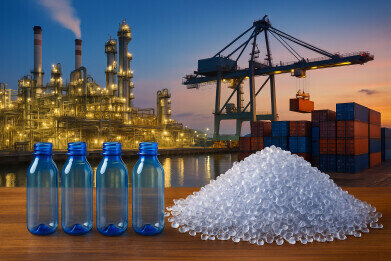
The EC has already provided a detailed example of its methodology in its case on polyethylene terephthalate (PET) from China which began in March 2023. PET is a widely used polyester, best known as the main material for beverage bottles, food containers and some fibres. In this case, the EC highlighted that most Chinese PET producers are fully- or partially-state owned and benefit from various government interventions that influence costs and investment decisions. Because it considered the Chinese domestic market to be distorted, the EC calculated the normal value for PET by reference to producers based in Malaysia, which it viewed as an appropriate benchmark. On that basis it found significant dumping margins and imposed antidumping duties between 7% and 24% on PET from various Chinese companies for a period of five years.
In a separate investigation, the EC examined imports of alkyl phosphate esters from China. These organic compounds have critical roles as lubricants, surfactants and flame retardants in industrial fluids, plastics and electronics. Again, the EC concluded that domestic Chinese prices did not provide a reliable basis to establish normal value, so it used prices from producers in Brazil as a reference country. It then calculated dumping margins and imposed antidumping duties that ranged from 53% to 68% on Chinese imports of these products, a level that reflected both the extent of the under-pricing and the severity of the economic injury to producers based in the EU.
Ineos’ complaints have underscored a wider debate about the future of the European chemical sector. Trade defence instruments such as antidumping duties can slow or offset the impact of underpriced imports, but they cannot easily reverse long-term trends such as global overcapacity, the shift of investment to regions with cheaper energy, or the cost of Europe’s climate and environmental policies. Industry executives have argued that a combination of measures, which includes more predictable energy costs, support for low-carbon technologies and coherent trade policy, will be necessary if Europe is to retain its own base in bulk chemicals.



Digital Edition
Lab Asia Dec 2025
December 2025
Chromatography Articles- Cutting-edge sample preparation tools help laboratories to stay ahead of the curveMass Spectrometry & Spectroscopy Articles- Unlocking the complexity of metabolomics: Pushi...
View all digital editions









Events
Jan 21 2026 Tokyo, Japan
Jan 28 2026 Tokyo, Japan
Jan 29 2026 New Delhi, India
Feb 07 2026 Boston, MA, USA
Asia Pharma Expo/Asia Lab Expo
Feb 12 2026 Dhaka, Bangladesh




