News
Where is Planet Nine?
Mar 25 2016
Mercury, Venus, Earth, Mars, Jupiter, Saturn, Uranus, and Neptune. It’s a widely accepted fact that the solar system is home to eight planets. That said, it is over 4.6 billion years old, so it’s only fitting that it keeps its fair share of secrets. Dark, mysterious and illusive, space scientists are maintaining that Planet 9 could be concealed within the solar system. Researchers claim that the ‘planet’ has been actively disrupting the movements of other smaller objects, but is simply too far away to be recognised.
Similar to Uranus and Neptune, scientists suspect that Planet 9 is gaseous in form, and up to 10 times bigger than Earth. Given its mass, it would definitively fall into the planetary category, making it the ninth addition to the currently known astronomical orbiting objects.
Gravitational forces point to ‘invisible’ mass
Amazingly, scientists have yet to confirm a visual sighting of the planet. Instead, they suspect its existence simply through observations of dwarf planets and other outer solar system objects. After closely watching their movements, scientists noticed continual disturbance by an enormous, unseen force.
“If there’s going to be another planet in the solar system, I think this is it,” comments Greg Laughlin of Santa Cruz’s University of California. “It would be quite extraordinary if we had one. Fingers crossed. It would be amazing.”
Orbiting on the edge of the solar system
Scientists have already come up with some staggering Planet 9 figures, including the fact that the closest it would ever get to the sun is around 200 to 300 further than Earth. Plus, instead of one year, the planet takes a huge 20,000 years to complete an entire orbit of the sun. As for how it got to the cusp of the solar system? Scientists suggest that the gravity of Jupiter or Saturn could be responsible for pushing it to the outskirts. Due to the vast distance between Earth and supposed Planet 9, it would be impossible to glimpse, even with a fleet of powerful telescopes.
A third modern day planetary discovery?
There’s a continuous flow of incredible space research, yet scientists are under no illusions that humans have unravelled all of its secrets.
"This would be a real ninth planet," says Brown, the Richard and Barbara Rosenberg Professor of Planetary Astronomy. "There have only been two true planets discovered since ancient times, and this would be a third. It's a pretty substantial chunk of our solar system that's still out there to be found, which is pretty exciting."
Space exploration is an electrifying prospect, and the success of missions categorically depends on scientific advancements here on planet Earth. ‘Reactor Vessel Pressure Control and Data Logging’ looks at the latest electronic pressure and thermal mass flow controller innovation from Bronkhorst, and how the technology elicits automated pressure control of reactor vessels.
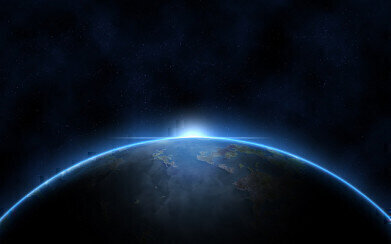
Image via Flickr Creative Commons. Photo credits: garysan97




Digital Edition
Lab Asia Dec 2025
December 2025
Chromatography Articles- Cutting-edge sample preparation tools help laboratories to stay ahead of the curveMass Spectrometry & Spectroscopy Articles- Unlocking the complexity of metabolomics: Pushi...
View all digital editions










Events
Jan 21 2026 Tokyo, Japan
Jan 28 2026 Tokyo, Japan
Jan 29 2026 New Delhi, India
Feb 07 2026 Boston, MA, USA
Asia Pharma Expo/Asia Lab Expo
Feb 12 2026 Dhaka, Bangladesh




