Laboratory events news
ELRIG 2025: Type I interferon signals in the lung may shape viral disease severity; early cancer spread
Dec 22 2025
Research presented by Professor Cecilia Johansson of Imperial College London has linked early type I interferon signalling in the lower respiratory tract to antiviral control and to a reduced capacity for metastatic cancer cells to seed in the lung
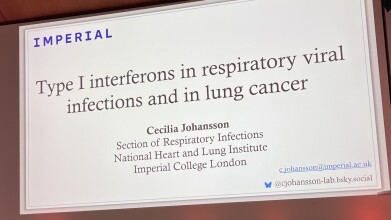
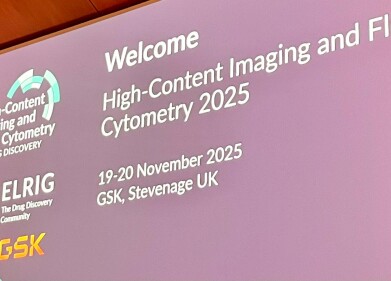
Professor Cecilia Johansson of Imperial College London has set out evidence that the earliest immune signals in the lower respiratory tract can influence both the course of respiratory viral infection and the lung’s susceptibility to the first steps of metastatic cancer spread. She delivered the talk at the ELRIG 2025 meeting at GSK’s Stevenage campus on 19–20 November 2025 and drew on mouse models and flow cytometry to connect cell-specific mechanisms to questions that could inform drug discovery.
Johansson framed the lung as an organ that must perform a daily balancing act. While it must tolerate continuous exposure to largely harmless material such as dust, pollutants and allergens, it must also mount rapid defences against pathogens, which include viruses, bacteria or fungi. The challenge becomes most acute in the alveoli, where gas exchange depends on delicate cellular architecture. Inflammation in this compartment can impair breathing quickly, whether through excess mucus, damage to epithelial barriers, infiltration that thickens the exchange surface, or destruction of its structures. The clinical question that follows has remained familiar from influenza to COVID-19 asking why do some people remain asymptomatic while others develop severe disease?
To address that divergence, Johansson focused on the earliest phase after infection, when viruses first interact with lung cells and innate immune pathways set the trajectory for later immune responses. Her laboratory has used respiratory syncytial virus (RSV) as a model system. RSV circulates seasonally and can cause severe disease in infants, older adults and among immunocompromised people. Johansson noted that vaccines have become available for some groups in recent years but access has remains uneven which has reinforced the case to map mechanisms that could reveal targetable pathways.
A central theme of her presentation was type I interferons, a family of cytokines that include multiple interferon-α subtypes and interferon-β. These ligands signal through the type I interferon receptor – which is widely expressed on nucleated cells – a distribution that supports rapid and broad antiviral defence. Type I interferons rise early after viral recognition and induce antiviral gene programmes but Johansson emphasised their wider role which is to orchestrate the immune sequence that can lead either to control with limited tissue damage or to harmful inflammation.
Johansson’s team tested causality by using mice that lacked the type I interferon receptor which prevented cells from responding to type I interferons. After RSV infection, these mice showed substantially lower induction of inflammatory cytokines and chemokines, despite higher viral loads than wild-type controls. Even so, the animals ultimately cleared the virus and survived. Disease readouts such as weight loss worsened despite the blunted inflammatory profile. Johansson interpreted this pattern as evidence that type I interferons amplify early inflammatory programmes that help to contain virus and support effective control while the balance between protection and pathology remains narrow.
The work raised a second question, asking which lung cells produce type I interferons early in infection in vivo? While many cell types can produce interferons in vitro, intact tissues impose constraints through localisation, cell–cell communication and microenvironmental context. Johansson described a reporter mouse model in which green fluorescent protein marked activation of an interferon-α promoter. Contrary to expectations that epithelial cells or plasmacytoid dendritic cells might dominate, the strongest signal came from a subset of highly autofluorescent alveolar macrophages.
Roughly one in ten alveolar macrophages became reporter-positive, which suggested that these resident ‘vacuum cleaner’ cells, positioned at the air-exposed alveolar surface, can act as a key early interferon source. In Johansson’s model, interferon production by alveolar macrophages induced downstream cytokines and chemokines that promoted immune cell recruitment with inflammatory monocytes as a prominent component of antiviral control.
Johansson then linked the RSV work to severe acute respiratory syndrome coronavirus 2 (SARS-CoV-2), the virus responsible for COVID-19. Early clinical studies reported impaired type I interferon activity in severe COVID-19, including cases linked to inborn errors in interferon pathways and cases associated with autoantibodies that neutralised type I interferons. Johansson’s group adapted mouse models to compare outcomes when type I interferon signalling was absent or intact. In line with clinical observations, loss of interferon signalling increased viral burden and worsened disease-associated measures. It also altered immune composition with recruitment patterns that implicated monocytes and neutrophils in dysregulated inflammation.
Neutrophils formed a further strand of the narrative because these cells can dominate airway cellularity in paediatric RSV infection. Johansson’s team asked how neutrophils entered the tissue and what activated them once they arrived. Their work suggested that recruitment alone did not suffice. Neutrophils required distinct inputs, both to attract them into the lung and to ‘license’ effector activity through an inflammatory environment. Direct antiviral effects proved difficult to demonstrate, in that neutrophil manipulation did not substantially alter viral load but Johansson argued that their abundance could still reshape the tissue milieu and influence pathology.
Johansson then pivoted to discuss the intersection between respiratory viral infection and cancer metastasis to the lung. She described a collaboration with cancer biologist Professor Eliane Malanchi of the Francis Crick Institute where they were asking whether recent infection could alter the opportunity of circulating tumour cells to seed in the lung and whether cancer could reshape immune responses to infection.
Using breast cancer metastasis models alongside RSV infection, the team tested whether infection altered early metastatic establishment. In one experiment, mice received RSV and, a day later, tumour cells that preferentially sought out the lung. Mice infected before tumour-cell delivery developed fewer metastatic nodules. Nodule size changed little which suggested an effect on early seeding rather than later growth. Depletion of neutrophils, inflammatory monocytes, natural killer cells and T cells did not remove the reduction in metastatic burden which argued against any single immune population as the sole driver.
Their attention therefore returned to type I interferons. Intranasal delivery of type I interferons, used to mimic infection-induced interferon programmes, also reduced lung metastases, which implicated interferon signalling as a pathway that could render the lung less permissive to early metastatic events. Analyses that combined cell sorting with transcriptomic approaches suggested that the most consequential changes occurred within non-immune lung cells, particularly epithelial populations. In co-culture, epithelial cells from infected or interferon-exposed lungs lost much of their ability to support tumour-cell proliferation, while fibroblasts showed little effect. Johansson concluded by stressing that infection is not a preventative strategy. Instead, the aim is to identify mediators that allow pharmacological mimicry of protective antiviral states without the harms of infection.

Digital Edition
Lab Asia Dec 2025
December 2025
Chromatography Articles- Cutting-edge sample preparation tools help laboratories to stay ahead of the curveMass Spectrometry & Spectroscopy Articles- Unlocking the complexity of metabolomics: Pushi...
View all digital editions









Events
Jan 21 2026 Tokyo, Japan
Jan 28 2026 Tokyo, Japan
Jan 29 2026 New Delhi, India
Feb 07 2026 Boston, MA, USA
Asia Pharma Expo/Asia Lab Expo
Feb 12 2026 Dhaka, Bangladesh




