-
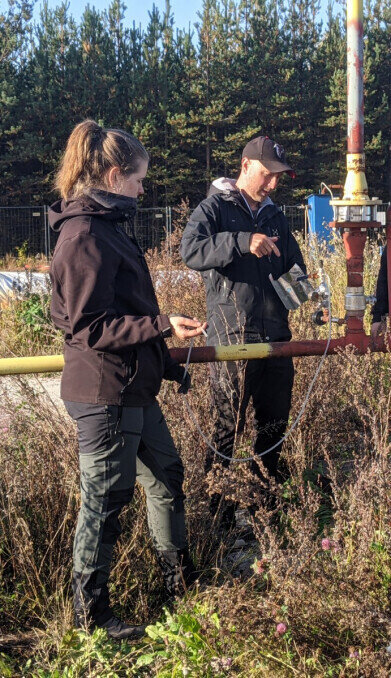 Researchers analysed subsurface fluid samples from the Siljan impact crater in Sweden. Credit: Linnaeus University
 -
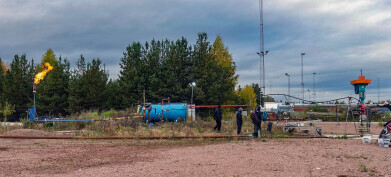 Methane naturally escaping from fractures in the Siljan impact crater.. Credit: Linnaeus University
 -
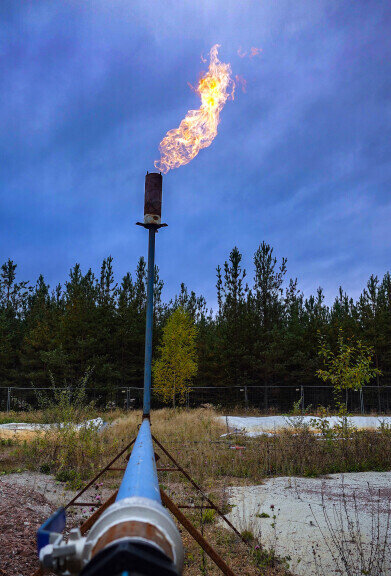 Credit: Linnaeus University
Research news
Meteorite crater microbes produce methane — a hint at life on Mars
Nov 26 2025
A fractured meteorite crater in central Sweden has turned out to be a thriving home for methane-producing microbes. This finding gives scientists a rare glimpse into Earth’s deep biosphere and strengthens the case for life in similar environments on Mars [1].
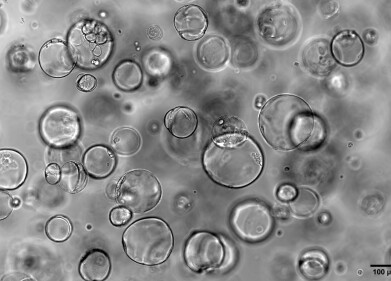
Working inside the Siljan impact structure, researchers recovered fluids from 400 metres below ground and discovered an active microbial community capable of generating methane. The team enriched the samples in the lab and found that the microbes readily produced methane from several carbon sources, including naturally occurring oil trapped within the crater’s ancient rocks.
Genomic and transcriptomic sequencing revealed an unusual two-member partnership: Acetobacterium sp. KB-1 and Candidatus Methanogranum gryphiswaldense. Together they run a single metabolic pathway - methyl-reduction - leaving behind an exceptionally heavy carbon-isotope signature, with δ¹³C values reaching 98.6‰. This chemical fingerprint provides a clear marker of life-driven methane formation in the deep subsurface.
“Impact craters are not just geological scars - they can be microbial havens,” said lead author Femke van Dam, Linnaeus University, Sweden. “Our findings suggest that similar environments on Mars could host life, especially given the methane detected in the Martian atmosphere near impact craters.”
Senior author Henrik Drake added: “The Siljan crater offers a window into life’s resilience. If microbes can thrive here, they might also persist in impact structures on other planets.”
The discovery highlights the role impact craters may play as long-term refuges for life - on Earth and potentially on other planets - and offers a new framework for interpreting methane signals in planetary exploration.
More information online
Active methylotrophic methanogenesis by a microbial consortium enriched from a terrestrial meteorite impact crater published in mBio


Digital Edition
Lab Asia Dec 2025
December 2025
Chromatography Articles- Cutting-edge sample preparation tools help laboratories to stay ahead of the curveMass Spectrometry & Spectroscopy Articles- Unlocking the complexity of metabolomics: Pushi...
View all digital editions









Events
Jan 21 2026 Tokyo, Japan
Jan 28 2026 Tokyo, Japan
Jan 29 2026 New Delhi, India
Feb 07 2026 Boston, MA, USA
Asia Pharma Expo/Asia Lab Expo
Feb 12 2026 Dhaka, Bangladesh




