
News
What is Ice Nucleation?
Dec 21 2015
Ecosystems are incredibly sensitive, which means that when something is thrown off course the consequences can be dire. When it comes to plants, fauna is burdened with a myriad of environmental problems. Ice propagation is one of the most prominent causes for concern, with scientists continually investing time and money into combating the problem.
So what exactly is ice propagation? And why has it got environmental scientists so concerned? Read on as we take a closer look at the issue, and what steps are being taken to manage it.
Ice crystal embryos snap freeze from the inside, out
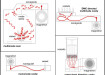
As the name suggests, ice nucleation is caused when plants are forced to endure severe temperatures. These primarily arrive in spring, when unusually chilly weather wreaks havoc on newly emerging foliage. The process of ice nucleation occurs when small ice crystal embryos form on membrane proteins that act as nucleation sites. These facilitate the aligning of water molecules, which promotes freezing. One ice crystals have formed plants are burdened with a myriad of growth implications and tissue damage. For farmers and agricultural producers, ice nucleation can be devastating on crops. This leads to a follow on effect in the form of increased consumer prices.
New research sparks new hope for combating ice nucleation
For more information on new research into ice nucleation, ‘Thermal Imaging Cameras Help Researchers Study Ice Nucleation and Ice Propagation in Plants’ is an insightful article. It explores the complex nature of ice nucleation, and the various methods scientists are using to research and monitor the problem. Thermal imaging cameras are the latest technology to emerge, offering scientists new insights on how plants freeze in the first place, and what can be done to protect foliage against the harsh weather.
Michael Wisniewski and David Livingston, researchers at the Agricultural Research Service of the US Department of Agriculture explain, “With these thermal imagers, we can determine the primary sites of ice formation in plants, how ice propagates and the presence of ice barriers. The use of high-resolution thermal imaging allows us to visualise the many adaptations that have evolved in plants, which directly or indirectly impact the freezing process and ultimately enable a plant to survive frost events. With a thermal imaging camera, we can see where active sites of ice nucleation are located, and how ice formation initiates and spreads into the surrounding tissues.”
Image via Flickr Creative Commons. Photo credits: Nick J Nixon




Digital Edition
Lab Asia Dec 2025
December 2025
Chromatography Articles- Cutting-edge sample preparation tools help laboratories to stay ahead of the curveMass Spectrometry & Spectroscopy Articles- Unlocking the complexity of metabolomics: Pushi...
View all digital editions






Events
Jan 21 2026 Tokyo, Japan
Jan 28 2026 Tokyo, Japan
Jan 29 2026 New Delhi, India
Feb 07 2026 Boston, MA, USA
Asia Pharma Expo/Asia Lab Expo
Feb 12 2026 Dhaka, Bangladesh