News
The History of Chemistry
Nov 30 2015
While modern day chemistry labs are equipped with the latest cutting edge equipment, humans have actually been experimenting with the discipline since the Bronze Age. Defined by Wikipedia as “the science of the composition of matter, its properties and characteristics, and the changes it undergoes,” chemistry is a fascinating field that’s undergone extensive change and development as human civilisation has evolved. While early discoveries may seem relatively trivial to a contemporary chemists, they all played an integral role in helping us build the scientifically sophisticated society we live in today.
Want to know more about how chemistry has shaped life as we know it? Read on for a glimpse at the history of chemistry, including key dates and discoveries.
3500 BC – During the Bronze Age, prehistoric civilisations learned to make a superior metal using a combination of copper and tin. Today, we call this ‘bronze.’
400 BC – In around 420 BC, Greek philosopher Democritus proposed his pioneering atomic theory.
600 AD – During this period alchemy began to evolve within Egypt. By the 1100s it has spread to the rest of the Arabian Peninsula, as well as Western Europe.
Early 1600s – In the early 1600s Robert Boyle made a clear distinction between alchemy and chemistry. He also stresses that theories must be backed with meticulous experiments.
Early 1700s - In 1702 German chemist Georg Ernst Stahl coined the ‘phlogiston theory’ that explained the release of phlogiston during the burning process.
1750s – Halfway through this century Joseph Black revealed his discovery of carbon dioxide.
1766 – This year saw Henry Cavendish officially identify hydrogen as an element.
1770s – A decade year for chemistry, the 1770s gave light to Carl Scheele and Joseph Priestley’s discovery of oxygen.
1869 – Science students across the globe use the periodic table, a reference document that Dmitri Mendeleev developed back in 1869.
1985 – In the mid-80s, Richard E. Smalley, Robert F. Curl, Jr. and Harold W. Kroto announced their discovery of a carbon exclusive spherical shaped molecule which they named buckminsterfullerene.
1994 – Robert A Holton and his team made history in 1994 when they successfully synthesised Taxol.
1995 – The most recent chemistry revelation occurred in 1995 when Eric Cornell and Carl Wiemen developed the world’s first Bose-Einstein condensate. The ultra-advanced substance is capable of displaying quantum mechanical properties on the macroscopic scale.
To this day scientists still continue to make ground-breaking developments in the chemistry sphere.
Interested in finding out more about the latest chemistry advancements? ‘Visiting the 36th BMSS Annual Meeting 15th-17th Sept 2015 BMSS Introduction to Mass Spectrometry Course 14th & 15th Sept 2015 University of Birmingham – Edgbaston, UK’ offers readers an overview of this year’s meeting, exhibition and short course hosted by the prestigious British Mass Spectrometry Society.
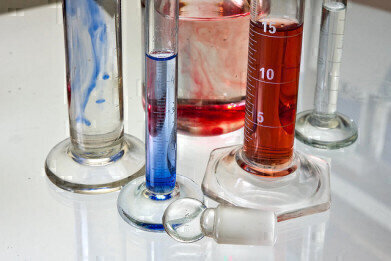
Image via Flickr Creative Commons. Credits: Horia Varlan


Digital Edition
Lab Asia Dec 2025
December 2025
Chromatography Articles- Cutting-edge sample preparation tools help laboratories to stay ahead of the curveMass Spectrometry & Spectroscopy Articles- Unlocking the complexity of metabolomics: Pushi...
View all digital editions










Events
Jan 21 2026 Tokyo, Japan
Jan 28 2026 Tokyo, Japan
Jan 29 2026 New Delhi, India
Feb 07 2026 Boston, MA, USA
Asia Pharma Expo/Asia Lab Expo
Feb 12 2026 Dhaka, Bangladesh




