News
Meet the World’s Next Big Explorers … Cockroaches!
May 02 2015
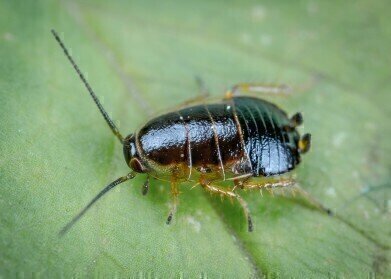
You might have heard of Raleigh, Columbus and Cook - three of history’s most famed explorers, voyaging into the unknown with a desire for knowledge powering their quests. But the next of the great explorers could be an altogether different beast as scientists have successfully created the very first remote-controlled cockroach explorers.
Cyborg cockroaches might sound like something destined for B-Movie stardom, but for scientists at Texas A&M University, they are a very real, very innovative way to explore places that are just too unsafe for humans.
A miniature computer, wired directly into the nerves that control the cockroach’s front legs, hijacks the nervous system and delivers pulses to the legs that allow a human operator to steer the roach remotely. The inch-long computer and battery pack sits on the cockroach like a backpack, effectively controlling the cockroach’s movements through its mind.
Current tests have proved that the technology is only 60% effective, meaning that the roach goes the dictated way three out of five times, but the possible implementations of these mind-controlled cockroaches are potentially life-saving.
The simple addition of a high-resolution microphone to the cockroach backpack could turn the little insects into human detection systems amid the destruction caused by natural disasters, like earthquakes, allowing them to hear even the faintest sounds.
In these situations, says lead researcher Hong Liang, cockroaches make the ideal assistants to disaster rescue teams; “Insects can do things a robot cannot. They can go into small places, sense the environment, and if there’s movement, from a predator say, they can escape much better than a system designed by a human.”
Cockroaches may not be everyone’s favourite insect, let alone animal, but is it ethical to manipulate them in this way? Cockroaches are well known to be able to withstand harsh environments, they can survive without food for long periods of time and prefer to be squeezed into tight spots, which makes their chances of survival in destitute locations much higher than other beasties.
On top of this, Texas A&M’s engineers placed roach welfare high on their agenda and entered the roaches into a series of tests to gauge how much weight they could comfortably carry. Believe it or not, this involved placing the roaches on mini treadmills to see how the weight of the computerised backpack affected their stamina!
At the moment it’s just the roach’s direction that can be controlled, but further advancements promise greater control, such as changing speed or calling the roach to a halt. The possibilities are endless, but what is clear is that our attitude to the simple roach may be about to change drastically – from pest to saviour with the help of a backpack computer.
If you’d like to read more about cockroaches, see our article on Cockroach Ancestors Revealed recently by Imperial College London.



Digital Edition
Lab Asia Dec 2025
December 2025
Chromatography Articles- Cutting-edge sample preparation tools help laboratories to stay ahead of the curveMass Spectrometry & Spectroscopy Articles- Unlocking the complexity of metabolomics: Pushi...
View all digital editions








Events
Jan 21 2026 Tokyo, Japan
Jan 28 2026 Tokyo, Japan
Jan 29 2026 New Delhi, India
Feb 07 2026 Boston, MA, USA
Asia Pharma Expo/Asia Lab Expo
Feb 12 2026 Dhaka, Bangladesh




