News
Is Interstellar Travel Closer Than We Think?
Mar 22 2016
Decidedly, interstellar space travel is a concept that’s generally reserved for sci-fi sagas. But now, physicists Gerald Jackson and Steven Howe are claiming that the dream of venturing beyond the reaches of our solar system could be closer than we think.
Together, the pair spent the last decade developing a wildly advanced antimatter propulsion probe. In theory, it could propel a 22-pound craft to a neighbouring star system known as Alpha Centauri. The journey would take 40 years, and use just 0.6 ounces of antihydrogen. Helping the craft on its way would be a vast 220 pound depleted uranium coated carbon sail, measuring in at 16 feet in length.
The immense force of antimatter
Antimatter stored in the probe would be used to propel the craft forward. It’s a complex process, which involves antihydrogen hitting the sail and forcing its uranium atoms to divide. The result of this fission is a pair of high speed atoms being forced in opposite directions. One will hit the sail to drive it forwards, while the other will be hurled into space. According to Jackson and Howe, this acceleration could see the probe reach speeds equal to 10% of the speed of light. At this rate, it would arrive at the cusp of the solar system in a decade.
Breathing new life into an old idea
The idea first came to light back in 2003, when Jackson and Howe presented drafts for their antimatter propulsion probe at the Particle Accelerator Conference. Due to lack of funding the project was never taken any further, however with a Kickstarter campaign on the horizon, interstellar travel could soon be a reality. Launched by their company Hbar Technologies, the pair hope to raise US$200,000. This will be used to fund the creation of an initial proof-of-concept design, as well as a device capable of measuring the thrust and power of the system.
Calling on the crowds
“Crowdfunding may be a good way to show interest in the project when it comes time to find bigger investors or governmental support,” Jackson commented in an interview with Forbes. “We will then need funding on the order of $100 million to actually build small prototype propulsion and power systems.”
The properties of hydrogen play an integral role in the latest Hbar Technologies project, and are also a key player in other scientific endeavours. For more information on new research being conducted into hydrogenation processes here on Earth, ‘Reactor Vessel Pressure Control and Data Logging’ is an interesting write up. It looks at the latest electronic pressure and thermal mass flow controllers from Bronkhorst, and how they can be applied for low flow lab reactor systems, as well as for high flow industrial applications.
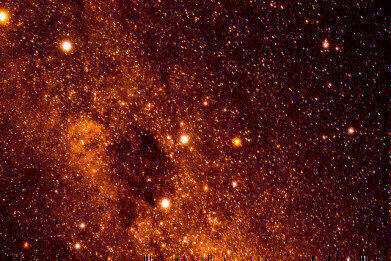
Image via Flickr Creative Commons. Photo credits: Massmo Relsig


Digital Edition
Lab Asia Dec 2025
December 2025
Chromatography Articles- Cutting-edge sample preparation tools help laboratories to stay ahead of the curveMass Spectrometry & Spectroscopy Articles- Unlocking the complexity of metabolomics: Pushi...
View all digital editions









Events
Jan 21 2026 Tokyo, Japan
Jan 28 2026 Tokyo, Japan
Jan 29 2026 New Delhi, India
Feb 07 2026 Boston, MA, USA
Asia Pharma Expo/Asia Lab Expo
Feb 12 2026 Dhaka, Bangladesh




