News
How Will Drone Technology Affect Sport?
Mar 31 2015
The way we view sport has been steadily changing as technology advances. Couch spectators are now offered multiple angles, rewinds and even 3D viewing, making watching sport more accessible and varied that it’s ever been.
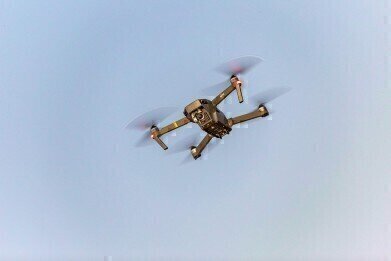
One of the most recent developments is the introduction of drones. Used for the first time in mainstream sport during the Sochi 2014 Winter Olympics, drone camera are easy to operate, quick to set up and much cheaper than traditional cameras, eliminating the need for expensive helicopter flights to capture that perfect angle. It’s fitting that extreme sports took to using drones first – the young crowd of fast paced competitors combined with awe-inspiring scenery makes drone-vision the best way to watch.
Drones can dramatically enhance the experience of sports spectating – getting around corners, in hard to reach places and changing angle at the press of a button. Golf, motor racing, cycling, and basically any sport that requires long tracking, are an easy fit for drone technology. However the use of drones in team based, stadium sport is where technology has the potential to change how sports are played.
Performance analytics
Using drones to review performance in sports such as football is sure to be big in the future. Current battery life only allows for a maximum of 15 minutes of footage to be shot, so long, uncut live footage would not be possible, but for the purposes of training the technology could prove invaluable. Another future drone development is the ‘follow-me’ drone – an autonomous camera that can follow players, meaning a cyclist could essentially become his or her own camera crew.
The only issues facing drone use in sport is that it is so new that it treads on untouched ground in terms of the legality of flying an object in airspace. These are kinks that will need to be worked out before drones can really go mainstream, but at the rate that sports technology is currently evolving, we’re probably only just starting to see how drones can change the way we view and play sport.
Bird in the Cage
One riddle has stumped physicists for decades - would a cage containing a bird be lighter if the bird is in flight?
Scientists from Stanford University appear have not only solved the age old conundrum, but the technology involved in the hyper-sensitive scales could also be put to practical use in the drone industry. Due to their not being affected by changes in the subject’s centre of gravity, the scales could provide valuable insight into the aerodynamics of winged drones that has been previously unavailable. For more information about how this will affect the development of drones, read: The Riddle of the Bird in the Cage is Finally Put to Bed.




Digital Edition
Lab Asia Dec 2025
December 2025
Chromatography Articles- Cutting-edge sample preparation tools help laboratories to stay ahead of the curveMass Spectrometry & Spectroscopy Articles- Unlocking the complexity of metabolomics: Pushi...
View all digital editions










Events
Jan 21 2026 Tokyo, Japan
Jan 28 2026 Tokyo, Japan
Jan 29 2026 New Delhi, India
Feb 07 2026 Boston, MA, USA
Asia Pharma Expo/Asia Lab Expo
Feb 12 2026 Dhaka, Bangladesh




