News
How Small Can a Black Hole Go?
Jan 02 2016
The mysteries of the solar system have infatuated space scientists for decades. Black holes are one of the most enigmatic phenomena, with a reputation as enormous, intense gravitational fields that seem to vanish away radiation and matter.
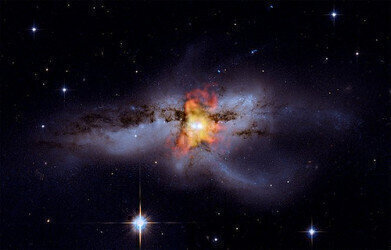
While scientists have generally assumed that black holes are categorically large, the latest reports from the American Astronomical Society's conference in Los Angeles revealed that black holes can be small. Space scientists took to the stage and shed light on the smallest black hole ever observed. It measured in at just 3.8 times the Sun’s mass, and just 24km in diameter.
Do ‘micro’ black holes count?
It sparked conversation about the existence of microscopic black holes. The gravitational masses we’re used to hearing about are known as ‘stellar black holes.’ These are created from collapsing stars, with the void forming nearby surrounding matter and gaining mass over time. In comparison, ‘micro black holes’ evaporate in a fraction of a second, and are unable to draw in any matter. Some scientists are adamant that these count as black holes, while others maintain that the lack of sucking power puts them in an entirely different category.
Unravelling the mysteries of ‘micro’ black holes
Either way, space scientists have been conducting incredible research into the formation of micro black holes. Some maintain that the ultra-low TeV energy range is enough to form micro black holes, which means they could be created in particle accelerators such as the Large Hadron Collider. Built by the European Organization for Nuclear Research, it’s the world's largest and most powerful particle collider. There’s been a huge amount of controversy over the artificial creation of LHC micro black holes. Some eccentric critics are gravely concerned that the monster machine could produce a mini black hole that could quite literally swallow the Earth whole.
Want to know more about cutting edge research focussing on particles? ‘Particle Characterisation with Dynamic Image Analysis Determination of particle size and particle shape with a new measuring technique’ looks at particle research here on planet Earth, and the new technologies that are replacing the long established methods of sieve analysis and laser diffraction. Today, advanced particle analysing equipment from Retsch Technology use DIA technology to meticulously evaluate images of the particles. Known as CAMSIZER and CAMSIZER XT, the machines are able to determine parameters such as length, width and sphericity of particles.
Image via Flickr Creative Commons. Photo credits: NASA's Marshall Space Flight Centre




Digital Edition
Lab Asia Dec 2025
December 2025
Chromatography Articles- Cutting-edge sample preparation tools help laboratories to stay ahead of the curveMass Spectrometry & Spectroscopy Articles- Unlocking the complexity of metabolomics: Pushi...
View all digital editions









Events
Jan 21 2026 Tokyo, Japan
Jan 28 2026 Tokyo, Japan
Jan 29 2026 New Delhi, India
Feb 07 2026 Boston, MA, USA
Asia Pharma Expo/Asia Lab Expo
Feb 12 2026 Dhaka, Bangladesh




