News
How Long Has the Universe Got Left?
Mar 24 2016
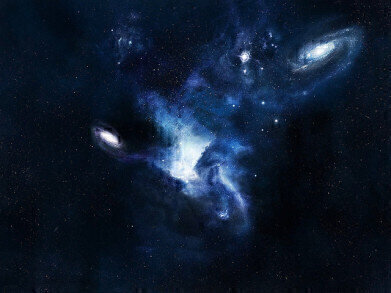
For some people, life moves at an alarmingly fast rate. For others, time seems to drag on eternally. For the universe itself, scientists predict that there’s at least another 2.8 billion years of life to unfold.
How does one even begin to calculate such a number? When considering the rate at which the universe is expanding, all evidence points to the theory that it won’t be tearing itself apart for at least several billion years. The concept is based on the fact that the continuous observation of stars and galaxies indicates that the universe is magnifying, at an increasing rate. Supposing this growth says constant, stars will eventually die out, matter will drift apart and the universe will essentially cease to exist in what’s described as a “heat death” scenario.
Could dark energy spell downfall?
Another theory is that acceleration is triggered by dark energy. As dark energy increases, so too does momentum, which would eventually force space-time to explode and wipe the cosmos out altogether. The aptly named ‘big rip’ theory is somewhat terrifying, but thankfully space scientists are asserting that it’s at least 2.8 billion years away.
Portuguese scientist predicts the end
Diego Sáez-Gómez, a researcher at Portugal’s University of Lisbon recently dove deeper into the complexities of the universe’s life span, modelling a number of scenarios depicting its ‘death.’ They drew on the latest dark energy expansion data sourced from neighbouring galaxies, supernovae and baryon acoustic oscillations. After meticulous calculations, Sáez-Gómez and his team found that at the very earliest a ‘big rip’ could occur at 1.2 times the current age of the universe, i.e. 2.8 billion years.
Of course, this figure is not consummate. Sáez-Gómez asserts that at the latest, “the upper bound goes to infinity.” This means that if the big rip never comes to light, the universe will succumb to the “heat death” alternative. Either way, scientists are adamant that the universe is not indestructible. But the good news is, the earliest signs of destruction won’t materialise for at least 2.8 billion years.
With billions of years to go, it’s critical that the world doesn’t drop the ball when it comes to preserving the planet. ‘Managing PAHs and Pesticides with a Rapid UHPLC-MS/MS Analysis’ explores one of the world’s major pollutants, and the steps being taken to manage the thousands of toxic polyaromatic hydrocarbons (PAHs) and pesticides that exist in soil, sediment, water, sewage and atmospheric deposition.
Image via Flickr Creative Commons. Photo credits: Sweetie187




Digital Edition
Lab Asia Dec 2025
December 2025
Chromatography Articles- Cutting-edge sample preparation tools help laboratories to stay ahead of the curveMass Spectrometry & Spectroscopy Articles- Unlocking the complexity of metabolomics: Pushi...
View all digital editions










Events
Jan 21 2026 Tokyo, Japan
Jan 28 2026 Tokyo, Japan
Jan 29 2026 New Delhi, India
Feb 07 2026 Boston, MA, USA
Asia Pharma Expo/Asia Lab Expo
Feb 12 2026 Dhaka, Bangladesh




