News
Could a British Fern Be the Next Big Biofuel Source?
Jan 17 2016
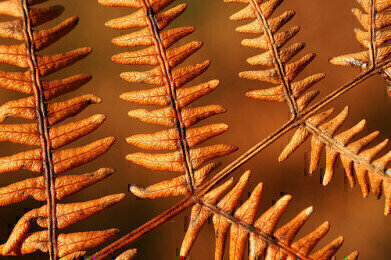
The UK is famous for its lush green countryside, and now scientists are suggesting that a native fern could be Britain’s next source of biofuel. The concept has been developed by south west based company, Brackenburn. As the name suggests, the company used bracken to produce biomass pellets which they refer to as “brackettes.” Thanks to its innovation, what was once considered a ‘pest’ could soon be a hugely valuable resource.
Turning bracken into biofuel
The process involves shredding bracken, compressing it into briquettes and dividing these up into pellets. When burnt they produce far more heat than oak which makes them a more efficient, and eco-friendly resource.
There’s certainly no shortage of bracken in the UK, with Brackenburn's marketing and sales director Barry Smith estimating that the nation is home to at least 2.5 million acres of the fern. Harvesting the foliage has no negative impact on the environment, with Smith explaining that "Left unchecked, bracken encroaches by three percent a year… at the end of the day there's no use for it whatsoever. It's a nuisance and to call it a crop is kind of giving it a status it doesn't deserve."
So what makes bracken such a desirable source of biofuel? According to Brackenburn, its product burns hotter and longer than oak and other woods, giving it impressive eco credentials. This is due to the low moisture content and high calorific value of the plant.
"Once it's cut, once it's dried, once it's briquetted, the calorific value is greater than the equivalent briquette would be of oak," says Smith.
From weed to work
As well as being an eco-friendly source of fuel, bracken also supports the local economy. Briquettes are currently harvested, manufactured and sold locally for around £6.99 per 7 to 10 kilos. Smith maintains that the process creates jobs in rural areas, and boosts the UK’s biofuel status.
As for the claims that bracken contains carcinogenic associated with stomach and oesophageal cancer. Brackenburn is adamant that carcinogens die when bracken wilts, which is why the fern is only harvested when it’s brown.
The biofuel industry is remarkably innovative, but it’s not without its hurdles. ‘Biofuels and their Precursors – A Challenge for Common Elemental Analyzers’ looks at the logistical barriers of mass biofuel production, and how innovative flame sensor technology is helping scientists overcome them.
Image via Flickr Creative Commons. Photo credits: nutmeg66

Digital Edition
Lab Asia Dec 2025
December 2025
Chromatography Articles- Cutting-edge sample preparation tools help laboratories to stay ahead of the curveMass Spectrometry & Spectroscopy Articles- Unlocking the complexity of metabolomics: Pushi...
View all digital editions







Events
Jan 21 2026 Tokyo, Japan
Jan 28 2026 Tokyo, Japan
Jan 29 2026 New Delhi, India
Feb 07 2026 Boston, MA, USA
Asia Pharma Expo/Asia Lab Expo
Feb 12 2026 Dhaka, Bangladesh




