-
 Professor Urtė Neniškytė. Credit Vilnius University
Research news
ERC grant funds study of brain’s sugar code and human neural wiring
Jul 21 2025
Professor Urtė Neniškytė of Vilnius University Life Sciences Center (VU LSC) has been awarded a prestigious €2 million European Research Council (ERC) Consolidator Grant to investigate how sugar molecules help shape the human brain.
Her five-year project, GlycoCirc, will study the brain’s glycocalyx - a sugar-rich coating on neurons - and its role in forming neural circuits during development. The aim: to understand how these little-known sugar structures guide cell-to-cell interactions and potentially influence what makes the human brain unique.
“The glycocalyx has been overlooked in neuroscience for decades,” said Professor Neniškytė. “Yet these sugar molecules are the first thing a neuron uses to sense its environment.”
From sugar trees to brain wiring
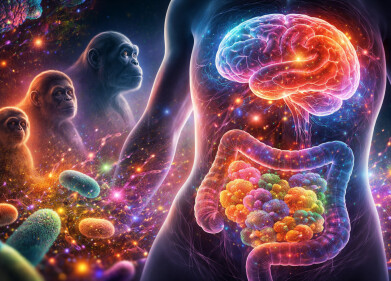
The glycocalyx resembles a dense forest of tiny sugar branches extending from brain cells. On neurons, this coating can be up to a micrometre thick and may help direct which synapses form, and which are pruned - a process crucial to brain development.
Neniškytė believes that subtle changes in this layer during early development could help explain the evolutionary leap seen in the human brain.
“Its structure is genetically unique to humans - even compared with bonobos. The timing of those molecular differences matches the acceleration in human brain evolution,” she explained.
With ERC support, her team will use a combination of live-cell imaging, neuronal activity recording, and biochemical profiling to map how the glycocalyx develops and differs across species.
Modelling the brain in a dish
To explore these processes, the group will rely heavily on human and non-human induced pluripotent stem cells (iPSCs). These can be turned into neurons, astrocytes, and microglia - allowing the team to recreate miniature brain-like systems in the lab.
The work also has implications for disease. Glycocalyx-related disorders often present with neurological symptoms - from epilepsy to neurodegeneration. The lab has already identified glycocalyx changes in human epilepsy tissue that appear to influence how neurons fire.
Modelling the brain in a dish
Beyond its scientific goals, the project will strengthen local expertise. The ERC grant will allow Professor Neniškytė to bring in two senior postdocs: one with experience in iPSC biology, the other with expertise in high-resolution neuronal recording.
“This funding opens up access to cutting-edge tools and global collaboration,” she said. “It brings new skills into our lab - and into Lithuania.”
The GlycoCirc project will run through 2030, adding to a growing body of European-funded research focused on the cellular and molecular foundations of cognition.
More information online


Digital Edition
Lab Asia Dec 2025
December 2025
Chromatography Articles- Cutting-edge sample preparation tools help laboratories to stay ahead of the curveMass Spectrometry & Spectroscopy Articles- Unlocking the complexity of metabolomics: Pushi...
View all digital editions









Events
Jan 21 2026 Tokyo, Japan
Jan 28 2026 Tokyo, Japan
Jan 29 2026 New Delhi, India
Feb 07 2026 Boston, MA, USA
Asia Pharma Expo/Asia Lab Expo
Feb 12 2026 Dhaka, Bangladesh




