Research news
Scientists develop virtual cell platform to simulate in silico live tissue behaviour
Aug 05 2025
Digital twin system offers a way to test hypotheses and therapeutics before live cell experiments
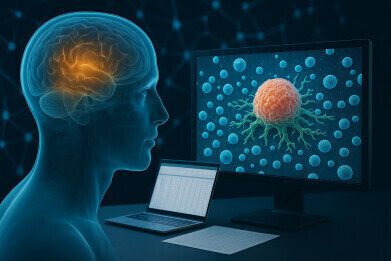
A researcher team drawn from Indiana University, Johns Hopkins University School of Medicine, the University of Maryland School of Medicine, and Oregon Health & Science University, all in the United States, has reported the creation of a computer-based platform that can simulate the behaviour of cells from any part of the body. The study describes how the tool can be used to model biological processes and cellular responses in a range of tissues, including cancers and the developing brain.
The research built on a prior version of a programme called PhysiCell, originally developed by Professor Paul Macklin at Indiana University. PhysiCell uses agent-based modelling, in which each cell type is represented as a mathematical entity governed by rules derived from genetic and environmental inputs. These agents interact with digital representations of factors such as oxygen, therapeutics or neighbouring cells to simulate the emergence of complex tissues, including tumours.
Professor Genevieve Stein-O’Brien, the Terkowitz Family Rising Professor of Neuroscience and Neurology at Johns Hopkins University School of Medicine, explained that the virtual cell environment has made it possible to test how cells develop and organise in structures such as the brain cortex. Working with Dr Daniel Bergman at the University of Maryland’s Institute for Genome Sciences, her team is leading the development of the platform to model how neural circuits form from individual cells.
The programme’s innovation lies in a novel coding grammar that allows scientists without expertise in computer programming to build models using spreadsheet-style syntax. Each line of the spreadsheet links a cell type to a readable rule, such as: ‘this cell increases division as oxygen concentration increases’. The system then converts these rules into equations to generate cell behaviour simulations.
The team has used the model to recreate data from spatial transcriptomics – a field that maps gene expression to specific locations in tissues. In one such application, undergraduate researcher David Zhou and doctoral candidate Zachary Nicholas developed what is believed to be the first virtual model of human brain development, using data from the Allen Brain Atlas which is publicly available.
The platform has also shown promise in modelling cancer dynamics. Professor Elana Fertig, director of the Institute for Genome Sciences at the University of Maryland, co-led the project and previously helped establish pancreatic tumour data used in the simulations during her tenure at the Johns Hopkins Kimmel Cancer Centre.
In one study, Dr Jeanette Johnson, a postdoctoral fellow, used the model to simulate the effects of enhanced epidermal growth factor receptor signalling in breast tumours. The simulation showed that the pathway increased cancer cell motility and promoted tumour expansion. Follow-up laboratory experiments confirmed this behaviour in cultured cells.
The project has received support from the Jayne Koskinas Ted Giovanis Foundation, the National Institutes of Health, the Lustgarten Foundation, and the National Foundation for Cancer Research. Stein-O’Brien stated that the goal is to create a ‘virtual cell laboratory’ – a ‘digital twin’ environment in which hypotheses and drug targets can be prioritised before committing to experiments with live cells.
Ongoing work has involved the integration of artificial intelligence to automate model development using the grammar, enhancing the system’s potential to adapt to novel datasets and refine therapeutic predictions. The team has continued to expand the platform’s behavioural repertoire to more accurately represent cell dynamics in human health and disease.
For further reading please visit: 10.1016/j.cell.2025.06.048



Digital Edition
Lab Asia Dec 2025
December 2025
Chromatography Articles- Cutting-edge sample preparation tools help laboratories to stay ahead of the curveMass Spectrometry & Spectroscopy Articles- Unlocking the complexity of metabolomics: Pushi...
View all digital editions









Events
Jan 21 2026 Tokyo, Japan
Jan 28 2026 Tokyo, Japan
Jan 29 2026 New Delhi, India
Feb 07 2026 Boston, MA, USA
Asia Pharma Expo/Asia Lab Expo
Feb 12 2026 Dhaka, Bangladesh




