

Lab safety
Why Isolators Are Essential in Biotech and Pharmaceutical Manufacturing
Sep 17 2025
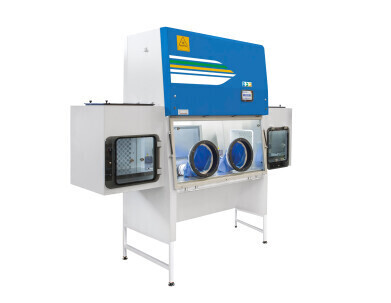
In the tightly controlled environments of biotechnology and pharmaceutical manufacturing, ensuring sterility and operator safety is non-negotiable. Processes involving high-potency drugs, cytotoxic compounds, or delicate biologics demand equipment that eliminates contamination risks and protects both personnel and product. That’s where isolators have become essential, by creating a sealed and controlled-environment chamber that separates operators from materials. Using HEPA or ULPA filtration and pressure-controlled airflow, isolators maintain ultra-clean environments, enabling safe handling of sterile and hazardous substances.
To ensure this, isolators are accessed via glove ports and incorporate airlocks or transfer hatches to move materials in and out without breaking containment and can be operated under either positive or negative pressure, depending on the application. Positive-pressure isolators are designed to protect the product—ideal for aseptic processing—while negative-pressure isolators protect the operator.
The manufacturing team at Faster s.r.l. in Italy, has developed isolators suited for both purposes. The GloveFAST Aseptic isolator creates a sterile, positive-pressure environment perfect for compounding and microbiological testing. The GloveFAST Cyto Pharma model maintains negative pressure to safely manage cytotoxics, ensuring product sterility and operator protection.
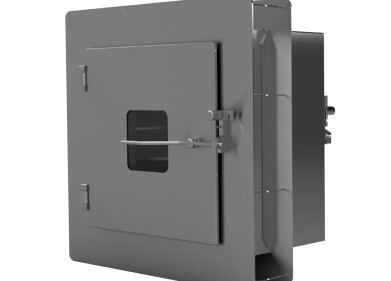
One of the advantages of isolators is their ability to prevent cross-contamination. In cleanrooms, people remain the greatest source of particles and microbes. By removing direct human contact and replacing it with sealed systems, isolators significantly lower the risk of contamination. Materials enter the isolator via decontamination chambers or sealed transfer ports, ensuring continuous integrity of the sterile field.
Isolators are also vital for operator safety, particularly when handling hazardous drugs or HPAPIs. Negative-pressure systems contain these substances securely, preventing accidental exposure.
In addition to safety, isolators offer major regulatory and operational benefits. As regulatory bodies such as the FDA and EMA demand increasingly high standards for contamination control, isolators provide reliable compliance with Good Manufacturing Practices (GMP).
The use of isolators spans the full range of life sciences. In biotech laboratories, they’re used for tasks like cell culture, sterility testing, and viral vector production—processes where even minute contamination can compromise outcomes. In pharmaceutical settings, isolators support aseptic filling, sterile compounding, and the handling of high-risk materials.
Many companies now integrate isolators into fully automated production lines, reducing human intervention and boosting efficiency. Faster Air’s isolators can be incorporated into modular systems, streamlining everything from sterile filling to environmental monitoring. Looking ahead, the industry is moving toward greater automation and integration with isolators now being paired with robotics, smart sensors and digital monitoring to further reduce risk and improve consistency.
In today’s biotech and pharmaceutical landscape, isolators are more than just equipment—they are an essential infrastructure for ensuring safe, sterile, and scalable production. The long-term advantage for the use of isolators is clear. With fewer contamination events and improved product yields, isolators can provide a great return on investment.
As the exclusive distributor of Faster s.r.l. isolators for mainland UK, explore Biopharma Group’s range of positive and negative isolators for sterile and cytotoxic applications, or contact our team for specialist guidance.
.jpg)
Digital Edition
Lab Asia Dec 2025
December 2025
Chromatography Articles- Cutting-edge sample preparation tools help laboratories to stay ahead of the curveMass Spectrometry & Spectroscopy Articles- Unlocking the complexity of metabolomics: Pushi...
View all digital editions










Events
Jan 21 2026 Tokyo, Japan
Jan 28 2026 Tokyo, Japan
Jan 29 2026 New Delhi, India
Feb 07 2026 Boston, MA, USA
Asia Pharma Expo/Asia Lab Expo
Feb 12 2026 Dhaka, Bangladesh




