-
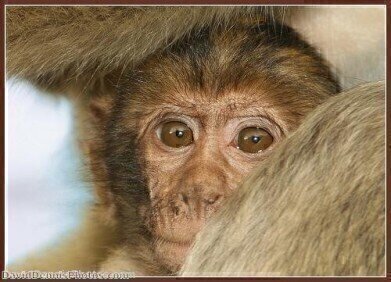 Two monkeys were used to test the new technique
IT solutions
Avatar controlled by monkey's brain
Feb 19 2014
An "avatar" monkey has had its movements controlled by the brain of another monkey, according to US scientists. The monkey's brain was used to stimulate the avatar's spinal cord through an electrical current. This latest move could help those that have become paralysed take control of their body once more.
Published in 'Nature Communications', the Harvard Medical School study used brain scans of the "master" monkey's thoughts. These scans were then used to stimulate the spine of the avatar, resulting in movement that was effectively controlled by the master monkey.
The brain scans were performed by a chip that was implanted in the master monkey's brain, which was able to monitor the activity of around 100 neurons. Neuron activity patterns were then matched to the monkey's movements, meaning that the researchers were able to see how different patterns of stimulation resulted in different movements.
For the test, researchers used a master monkey that was awake and a sedated avatar. The avatar monkey had a total of 36 electrodes implanted throughout its spinal cord, which then allowed scientists to look at how simulation affected bodily movements.
Both monkeys were then hooked up so that the readings of the master monkey's brain were able to stimulate the electrodes within the avatar's spine, resulting in movement. The movements occurred in real time of each other.
In 98 per cent of the tests, the master monkey was able to control the avatar's arm, which was holding a joystick. The master monkey had to decide whether the cursor should be moved up or down.
It is hoped that this discovery could help those that have suffered damage to their spinal cord that has resulted in them losing control of their limbs. This type of damage can mean that information does not travel from the brain to the spinal cord, but this new discovery could help to bridge the gap.
Dr Ziv Williams, told the BBC: "The goal is to take people with brain stem or spinal cord paralysis and bypass the injury.
"The hope is ultimately to get completely natural movement, I think it's theoretically possible, but it will require an exponential additional effort to get to that point."

Digital Edition
Lab Asia Dec 2025
December 2025
Chromatography Articles- Cutting-edge sample preparation tools help laboratories to stay ahead of the curveMass Spectrometry & Spectroscopy Articles- Unlocking the complexity of metabolomics: Pushi...
View all digital editions







Events
Jan 21 2026 Tokyo, Japan
Jan 28 2026 Tokyo, Japan
Jan 29 2026 New Delhi, India
Feb 07 2026 Boston, MA, USA
Asia Pharma Expo/Asia Lab Expo
Feb 12 2026 Dhaka, Bangladesh




