News
UK regulators issue first guidance on cell-cultivated meat to steer approvals
Dec 09 2025
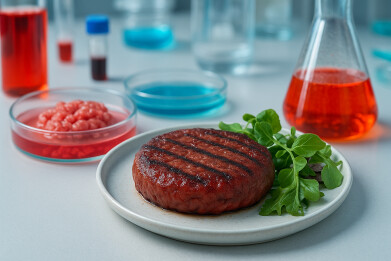
The Food Standards Agency, in conjunction with the Food Standards Scotland, have issued the first national guidance for cell-cultivated products, confirming that so-called ‘lab-grown meat’ will be regulated as products of animal origin in the United Kingdom, with detailed expectations for allergenicity, nutritional quality and safety assessment
Cell-cultivated products are a category of novel foods that do not involve traditional farming such as rearing livestock or growing plants and grains. Instead, producers take cells from animals or plants and then culture them in controlled conditions to form edible products. The current work by the Food Standards Agency (FSA) and Food Standards Scotland (FSS) has focused on animal cells only, through their joint cell-cultivated products (CCP) ‘Sandbox Programme’.
The FSA and FSS have now issued the first in a series of guidance documents for this programme. The initial guidance confirmed that cell-cultivated products produced from animal cells – often called as ‘lab-grown meat’ – will fall within the legal definition of products of animal origin. This classification means that producers must comply with existing hygiene and food safety legislation at each stage of manufacture, from the sourcing of cells and growth media to processing, storage and distribution.
A second document set out how regulators will expect businesses to address allergenicity and nutritional quality in their dossiers for all cell-cultivated products, irrespective of whether they derive from animal or plant cells.
“Guidance of this kind provides clarity for businesses, helping them to understand and correctly demonstrate to UK food regulators how their products are safe. Specifically, this guidance ensures that companies have assessed potential allergenic risks and that they are nutritionally appropriate before they can be authorised for sale.
“Consumers can be reassured that these innovative novel foods will meet the same rigorous safety standards as conventional foods. The Sandbox programme is allowing us to fast-track regulatory knowledge to reduce barriers for emerging food technologies without any compromise on safety standards,” said Dr Thomas Vincent, deputy director of innovation at the Food Standards Agency.
The guidance has been developed within a formal, science-based framework that aligns with the wider UK novel foods regime. It is the first output of the CCP Sandbox Programme, which the Department for Science, Innovation and Technology has funded through the Engineering Biology Sandbox Fund. The sandbox approach allows regulators to work closely with innovators and to clarify evidential expectations at an early stage, so that applicants can design studies that address specific safety questions. In practice, this is intended to increase regulatory predictability, to give businesses confidence to invest and to enable regulators to assess submissions more efficiently.
The FSA and FSS have indicated that the guidance will support growth in the broader category of innovative foods. By setting out how allergenicity must be assessed, the agencies expect companies to consider, for example, whether any proteins expressed in cell-cultivated tissues resemble known allergens, and whether any process-related residues or novel ingredients in the growth medium could introduce new allergenic risks.
The nutritional guidance aims to ensure that cell-cultivated products match, or clearly complement, the nutritional profiles of comparable conventional foods, so that consumers do not face unrecognised deficits or excesses in their diets if they substitute these products at scale.
The CCP Sandbox Programme itself has formed part of a two-year initiative. It began in March 2025, when a team of scientists and regulatory specialists came together with academic partners, industry representatives and trade bodies to examine CCPs in detail. Their remit has been to generate robust scientific evidence about how cell-cultivated products are developed and manufactured, to inform how the FSA and FSS will regulate this class of foods in the longer term.
The evidence generated through the programme is intended to enable the regulators to assess CCP applications more efficiently and to ensure that they meet statutory requirements before they reach the market. The agency has committed to complete full safety assessments for two cell-cultivated products within the two-year period, as a proof of concept for the sandbox model.
As part of this work, the FSA intends to issue clearer guidance for applicants, to address scientific and technical questions that must be answered before any CCPs can be sold to consumers.
“Safe innovation is at the heart of this programme. By prioritising consumer safety and making sure novel foods such as CCPs are demonstrably safe, we can support growth in innovative sectors.
“Our aim is to provide consumers with a wider choice of novel food, while we maintain the highest safety standards,” said Professor Robin May, chief scientific advisor at the Food Standards Agency.
Science Minister Lord Vallance underlined the strategic role of the programme in UK industrial policy.
“By supporting the safe development of cell-cultivated products, we are giving businesses the confidence to innovate and to strengthen the UK’s position as a global leader in sustainable food production.
“This work will help to bring novel products to market more quickly and to strengthen consumer trust, as well as support our Plan for Change and create novel economic opportunities across the country,” said Vallance, who became well known to the British public as the Chief Scientific Officer during the COVID-19 pandemic before he went to the House of Lords.
The FSA has also confirmed the eight CCP companies selected to participate directly in the sandbox. These firms, chosen through a competitive process, have been intended to reflect the diversity of technologies, processes and ingredients that feature in cell-cultivated product pipelines worldwide.
The participants are Hoxton Farms (UK), BlueNalu (USA), Mosa Meat (the Netherlands), Gourmey (France), Roslin Technologies (UK), Uncommon Bio (UK), Vital Meat (France) and Vow (Australia). Together, they represent a spectrum of approaches that range from cultivated animal fats to whole-cut meat analogues and hybrid products that combine cell-cultivated material with plant-based ingredients.
Alongside direct engagement with these eight firms, the programme has involved a wider cross-section of the international CCP sector. Academic partners include the Cellular Agriculture Manufacturing Hub, led by the University of Bath, the National Alternative Protein Innovation Centre and the Bezos Centre for Sustainable Protein. These institutions contribute expertise in tissue engineering, bioprocess development and techno-economic assessment which the regulators can use to develop proportionate and practical evidential requirements.
The sandbox also involves the Alternative Proteins Association, which acts as a trade body for the broader industry, and the Good Food Institute Europe, a non-governmental organisation that advocates for alternative protein technologies. Their participation has enabled the FSA and FSS to test whether their guidance is realistic for companies of different sizes and at different stages of development, from early-stage start-ups to established firms that plan to scale production.
Further guidance from the CCP Sandbox Programme is due later in 2026. The FSA and FSS have indicated that future documents will address topics such as process controls, traceability, labelling expectations and the interface between cell-cultivated products and other regulatory regimes, including those that govern feed, veterinary controls and environmental protection.
For further reading click here
Digital Edition
Lab Asia Dec 2025
December 2025
Chromatography Articles- Cutting-edge sample preparation tools help laboratories to stay ahead of the curveMass Spectrometry & Spectroscopy Articles- Unlocking the complexity of metabolomics: Pushi...
View all digital editions










Events
Jan 21 2026 Tokyo, Japan
Jan 28 2026 Tokyo, Japan
Jan 29 2026 New Delhi, India
Feb 07 2026 Boston, MA, USA
Asia Pharma Expo/Asia Lab Expo
Feb 12 2026 Dhaka, Bangladesh




