-
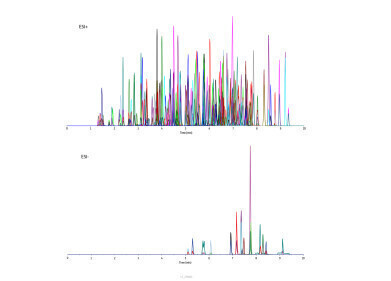
 Figure 1: Highly sensitive targeted and non-targeted HPLC-MS analysis of PFAS.
 -
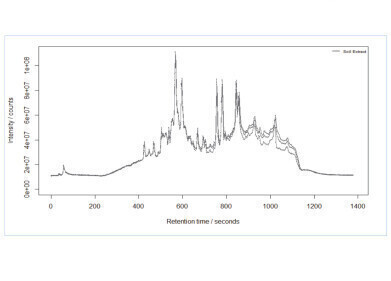 Figure 2: Total ion chromatograms (TIC) of the soil sample measured in triplicate.
 -
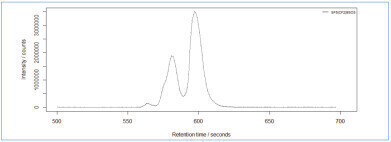 Figure 3: Ion trace correspondent to SF5(CF2)9SO3- with m/z 656.8927 +/-20 ppm.
Columns
Highly sensitive targeted and non-targeted HPLC-MS PFAS analysis
Feb 02 2025
Per- and polyfluoroalkyl substances (PFAS) are persistent environmental pollutants known for their long lifetime and mobility. Their stability leads to accumulation in groundwater and soil, with proven harmful health effects. This technical note presents a method for identifying and quantifying PFAS using a YMC-Triart C18 HPLC column. This column, based on a robust hybrid silica particle, offers enhanced separation of isomers and improved analytical performance when coupled with mass spectrometry.
PFAS standards could be well resolved by the YMC-Triart column. Notably, partial separation of PFOS and PFHxS isomers within 10 seconds facilitated fragmentation pattern analysis for structural elucidation.
Non-targeted analysis in a soil extract
To evaluate performance in complex matrices, a soil extract from a contaminated site (Brilon-Scharfenberg, Germany; from the scientific publication of Zweigle et al. [1]) was analysed. Total ion chromatograms (TICs) from triplicate measurements (Figure 2) revealed consistent profiles, despite the high matrix complexity.
The YMC-Triart C18 column achieved effective separation of PFAS, including improved partial resolution of isomers compared to Zweigle et al. [1]. For instance, SF5(CF2)9SO3 isomers were separated (Figure 3), enabling the acquisition of distinct fragmentation spectra. The larger fragments in longer retention indicate an exclusively linear isomer. Specifically, the shorter retention time and the smaller fragments suggest a branched isomer or a differently positioned SF5-group.
Conclusion
The YMC-Triart C18 column demonstrates robust performance for PFAS analysis. It delivers:
- Efficient separation of key PFAS standards with linear quantification
- Reproducible results in complex matrices, such as soil extracts
- Improved isomer separation, enabling structural elucidation through distinct fragmentation patterns
The column provides a reliable and enhanced approach to targeted and non-targeted PFAS analysis, supporting environmental monitoring and regulatory compliance.
Download the Technical Note for full details.
More information online
References:
1. Environ. Sci. Technol. 2023, 57, 6647−6655.

Digital Edition
Lab Asia Dec 2025
December 2025
Chromatography Articles- Cutting-edge sample preparation tools help laboratories to stay ahead of the curveMass Spectrometry & Spectroscopy Articles- Unlocking the complexity of metabolomics: Pushi...
View all digital editions









Events
Jan 21 2026 Tokyo, Japan
Jan 28 2026 Tokyo, Japan
Jan 29 2026 New Delhi, India
Feb 07 2026 Boston, MA, USA
Asia Pharma Expo/Asia Lab Expo
Feb 12 2026 Dhaka, Bangladesh




