Autoclaves
How to Load an Autoclave for Discard and Waste Loads
Nov 19 2025
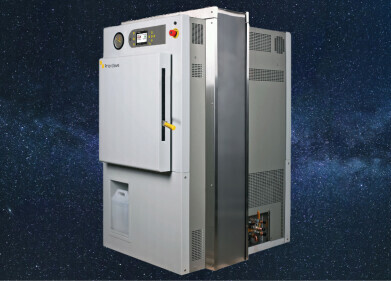
The natural assumption would be that sterilising discard and waste is one of the simpler tasks when using an autoclave. You don’t need the materials after they are sterilised, so it’s tempting to simply crank the autoclave up to maximum and run it. While that might work, it is far from the most efficient method.
The challenge with a discard load is its complex structure of interlocking geometry, which traps pockets of air that block sterilising steam. Fortunately, there are ways to overcome this challenge.
The Discard Load
Start with proper autoclave-compatible bags, often called autoclavable bags. These should not be sealed airtight. Either leave the bag open or loosely gather the top and secure it with autoclave tape so that you can still get your fingers into the opening – from an autoclaving perspective, the more open the bag, the better. This ensures air can escape and steam can enter. Trapped air is the enemy of sterilisation; it forms insulating pockets that prevent heat and steam from reaching all parts of the load.
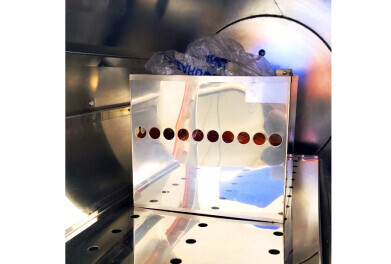
For safety and good housekeeping, waste bags should be placed inside a Morrison container (or a similar rigid autoclave basket with a waterproof lower section and perforated central area). If the bag splits during the cycle, the container will catch any spills and prevent contaminated material from leaking onto shelves or around the heating elements. The container is usually designed with holes to allow steam to reach the bottom and centre of the load.
Slide the loaded container into the autoclave and position it so steam can circulate freely around it. Don’t cram too many containers in at once; overcrowding reduces steam penetration and slows air removal.
Unlike media cycles, discard cycles typically do not use the load probe. You should not push the probe into the bag: the hot plastic can melt around the probe, making it difficult to remove and potentially damaging it. For these cycles, the probe is usually tucked safely down the side of the Morrison container, and the controller monitors only the chamber conditions rather than the load.
The Discard Cycle
Discard cycles are usually designed for items like Petri dishes, gloves, tissues, and general contaminated lab waste contained in autoclave bags. They are typically run at 121 °C for at least 15–20 minutes.
The cycle still begins with a free-steaming phase around 95–100 °C. This allows the temperature of the waste to catch up and, crucially, helps remove air from inside the bags and around the load. Petri dishes and other items naturally trap small air pockets, so this air removal stage is vital for effective sterilisation.
Once free steaming is complete, the autoclave raises the temperature to around 121 °C and maintains it for 15–20 minutes or longer, depending on your protocol and load size. Since the control is based on chamber temperature rather than a load probe, discard cycles often cool down faster than media loads. The cooling fans typically activate earlier, bringing the chamber and its contents down to a safe opening temperature.
Some autoclaves are fitted with a vacuum system, steam generator, and jacket. For discard loads, these features can significantly speed up and improve air removal by using pre-vacuum and pulsed steam, and then accelerate drying and cooling with post-vacuum and jacket cooling. Regardless of the technology, good practice remains the same: use the right bags, use an autoclave with a discard cycle to displace trapped air, and contain spills in a Morrison container.
To ensure all parts of your discard load are sterilised correctly, Astell Services can provide load validation for your lab’s typical discard load when sterilised in an Astell autoclave. A typical discard load is assembled with temperature probes placed in various difficult-to-sterilise locations, such as inside containers, inside gloves, and within clusters of Petri dishes. This setup allows temperature readings to be taken throughout the load, and the autoclave cycle to be customised to provide the most efficient, effective cycle for that load type.
Digital Edition
Lab Asia Dec 2025
December 2025
Chromatography Articles- Cutting-edge sample preparation tools help laboratories to stay ahead of the curveMass Spectrometry & Spectroscopy Articles- Unlocking the complexity of metabolomics: Pushi...
View all digital editions









Events
Jan 21 2026 Tokyo, Japan
Jan 28 2026 Tokyo, Japan
Jan 29 2026 New Delhi, India
Feb 07 2026 Boston, MA, USA
Asia Pharma Expo/Asia Lab Expo
Feb 12 2026 Dhaka, Bangladesh




