News
What is Light Poverty?
Jan 15 2016
While the Western world takes light largely for granted, it’s a luxury that not everyone enjoys. In fact, the latest research from Philips revealed that across the globe more than 1.1 billion people don’t have access to electric light. This equates to a huge one in seven humans. It’s a colossal issue, and stands as categorical proof that there are 1.1 billion reasons why the world needs to step up, and eradicate light poverty for good.
Life stops when the sun goes down
So why does it matter? Today, light is considered a fundamental service. Without it, human development ceases to function as it should. While the rest of the world continues as normal, the 1.1 million people without access to artificial light find their lives grinding to a halt. Children are unable to study, businesses are forced to shut up shop and communal life becomes engulfed in darkness.
Yes, candles, oil lamps are fires are an option however these primitive sources of light result in 1.5 million deaths a year. As well as blazes, light poverty also results in respiratory illnesses. From a financial point of view light poverty plunges the poorest people on the planet into even more financial stress. Every year families in the Democratic Republic of Congo spend around 30% of their income on fuel to power kerosene lamps, while Africans spend the equivalent of £65 per kilowatt-hour on primitive style after dark illumination. This is 100 times what the average Westerner spends.
What causes the lack of light?
At its core, light poverty is caused by an imbalance in the availability of modern technology. While some countries enjoy electric light as standard, others are quite literally left in the dark. So how can the world solve the light poverty crisis? According to the latest research from the United Nations Environment Programme the answer isn’t as simple as investing in energy grids and power plants. Instead, the group maintains that light poverty stricken regions should rely on solar-powered LED solutions. For a one off cost of £15 a single solar powered LED could bathe a room in light. As well as being a cost effective option LEDs also slash carbon emissions and eliminate the risk of indoor pollution.
For an in-depth look at the paramount importance of light, ‘Bright Lights, Big Science The physical phenomenon that has helped to shape human history and open up our world’ takes readers on a fascinating journey that delves into the story of light itself.
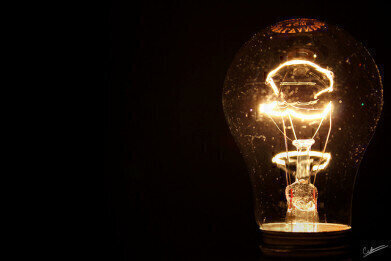
Image via Flickr Creative Commons. Photo credits: Caleb Roenigk




Digital Edition
Lab Asia Dec 2025
December 2025
Chromatography Articles- Cutting-edge sample preparation tools help laboratories to stay ahead of the curveMass Spectrometry & Spectroscopy Articles- Unlocking the complexity of metabolomics: Pushi...
View all digital editions










Events
Jan 21 2026 Tokyo, Japan
Jan 28 2026 Tokyo, Japan
Jan 29 2026 New Delhi, India
Feb 07 2026 Boston, MA, USA
Asia Pharma Expo/Asia Lab Expo
Feb 12 2026 Dhaka, Bangladesh




