News
What Happens to the Human Brain in Space?
Jul 21 2016
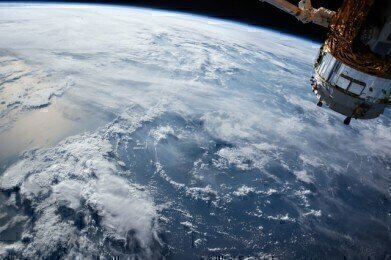
Space travel is extraordinary, but constantly developing technology has made it all the more accessible. We’re coming to know more and more about the experience of astronauts – the work they do on the space station, the stunning views but also the challenges.
One of the biggest challenges is coping mentally. Spending such a long time in the same place, completely confined, isn’t something you experience on earth. But what actually happens to the human brain in space? What do we know for certain? And is there anything we’re still not sure about?
Microgravity
First of all, there are the effects from the difference in environment. In microgravity, the vestibular system – that controls your balance and spatial orientation – is essentially lost. The brain perceives this change in environment as a feeling of constant falling. When the human eye detects no change in environment, as vision remains steady, it can lead to complete disorientation and dizziness.
Isolation
The other side of the picture is the isolation and confinement. Dealing with total confinement is a completely unique situation. The brain becomes restless because of general isolation, but the prolonged isolation of space causes a decrease in cognitive capability too.
Another problem is the lack of a recognisable ‘day’ and ‘night’ as we know it. Not only does this lead to an improper sleeping pattern, but it also causes a kind of temporal disorientation, which makes it hard to sleep and work – even in an irregular pattern.
NASA’s Behavioural Health and Performance program tries to tackle issues that may arise in this unique situation. Their 3 main risks are pretty much what’s been listed above:
- Adverse cognitive conditions
- Bad teamwork
- Sleep deprivation
The issue of teamwork arises from being around the same set of people and feeling completely confined to this. Trying to then work with these people as a team is mentally straining. To prevent or counter the issues, NASA has outlined requirements for food, non-medical strategies and sensory stimulation.
One potential solution for sensory stimulation, they suggest, is plant life. Plants can provide sensory input as well as a hobby, aesthetic appeal and even a psychological link to earth. It’s surprising how something so small can trigger such a positive psychological association, but the earth is full of these tiny bits of nature. Little Things that Run the World explores how insects are hugely important to the earth and the role they play in habitats across the world.




Digital Edition
Lab Asia Dec 2025
December 2025
Chromatography Articles- Cutting-edge sample preparation tools help laboratories to stay ahead of the curveMass Spectrometry & Spectroscopy Articles- Unlocking the complexity of metabolomics: Pushi...
View all digital editions









Events
Jan 21 2026 Tokyo, Japan
Jan 28 2026 Tokyo, Japan
Jan 29 2026 New Delhi, India
Feb 07 2026 Boston, MA, USA
Asia Pharma Expo/Asia Lab Expo
Feb 12 2026 Dhaka, Bangladesh




