News
What Happened to Tim Peake’s Body in Space?
Jul 19 2016
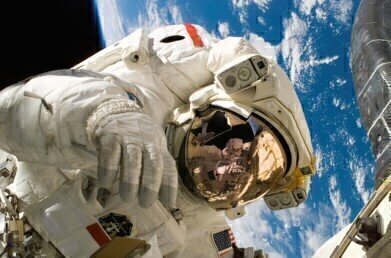
From December 2015 to June 2016, Tim Peake spent over half a year aboard the International Space Station (ISS). It will certainly have taken its toll on him mentally, but what effect will it have had on his body? There are various factors to consider, with a range of different impacts.
Upon returning to earth, the first things that Peake will have noticed are issues with walking and balance. His vestibular system – the sensory system that contributes to balance and spatial orientation – will have adapted to the completely different environment. Given that his home for the past 6 months has been almost gravity-free, this will cause him to experience some real difficulties returning to Earth.
Physical changes
The low-gravity environment of the ISS means that Tim Peake’s body will not have been in action anywhere near as much as normal during his stay. Despite an exercise regime and his partaking in the London Marathon, his muscles will have become much weaker and his bone density lowered.
Another effect of the low-gravity environment is that he will have grown slightly. Removing gravity allows the spine to stretch out without the usual gravitational compressions. This means that Tim Peake will probably be a couple of inches taller for a short period.
Light-headed
On earth, gravity contributes to the flow of blood by drawing it down to the legs. In space, without this level of gravity, blood rushes to the head a lot more. This causes some degree of dizziness for astronauts as well as a possible effect on Peake’s vision.
It doesn’t help that at the same time, astronauts often experience motion sickness. After being hurled through space for so long with no sense of orientation, a return to Earth’s gravity can feel like a big shift in motion. Even though they are temporary effects, this dizziness, vision change and motion sickness could combine to make Tim Peake feel pretty rotten for a few days.
Tim Peake will undergo a readjustment, or acclimatisation process to make sure his muscle strength, bone density and skeletal structure are restored. However, the changes are a reminder that gravity is certainly a powerful force. Entering microgravity can cause some surprising changes to your body. It’s thought that ultracentrifugation could generate forces thousands or millions of times stronger than the force of gravity. Technical Considerations for Ultracentrifugation looks at the different variables involved with Ultracentrifugation and how they can affect the process.



Digital Edition
Lab Asia Dec 2025
December 2025
Chromatography Articles- Cutting-edge sample preparation tools help laboratories to stay ahead of the curveMass Spectrometry & Spectroscopy Articles- Unlocking the complexity of metabolomics: Pushi...
View all digital editions







Events
Jan 21 2026 Tokyo, Japan
Jan 28 2026 Tokyo, Japan
Jan 29 2026 New Delhi, India
Feb 07 2026 Boston, MA, USA
Asia Pharma Expo/Asia Lab Expo
Feb 12 2026 Dhaka, Bangladesh