-

-
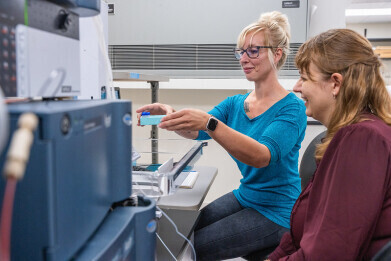 Graduate student Nikki Deiro (L) and Balbach run samples at MSU’s Mass Spectrometry and Metabolomics Core. Credit: Finn Gomez & Paul Henderson / MSU College of Natural Science
 -
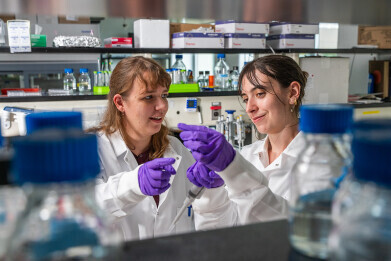 In the Balbach lab, researchers like graduate student Macy Jenks (R) are helping push the boundaries of reproductive metabolism. One analytical method used is metabolic flux analysis, which follows the pathway of glucose and other energy sources through sperm metabolism. Credit: Finn Gomez & Paul Henderson / MSU College of Natural Science
 -
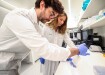
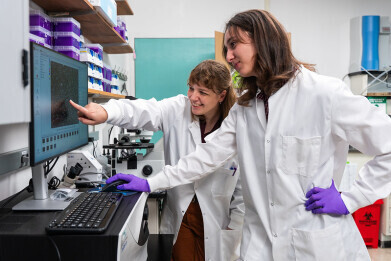 Using a special microscope, Melanie Balbach (L) and undergrad research assistant Lana Kouatli are able to track the quantities and motility of sperm in a particular sample. Credit: Finn Gomez & Paul Henderson / MSU College of Natural Science
News
Scientists uncover molecular switch that powers sperm for fertilisation and could lead to male contraceptive
Nov 05 2025
Researchers at Michigan State University have identified the enzyme-driven molecular switch that supercharges sperm metabolism during their journey to fertilise an egg. The discovery opens a path towards fertility treatments and the development of a safe, reversible, nonhormonal male contraceptive
A team at Michigan State University, East Lansing, United States has identified a molecular ‘switch’ that appears to supercharge sperm during their final sprint to an egg. The discovery could alter the framework for infertility therapies and underlie efforts to develop a safe, nonhormonal male contraceptive.
“Sperm metabolism is special since it’s only focused on generating more energy to achieve a single goal: fertilisation,” said Dr. Melanie Balbach, assistant professor in the Department of Biochemistry and Molecular Biology and senior author of the study.
In mammals, sperm reside in a low-energy state prior to ejaculation. As they transit through the female reproductive tract, they undergo a sequence of changes that empower complex motility, membrane transformations and ultimately enable fertilisation. These include vigorous swimming patterns and alterations to membranes that interact with the egg.
“Many types of cells undergo this rapid switch from low to high energy states, and sperm are an ideal way to study such metabolic reprogramming,” Balbach said. She has long pursued investigations into sperm metabolism and in 2023 she relocated her research to Michigan State.
Balbach’s postdoctoral research at Weill Cornell Medicine, New York, saw her leading a pivotal experiment in which the inhibition of a critical sperm enzyme rendered mice temporarily infertile. That finding signalled the possibility of a male contraceptive that would not rely on hormones.
Metabolism is central to sperm function and although scientists have long known that fertilisation-related changes in sperm demand vast energy, the mechanism by which sperm adjust to that demand had remained obscure – until now.
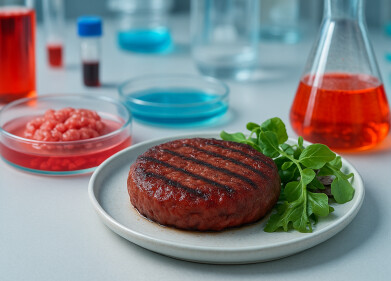
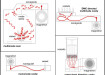
In collaboration with researchers at Memorial Sloan Kettering Cancer Center, in New York, and the Van Andel Institute, in Grand Rapids, Michigan, Balbach’s group devised a refined technique that allowed tracking of glucose metabolism inside sperm. Glucose is absorbed from the surroundings and functions as a key metabolic fuel.
By tracing glucose’s journey within sperm, the team observed sharp metabolic distinctions between dormant and activated sperm.
“You can think of this approach like painting the roof of a car bright pink and then following that car through traffic using a drone,” Balbach explained.
“In activated sperm, we saw this painted car moving much faster through traffic while preferring a distinct route and could even see what intersections the car tended to get stuck at,” she added.
Using Michigan State’s Mass Spectrometry and Metabolomics Core, the researchers revealed a detailed map of the multi-step, high-energy metabolic programme needed for sperm to achieve fertilisation. Among their findings was that an enzyme called aldolase plays a key role in converting glucose into usable energy. They also discovered that sperm mobilise internal energy reserves already onboard as they begin their journey.
Further, the experiments showed that certain enzymes act as regulators of glucose flow, akin to traffic controllers.
Looking ahead, Balbach intends to investigate how sperm deploy different substrates – such as glucose and fructose – to match energy demands. That line of research could influence diagnostics and treatments in reproductive health.
With infertility affecting about one in six individuals worldwide, Balbach considers metabolic analysis of sperm a promising route to improve assisted reproduction and better diagnose trouble with sperm function. Her team regards the findings as a stepping stone toward a metabolism-based contraceptive strategy.
“Better understanding the metabolism of glucose during sperm activation was an important first step and now we’re aiming to understand how our findings translate to other species, like human sperm,” Balbach said.
“One option is to explore if one of our ‘traffic-control’ enzymes could be safely targeted as a nonhormonal male or female contraceptive,” she added.
Traditional approaches to male contraception have tended to block sperm production. That method is poorly suited to on-demand fertility control and hormonal methods can carry significant side effects. The work led by Balbach and collaborators is forging a complementary direction: an inhibitor-based, nonhormonal approach that could grant male users temporary infertility with minimal side effects.
“Right now, about 50 per cent of all pregnancies are unplanned and this would give men additional options and agency in their fertility,” Balbach said.
“Likewise, it creates freedom for those using female birth control, which is hormone-based and highly prone to side effects. I’m excited to see what else we can find and how we can apply these discoveries,” she concluded.
For further reading please visit: 10.1073/pnas.2506417122

Digital Edition
Lab Asia Dec 2025
December 2025
Chromatography Articles- Cutting-edge sample preparation tools help laboratories to stay ahead of the curveMass Spectrometry & Spectroscopy Articles- Unlocking the complexity of metabolomics: Pushi...
View all digital editions






Events
Jan 21 2026 Tokyo, Japan
Jan 28 2026 Tokyo, Japan
Jan 29 2026 New Delhi, India
Feb 07 2026 Boston, MA, USA
Asia Pharma Expo/Asia Lab Expo
Feb 12 2026 Dhaka, Bangladesh