Research news
Researchers uncover natural gut defence to reduce antibiotic resistance in infants
Oct 31 2025
A team at the Technical University of Denmark has identified a natural mechanism in the infant gut that may help to curb antibiotic-resistant bacteria by nourishing beneficial bifidobacteria from the earliest months of life
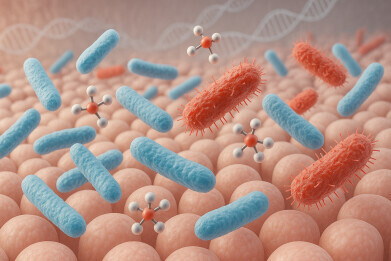
Infants in their first year of life – who carry high levels of antibiotic-resistant bacteria – are at increased risk of poor outcomes if they then require treatment with antibiotic drugs for infectious diseases. A research team at the Technical University of Denmark (DTU), Lyngby, in the north of Copenhagen, has identified a natural strategy to counter this risk by supporting a subgroup of bifidobacteria that naturally occurs in the gut.
The study presents a novel approach to limit antibiotic resistance – to promote the beneficial bacteria that help to suppress resistant strains from the earliest weeks of life. The research revealed how certain bifidobacteria can naturally inhibit the growth and genetic exchange of antibiotic-resistant microbes within the developing gut microbiome.
“We [have] documented that special lactic acids produced by bifidobacteria play a key role in keeping antibiotic-resistant bacteria at bay which is important for reducing the risk of resistance genes being transferred to other bacteria in the gut.
“Genes [coding resistance] can jump from one type of bacteria to another, and the more bacteria with resistance that are present in the gut, the greater the chance that they will encounter other bacteria and transfer resistance to them,” said Dr. Ioanna Chatzigiannidou, postdoctoral researcher from DTU Bioengineering, who participated in the project.
The study analysed 547 stool samples collected from 56 children and their mothers over a five-year period.
Professor Susanne Brix Pedersen, head of the research project at DTU Bioengineering, said that this knowledge could soon be translated into practical clinical use once a rapid test has been developed to identify whether infants naturally possess these protective bifidobacteria.
“It will be very important if we can strengthen their ability to handle antibiotic-resistant bacteria from the first weeks of a child's life.
“This is especially true in the first year of life, when infants are [at risk when] exposed to many infectious diseases due to an immature immune system.
“It is a matter of life and death if they have many antibiotic-resistant bacteria – for instance the pneumonia bacterium Klebsiella pneumoniae – which makes it difficult to treat pneumonia with certain antibiotics,” said Professor Brix Pedersen.
The research forms part of a wider body of work at DTU to understand and prevent antibiotic resistance in early life. Professor Brix Pedersen also participates in the BEGIN study, based in the paediatric department at Aarhus University Hospital, which investigates whether dietary supplements containing beneficial bifidobacteria can strengthen the immune systems of newborn babies.
So far, the trial has enrolled 300 mothers and their infants, who receive either a placebo or a supplement containing the bifidobacteria strain identified in the DTU study.
Antibiotic-resistant bacteria that cannot be eliminated with conventional drugs represent an escalating global threat. Although Denmark has lower overall resistance rates than many countries, experts have observed concerning trends in infant infections.
National monitoring of antibiotic use and resistance in humans and animals takes place through the Danish Integrated Antimicrobial Resistance Monitoring and Research Programme (DANMAP), which is jointly administered by the Statens Serum Institut – Denmark’s national public health institute – and DTU Food.
Denmark’s longstanding restrictive approach to antibiotic use has helped to limit observed levels of antimicrobial resistance, yet antibiotic-resistant bacteria have been detected in Danish infants, showing that the problem still exists.
The Danish Health Authority advises that infants should be exclusively breastfed until six months of age, with partial breastfeeding continued until 12 months or longer. Breastfeeding and breast milk provide broad health benefits, including lower infant mortality and protection against acute infections such as diarrhoea, pneumonia and ear infections, as well as a reduced risk of childhood obesity.
For further reading please visit: 10.1038/s41467-025-63401-6



Digital Edition
Lab Asia Dec 2025
December 2025
Chromatography Articles- Cutting-edge sample preparation tools help laboratories to stay ahead of the curveMass Spectrometry & Spectroscopy Articles- Unlocking the complexity of metabolomics: Pushi...
View all digital editions







Events
Jan 21 2026 Tokyo, Japan
Jan 28 2026 Tokyo, Japan
Jan 29 2026 New Delhi, India
Feb 07 2026 Boston, MA, USA
Asia Pharma Expo/Asia Lab Expo
Feb 12 2026 Dhaka, Bangladesh