Research news
Fertility gene PRDM9 helps glioblastoma cells evade chemotherapy in world-first study
Dec 15 2025
Researchers at the University of Sydney have identified how a fertility gene, PRDM9, enables drug-tolerant persister cells in glioblastoma to survive chemotherapy by rerouting cholesterol metabolism, and have reported that combined targeting of PRDM9 and cholesterol synthesis could delay or prevent tumour relapse
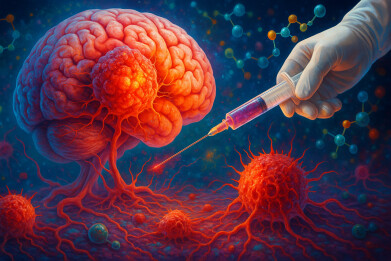
World-first research has identified a molecular mechanism that may explain why glioblastoma almost always returns after treatment and has provided mechanistic clues for future therapies that University of Sydney scientists now intend to investigate with an Australian industry partner.
Glioblastoma is one of the most lethal brain cancers, with a median survival of about 15 months. Despite surgery and chemotherapy, more than 1,250 clinical trials in the past two decades have failed to deliver substantial gains in survival. Accounting for about half of all brain tumours, glioblastoma leads to the deaths of up to 200,000 people globally each year. Even after surgery, radiation and chemotherapy, recurrence is almost universal. Clinicians refer to this state as ‘minimal residual disease’, in which a small number of concealed cancer cells survive treatment and eventually re-establish the tumour.
In the study the researchers showed that a small population of drug-tolerant cells – known as persister cells – rewired its metabolism to withstand chemotherapy. These cells used an unexpected ally as a form of molecular concealment: a fertility gene called PRDM9 (PR/SET domain 9), previously known only for its role in reproductive cells at the very start of egg and sperm formation, long before fertilisation.
“This is a world-first discovery that alters what we know about glioblastoma,” said Professor Lenka Munoz from the Charles Perkins Centre at the University of Sydney.
“By uncovering how these cancer cells recruit a fertility gene to survive treatment, we have created a foundation for novel approaches that could lead to safer and more effective therapies,” she added.
The team found that, under the stress of chemotherapy, glioblastoma cells hijacked PRDM9 to drive cholesterol production, which enabled persister cells to tolerate damage, later permitting tumour regrowth. By contrast, prior work had associated PRDM9 only with the control of genetic recombination in germ cells, not with malignant tissue.
“For patients and their families who face glioblastoma, recurrence is almost inevitable. This research provides a rational basis for novel strategies in future where none previously existed,” Professor Munoz said.
The researchers reported that inhibition of PRDM9 – or depletion of cholesterol supply – eradicated persister cells in laboratory and animal models. When they combined this approach with chemotherapy, survival improved markedly in mouse models, with suppression of tumour regrowth in preclinical experiments.
“Chemotherapy kills most cancer cells but in glioblastoma a small fraction survives and can regenerate the tumour. We think we have identified the survival mechanism of these cells and potential ways to disrupt it,” Professor Munoz said.
To explore translational options, the group developed a novel brain-penetrant chemotherapy agent – WJA88 – and paired it with a cholesterol-lowering drug that has already been tested in humans. This combination reduced tumour volume and extended survival in preclinical glioblastoma models with minimal observed side effects.
“PRDM9 is not active in most normal tissues which makes it a highly selective and promising target for cancer therapy,” said Dr George Joun, first author and postdoctoral research associate in the School of Medical Sciences in the Faculty of Medicine and Health at the University of Sydney.
“If we can eliminate the final cancer cells that persist after treatment, we can prevent glioblastoma from returning and substantially improve outcomes for patients and families,” he said.
The researchers have emphasised that this is the first report to link the PRDM9 gene to cancer, which suggests that it could support safer and more targeted treatment strategies. Professor Munoz and colleagues suspect that a similar mechanism may operate in other hard-to-treat malignancies and they plan to test the approach in ovarian cancer models next.
“Cancer relapse remains one of the most difficult problems in oncology. Our research shows that relapse may be preventable in preclinical models if we directly target persister cells,” Professor Munoz said.
The University of Sydney team has now entered a collaboration with Australian biotechnology company Syntara to develop PRDM9 inhibitors for further testing in animal models, with the long-term aim to progress to human studies. The next step will be to determine whether these inhibitors can remove persister cells and stop glioblastoma from returning. Clinical evaluation in humans is likely to remain several years away and will depend on successful completion of preclinical safety and efficacy studies.
The findings have reinforced calls from experts to re-focus cancer research on rare, treatment-resistant cell populations and on events that follow the end of therapy.
“We now need to look beyond the main mass of the tumour and study the rare persister cells that drive recurrence and we must examine what happens after treatment ends rather than only during drug exposure,” said Professor Munoz.
For further reading please visit: 10.1038/s41467-025-65888-5



Digital Edition
Lab Asia Dec 2025
December 2025
Chromatography Articles- Cutting-edge sample preparation tools help laboratories to stay ahead of the curveMass Spectrometry & Spectroscopy Articles- Unlocking the complexity of metabolomics: Pushi...
View all digital editions









Events
Jan 21 2026 Tokyo, Japan
Jan 28 2026 Tokyo, Japan
Jan 29 2026 New Delhi, India
Feb 07 2026 Boston, MA, USA
Asia Pharma Expo/Asia Lab Expo
Feb 12 2026 Dhaka, Bangladesh




