-
-
 Dr. Amandine Chaix, senior author of the study. Credit: Charlie Ehlert / University of Utah Health
Research news
Mouse study raises concerns about long-term ketogenic diet effects on obesity and type 2 diabetes
Oct 30 2025
A study from University of Utah Health has revealed that sustained use of a ketogenic diet caused severe metabolic disturbances in mice, including fatty liver disease and impaired regulation of blood sugar levels
A research team at University of Utah Health has published a study that indicates prolonged adherence to a classic ketogenic diet may pose serious metabolic health risks in mice and that the findings may prompt closer scrutiny of its use in humans.
The ketogenic diet is a very high-fat, very low-carbohydrate regimen originally developed to treat epilepsy. Under the diet, the body enters a metabolic state called ketosis, in which it produces ketone bodies from fat to serve as an alternative fuel for the brain when glucose availability is reduced.
Over time the diet also gained popularity for weight loss and management of conditions such as obesity and type 2 diabetes. The new study, however, shows that when male and female adult mice were maintained on a ketogenic diet long-term, they developed significant metabolic abnormalities despite avoiding weight gain.
“We’ve seen short-term studies and those just looking at weight but not really any studies looking at what happens over the longer term or with other facets of metabolic health,” said Dr. Molly R. Gallop, who led the study during her postdoctoral fellowship in nutrition and integrative physiology.
To fill this gap, the research team placed both male and female mice on one of four diet types: a high-fat Western diet, a low-fat high-carbohydrate diet, a classic ketogenic diet in which almost all calories derived from fat and a protein-matched low-fat diet. The mice were permitted to eat freely for nine months or longer, a period equivalent to a substantial portion of a mouse’s lifespan.
During the intervention the team tracked body weight, food consumption, blood fat profiles, liver fat accumulation, blood glucose and insulin levels and the activity of genes in the insulin-producing pancreatic cells. They then used advanced microscopy to explore the cellular mechanisms behind observed changes.
The ketogenic diet prevented substantial weight gain compared with the high-fat Western diet: both male and female mice on the ketogenic diet maintained lower body weights, with gains predominantly due to increased fat rather than lean mass.
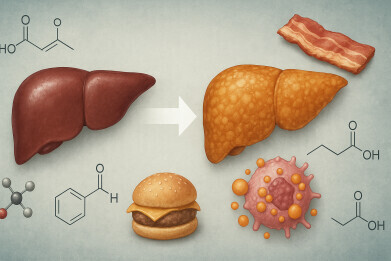
However, despite this apparent weight control, the mice on the ketogenic diet developed severe metabolic complications. One major finding was liver fat accumulation – or fatty liver disease – especially in the male mice, accompanied by poorer liver function. Female mice, by contrast, did not show a significant build-up of liver fat.
“One thing that’s very clear is that if you have a really high-fat diet, the lipids have to go somewhere, and they usually end up in the blood and the liver,” said Dr. Amandine Chaix, senior author of the study.
“The ketogenic diet was definitely not protective in the sense of fatty liver disease,” she added.
Another concerning outcome was impaired regulation of blood glucose. After two to three months on the ketogenic diet, the mice displayed low baseline levels of blood glucose and insulin. But when given a modest carbohydrate challenge, their blood glucose levels rose substantially and remained elevated far longer than expected, because their pancreatic cells failed to secrete sufficient insulin.
Microscopy revealed that pancreatic cells in the ketogenic diet group exhibited signs of stress in protein trafficking and secretory machinery, likely owing to the lipid-rich environment. The researchers infer this stress underlies the impaired insulin response. They nonetheless note that when the mice were removed from the ketogenic diet, the glucose-regulation problems reversed, suggesting the effects may not be permanent.
The authors emphasised that results from mice do not map directly to humans but they said their findings reveal previously unexplored long-term risks of a sustained ketogenic diet.
“I would urge anyone to talk to a health-care provider if they’re thinking about going on a ketogenic diet,” Gallop cautioned.
For further reading please visit: 10.1126/sciadv.adx2752




Digital Edition
Lab Asia Dec 2025
December 2025
Chromatography Articles- Cutting-edge sample preparation tools help laboratories to stay ahead of the curveMass Spectrometry & Spectroscopy Articles- Unlocking the complexity of metabolomics: Pushi...
View all digital editions







Events
Jan 21 2026 Tokyo, Japan
Jan 28 2026 Tokyo, Japan
Jan 29 2026 New Delhi, India
Feb 07 2026 Boston, MA, USA
Asia Pharma Expo/Asia Lab Expo
Feb 12 2026 Dhaka, Bangladesh