Research news
Chemotherapy drug transformed by SNA nanotherapy into powerful targeted cancer treatment
Oct 29 2025
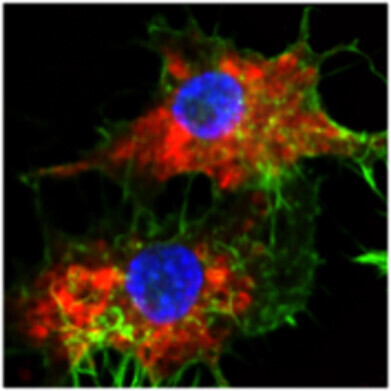
Scientists at Northwestern University have redesigned the chemotherapy drug 5-fluorouracil as a spherical nucleic acid nanostructure to improve solubility, tumour targeting and safety. In animal studies, the modified drug was absorbed more efficiently by leukaemia cells and showed dramatically enhanced efficacy without harming healthy tissue
In a promising advance for cancer treatment, scientists at Northwestern University, Evanston, Illinois, have reported the re-engineering of a widely used chemotherapy drug which improved its solubility, effectiveness and safety profile. The research team manipulated the molecular structure of the drug and integrated it into a spherical nucleic acid (SNA) nanostructure – consisting of a nanoparticle core surrounded by DNA strands – thereby converting a poorly soluble, weakly performing agent into a potent, targeted therapy that leaves healthy cells largely unaffected.
The investigators applied the novel therapy to a small-animal model of acute myeloid leukaemia (AML), a rapidly progressing blood cancer known for its resistance to conventional chemotherapy. They observed that, relative to the standard agent, the SNA-based drug entered leukaemia cells 12.5 times more efficiently, killed them up to 20,000 times more effectively and reduced cancer progression 59-fold – all while producing no detectable side effects. The research therefore suggests a markedly improved therapeutic window and enhanced specificity.
The work exemplifies the potential of the field of structural nanomedicine, in which scientists design nanomaterials that exploit not only composition but precise architecture in order to optimise interactions with the human body. With seven SNA-based therapies currently in clinical trials, the researchers believe that the approach could lead to potent treatments and vaccines for cancers, infectious diseases, neurodegenerative disorders and autoimmune conditions.

ASCO'25: major advances in oncology therapies, research
The 2025 Annual Meeting of the American Society of Clinical Oncology (ASCO), this year held in Chicago, Illinois from May 30 to June 2, showcased a series of pivotal clinical trials and therapeutic... Read More
“We have demonstrated in animal models that we can stop tumours in their tracks,” said Dr. Chad A. Mirkin, the study’s lead investigator.
“If this translates to human patients, it is a really exciting advance. It would mean more effective chemotherapy, better response rates and fewer side-effects. That is always the goal with any sort of cancer treatment,” he added.
Professor Mirkin, a pioneer in chemistry and nanomedicine, holds the George B. Rathmann Chair of Chemistry and is Professor of Chemical and Biological Engineering, Biomedical Engineering, Materials Science and Engineering and Medicine at Northwestern University. He is also founding director of the International Institute for Nanotechnology and a member of the Robert H. Lurie Comprehensive Cancer Center of Northwestern University.
In this study, the team focused on the conventional chemotherapy drug 5-fluorouracil (5-FU), which often fails to reach cancer cells efficiently and also damages healthy tissues – leading to side-effects such as nausea, fatigue and in rare instances heart failure.
According to Professor Mirkin, the problem lies not with the drug itself but with the manner in which the body processes it. Because 5-FU is poorly soluble – dissolving at less than 1 per cent in many biological fluids – it clumps or remains solid and is inefficiently absorbed.
“We all know that chemotherapy is often horribly toxic. But a lot of people don’t realise it is also often poorly soluble, so we have to find ways to transform it into water-soluble forms and deliver it effectively,” he noted.
To develop a more effective delivery system, the team turned to SNAs. SNAs are globular nanostructures that the Mirkin group originally invented at Northwestern University; they typically comprise a nanoparticle core decorated with a dense shell of DNA or RNA. In prior work, the group demonstrated that cells recognise SNAs and internalise them via scavenger receptor-mediated uptake. In the present study, they constructed SNAs in which 5-FU molecules were chemically integrated into DNA strands forming the shell of each nanoparticle.
“Most cells have scavenger receptors on their surfaces,” said Professor Mirkin.
“But myeloid cells over-express these receptors, so there are even more of them.
“If they recognise a molecule, then they will pull it into the cell. Instead of having to force their way into cells, SNAs are naturally taken up by these receptors,” he explained.
As anticipated, the structural redesign transformed 5-FU’s behaviour. Unlike free-floating and unstructured chemotherapy molecules, the SNA-form was readily recognised and absorbed by myeloid cells. Once internalised, enzymes broke down the DNA shell and released the drug molecules, which then killed the cancer cell from within. In the animal experiments the therapy eliminated leukaemia cells to near-completion in the blood and spleen and significantly extended survival. Because the SNAs selectively targeted AML cells, healthy tissues remained unharmed.
“Today’s chemotherapeutics kill everything they encounter,” Professor Mirkin said.
“So, they kill the cancer cells but also a lot of healthy cells. Our structural nanomedicine preferentially seeks out the myeloid cells. Instead of overwhelming the whole body with chemotherapy, it delivers a higher, more focused dose exactly where it is needed,” he concluded.
Looking ahead, Mirkin’s team plan to test the strategy in a larger cohort of small-animal models, then proceed to larger animal models and ultimately to human clinical trials – once appropriate funding is secured. If these steps succeed, the work may mark a significant step towards safer and more effective chemotherapy.
For further reading please visit: 10.1021/acsnano.5c16609
For the original accompanying video click here



Digital Edition
Lab Asia Dec 2025
December 2025
Chromatography Articles- Cutting-edge sample preparation tools help laboratories to stay ahead of the curveMass Spectrometry & Spectroscopy Articles- Unlocking the complexity of metabolomics: Pushi...
View all digital editions









Events
Jan 21 2026 Tokyo, Japan
Jan 28 2026 Tokyo, Japan
Jan 29 2026 New Delhi, India
Feb 07 2026 Boston, MA, USA
Asia Pharma Expo/Asia Lab Expo
Feb 12 2026 Dhaka, Bangladesh




