Research news
COVID-19 vaccines received during pregnancy has been linked to lower risk of severe illness and premature births
Dec 16 2025
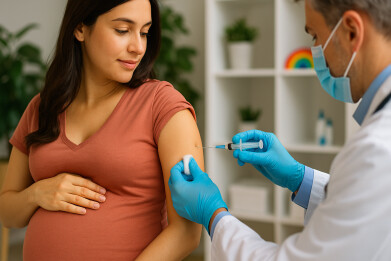
A University of British Columbia-led analysis of nearly 20,000 pregnancies across Canada has reported that COVID-19 vaccination was associated with markedly lower risks of hospitalisation, admission to intensive care and preterm birth, with protective effects that persisted as SARS-CoV-2 shifted from Delta to Omicron and subsequent sublineages
People who received a COVID-19 vaccine while pregnant were far less likely to experience severe illness or to deliver prematurely, according to a major study led by the University of British Columbia (UBC, Vancouver, Canada. Drawing on population-based health data from nine provinces and one territory across Canada, the researchers analysed outcomes from nearly 20,000 pregnancies affected by SARS-CoV-2 infection between April 2021 and December 2022.
The study has reported that vaccination was strongly associated with lower risks of hospitalisation, admission to intensive care and delivery before 37 weeks’ gestation. These associations remained evident as the virus evolved from the Delta variant to Omicron, and with Omicron’s sublineages that have continued to circulate widely.
“COVID-19 vaccination protects pregnant people and their babies from serious complications,” said Dr Deborah Money, professor of obstetrics and gynaecology at UBC and senior author of the study.
“Even as the virus evolved, vaccination continued to offer substantial benefits for both mother and child,” she added.
The work was conducted through the national CANCOVID-Preg surveillance network and represents one of the largest datasets, anywhere, to examine COVID-19 outcomes in pregnancy. The investigators reported that vaccinated people were about 60 per cent less likely to require hospital care and about 90 per cent less likely to require intensive care than those who were unvaccinated at the time of infection.
The analysis also found that vaccination was associated with fewer preterm births. During the period dominated by Delta, vaccination was linked to a 20 per cent reduction in the risk of preterm delivery, while during the Omicron period the associated reduction rose to 36 per cent. The researchers also reported that vaccination during pregnancy, rather than before conception, was associated with even lower rates of preterm birth and stillbirth.
“There is never a bad time to be vaccinated – whether you’re currently pregnant or planning a pregnancy,” said Dr Elisabeth McClymont, assistant professor in UBC’s department of obstetrics and gynaecology and lead author of the study.
“But our data suggest there may be added benefits to receiving the vaccine during pregnancy,” she added.
The findings have arrived amid continued discussion about vaccine guidance for pregnant people in some jurisdictions. In the United States, the Advisory Committee on Immunization Practices has not included a specific recommendation for COVID-19 vaccination during pregnancy in its recently updated adult immunisation schedule.
The World Health Organization has continued to recommend COVID-19 vaccination for pregnant people. The investigators said the findings should help to inform these policy discussions and support clinical decision-making.
“The body of evidence is overwhelmingly clear: COVID-19 vaccination is safe and effective in pregnancy.
“These latest findings provide critical information for pregnant women and their care providers and strongly support public health guidance that recommends vaccination during pregnancy,” said Dr Money.
To reduce the likelihood of confounding, the researchers adjusted for factors including age, body mass index and pre-existing conditions such as hypertension and diabetes. After these adjustments, vaccination remained associated with markedly lower risks of hospitalisation.
Beyond COVID-19, the authors argued that the study underlined the importance of including pregnant people in vaccine research and preparedness planning for future respiratory-virus outbreaks, in order to reduce avoidable harms for both pregnant individuals and newborns.
“Pregnancy is a unique period of vulnerability but also of opportunity for prevention,” Dr McClymont said.
“This study reinforces how vaccination can make a real difference for maternal and newborn health,” concluded.
For further reading please visit: 10.1001/jama.2025.21001


Digital Edition
Lab Asia Dec 2025
December 2025
Chromatography Articles- Cutting-edge sample preparation tools help laboratories to stay ahead of the curveMass Spectrometry & Spectroscopy Articles- Unlocking the complexity of metabolomics: Pushi...
View all digital editions






Events
Jan 21 2026 Tokyo, Japan
Jan 28 2026 Tokyo, Japan
Jan 29 2026 New Delhi, India
Feb 07 2026 Boston, MA, USA
Asia Pharma Expo/Asia Lab Expo
Feb 12 2026 Dhaka, Bangladesh