-
-
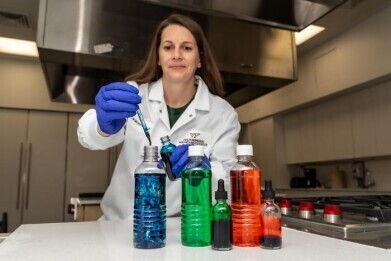 Dr. Mary Elizabeth Baugh, a Virginia Tech research scientist with the Fralin Biomedical Research Institute at VTC and the study’s first author, looked at how flavors such as acerola, bilberry, and horchata paired with nutrient flavors in a small group of volunteers. Credit: Clayton Metz/Virginia Tech
Research news
Blood glucose control found to alter gut–brain signals that shape food selection choices
Sep 19 2025
Researchers at the Fralin Biomedical Research Institute have found that normal-range differences in blood glucose can alter gut–brain signalling and shape food preferences, with implications for obesity and metabolic health
“We have to learn what we are going to eat, and one factor that’s less well studied is post-ingestive signals – our gut talking to our brain – teaching us what to eat,” said Dr. Alexandra G. DiFeliceantonio, who led a study at the Fralin Biomedical Research Institute at Virginia Tech Carilion, Roanoke, Virginia. She is interim co-director of the institute’s Centre for Health Behaviours Research.
The research has suggested that measures of glycaemic control, such as fasting glucose and HbA1C, were more closely linked to how much participants’ food preferences shifted than their body-mass index. None of the participants had been diagnosed with diabetes or prediabetes.
“We wanted to know whether the gut-to-brain system for relaying information about nutrient learning might be different for people who have obesity and for those with differences in glycaemic control,” DiFeliceantonio said.
“If it’s different, we should be using different targeted strategies to help them change their diet,” she added.
Dr. Mary Elizabeth Baugh, who was the first author of the study and a research scientist at the institute, explained that animal studies have shown gut-to-brain signalling to be essential but such mechanisms have been harder to demonstrate in people because of varied eating histories and preferences.
“They’re actually necessary, beyond just oral taste signals, to guide food preference,” said Baugh.
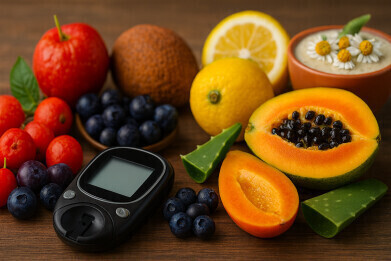
To overcome that challenge, the researchers introduced 26 adults from Virginia to 10 unfamiliar flavours, including acerola, bilberry, horchata, lulo, yuzu, papaya, chamomile, aloe vera, mamey and maqui berry. Participants tasted and rated the flavours, and then two of the least familiar and least liked were selected for testing. Each was delivered as a sweetened drink: one with calories, the other without. Later, both were matched for sweetness using only artificial sweeteners.
As expected, some participants learned to prefer the flavour paired with calories, even when sugar had been removed.
“And that’s because of post-ingestive mechanisms, not anything related to sweetness,” Baugh said.
But responses varied. Individuals with higher fasting glucose or HbA1C within the normal range were less likely to favour calorie-paired flavours.
“One of the most interesting findings was that measures of body weight status – body-mass index, waist-to-hip ratio and waist circumference – were not related to individual responses,” Baugh said.
“We need more data, but this points to potentially impaired learning based on post-ingestive signals. With higher values of glycaemic control, even within the normal range, there could potentially be some disruption in gut-brain signalling,” she added.
DiFeliceantonio concurred: “Even if you are a person with a healthy range BMI and a healthy range A1C, fluctuations in your blood glucose are still actually influencing what you eat in a way that you might not be aware of.”
Baugh has stressed that this was a small study and that larger cohorts are needed. Recruitment is now under way to explore glycaemic control and body weight across a wider spectrum.
“Ultimately, understanding the mechanisms that influence food choice and eating behaviours can be really impactful in developing different pharmacological or behavioural strategies for obesity treatment – and even prevention,” she said.
For further reading please visit: 10.1016/j.physbeh.2025.115037



Digital Edition
Lab Asia Dec 2025
December 2025
Chromatography Articles- Cutting-edge sample preparation tools help laboratories to stay ahead of the curveMass Spectrometry & Spectroscopy Articles- Unlocking the complexity of metabolomics: Pushi...
View all digital editions










Events
Jan 21 2026 Tokyo, Japan
Jan 28 2026 Tokyo, Japan
Jan 29 2026 New Delhi, India
Feb 07 2026 Boston, MA, USA
Asia Pharma Expo/Asia Lab Expo
Feb 12 2026 Dhaka, Bangladesh




