News
Type 2 diabetes found to double risk of sepsis says large Australian study
Oct 10 2025
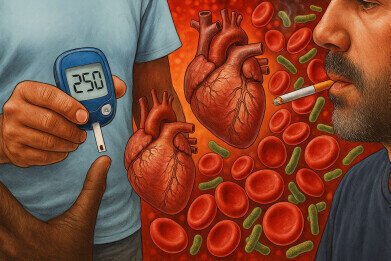
High blood sugar, smoking and other chronic conditions play a role in the development of sepsis in individuals with type 2 diabetes
People living with type 2 diabetes (T2DM) may face double the risk of sepsis compared with those without the condition, according to a long-term community-based study presented at the Annual Meeting of the European Association for the Study of Diabetes, held in Vienna between 15–19 September 2025. The findings have shown that younger adults and men are particularly vulnerable.
“An association between type 2 diabetes and sepsis has been noted in some earlier studies,” said Professor Wendy Davis from the University of Western Australia, Perth, who was the study’s lead author.
“Our study, in a large community-based sample of adults, confirmed a strong relationship even after adjustment for a number of potential risk factors and the competing risk of death from unrelated causes, which may have occurred in people at high risk of sepsis before they developed sepsis, thus leading to overestimation of the incidence of sepsis if ignored.”
Sepsis arises as a severe, life threatening and uncontrolled response to infection, which can trigger organ failure and critical illness. More than 10% of those who develop sepsis die, making it a leading cause of mortality worldwide.
Although previous investigations have suggested that people with T2DM face between two and six times the risk of sepsis, contemporary data have remained limited.
“The best way to prevent sepsis is to quit smoking, normalise high blood sugar, and prevent the onset of the microvascular and macrovascular complications of diabetes,” Davis added.
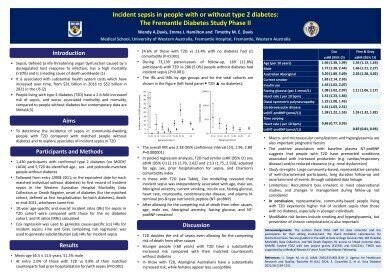
To address this gap, the research team analysed outcomes from the Fremantle Diabetes Study Phase II, a longitudinal observational project based in a multi-ethnic urban community of 157,000 people in Western Australia. The study enrolled 1,430 adults with T2DM between 2008 and 2011, who were matched with 5,720 individuals without the condition according to age, sex, and postcode. The mean age at enrolment was 66 years, with men comprising 52% of participants.
Health records were linked until the first record of sepsis, new onset diabetes in the control group, death or the end of 2021. At the time of enrolment, 2 per cent of those with diabetes had a previous hospitalisation for sepsis compared with 0.8 per cent of the control cohort. Across an average follow-up of ten years, 169 participants with diabetes – 11.8 per cent – and 288 individuals without the condition – 5 per cent – developed sepsis.
After adjusting for confounding factors which included age, sex, prior hospitalisation and co-existing chronic conditions, T2DM was associated with double the risk of sepsis. In the 41–50 age bracket, the relative risk increased 14.5-fold.
Further analysis identified several independent risk factors among those with T2DM, including older age, male sex, Aboriginal ancestry, current smoking, insulin use, high fasting glucose levels, elevated heart rate, distal symmetrical polyneuropathy, cerebrovascular disease and increased levels of the cardiac biomarker NT-proBNP. Indigenous Australians with T2DM were three times more likely to develop sepsis, while smoking raised the risk by 83 per cent.
“Our study identifies several modifiable risk factors, including smoking, high blood sugar and complications of diabetes, underscoring that there are steps [patients] can take to potentially lower their risk of sepsis,” said Professor Davis.
The researchers noted that elevated blood sugar can impair immune function, while diabetes predisposes individuals to infections such as urinary tract infections, pneumonia and skin infections that are more likely to escalate into sepsis. Vascular damage and neuropathy, both common in T2DM, can also contribute to susceptibility.
As an observational study, the findings cannot establish causality. The investigators acknowledged that unmeasured variables may have influenced outcomes, that participants might have been healthier than non-participants, and that changes in the management of diabetes during follow-up were not captured.
Click here to read the abstract in full.




Digital Edition
Lab Asia Dec 2025
December 2025
Chromatography Articles- Cutting-edge sample preparation tools help laboratories to stay ahead of the curveMass Spectrometry & Spectroscopy Articles- Unlocking the complexity of metabolomics: Pushi...
View all digital editions










Events
Jan 21 2026 Tokyo, Japan
Jan 28 2026 Tokyo, Japan
Jan 29 2026 New Delhi, India
Feb 07 2026 Boston, MA, USA
Asia Pharma Expo/Asia Lab Expo
Feb 12 2026 Dhaka, Bangladesh




