-

-
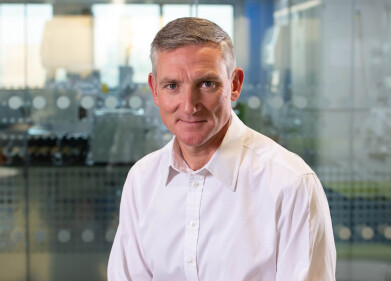
 Johan Jakobsson is professor of neuroscience at the Lund University Faculty of Medicine, where he leads the Laboratory of Molecular Neurogenetics. His lab is affiliated with the Lund Stem Cell Center, the Lund University Cancer Center and the strategic research area’s MultiPark and StemTherapy. Credit: Tove Smeds
News
Repetitive DNA drives human brain development and sheds light on neurological disease
Sep 02 2025
Long dismissed as ‘junk’, repetitive DNA has now been shown to play a vital role in shaping the developing human brain. Researchers at Lund University, Scania, Sweden, have now revealed that these hidden sequences regulate gene activity, influence evolution and may hold clues to neurodevelopmental and neuropsychiatric disorders
Conventional wisdom has long dismissed large stretches of human DNA as ‘junk’ which was thought to serve no meaningful purpose. However, researchers at Lund University have now shown that the repetitive portion of the human genome plays an active role during early brain development.
DNA carries the complete set of instructions that an organism requires to develop and survive, yet only about 1.5% of it consists of protein-coding genes that determine traits such as eye colour, height or hair type. The remaining 98.5%, previously written off as ‘junk DNA’ has increasingly been recognised as an important part of the genome that regulates when and where genes are switched on, thereby influencing development, cellular processes and even evolution.
Researchers at Lund University have explored this overlooked component of the genome. Their study has revealed how particular sequences within the non-coding genome shape the developing human brain.
“An underlying question in my lab is: how did the human brain become human?”
“We wanted to know which parts of the genome contribute to uniquely human functions, and how this connects to brain disorders,” said D. Johan Jakobsson, a professor in the Department of Experimental Medical Sciences and head of the Laboratory of Molecular Neurogenetics.
Jakobsson and his colleagues, in collaboration with scientists at the University of Copenhagen in Denmark, the University of Cambridge in the UK and New York University in the US, look into the repetitive sequences known as ‘transposable elements’. Sometimes described as ‘jumping genes’ these sequences can move within the genome which has made them difficult to study.
Using induced pluripotent stem cells (iPSCs) and brain organoids – simplified, miniature models of the human brain grown in the laboratory – the researchers examined one particular family of transposable elements called LINE-1 (L1) transposons. iPSCs are a type of stem cell that is created by reprogramming adult cells – such as skin or blood cells – back into an embryonic-like state.
Then by combining CRISPR gene-editing with advanced sequencing methods the team was able to switch these elements off and observe the results.
“Previously we assumed this part of the genome was switched off and simply sat quietly in the background,” Jakobsson said.
“That turned out to be a misconception. These elements are not silent; they are active in human stem cells and appear to play an important role in early brain development.
And when you block them, there are real consequences,” he added.
Silencing the L1 transposons disrupted gene activity and led to abnormal brain organoid growth.
“From an evolutionary perspective, this could help to explain how the human brain developed differently from that of other primates,” Jakobsson noted.
“But from a disease perspective, it also showed that these elements form part of the cell’s machinery and are probably linked to disorders.
To fully understand neurodevelopmental or neuropsychiatric conditions, we must study this part of the genome,” he explained.
With many of the genes affected by L1 transposons linked to brain disorders, the findings have opened avenues for future research.
The Lund team has continued this work through the Aligning Science Across Parkinson’s (ASAP) Collaborative Research Network, working with international partners to investigate how transposable elements contribute to brain disease using both patient-derived cells and donated brain tissue.
“This study points to the fact that these elements are not just evolutionary leftovers; they are important to regulate genes that are active in the brain,” said Jakobsson.
“Our next step is to investigate patient samples, from children with neurodevelopmental disorders and adults with age-related conditions such as Parkinson’s disease.
“The goal is to understand how these hidden parts of our genome contribute to disease and, eventually, how we might use that knowledge to improve treatments,” he concluded.
For further reading please visit: 10.1016/j.xgen.2025.100979



Digital Edition
Lab Asia Dec 2025
December 2025
Chromatography Articles- Cutting-edge sample preparation tools help laboratories to stay ahead of the curveMass Spectrometry & Spectroscopy Articles- Unlocking the complexity of metabolomics: Pushi...
View all digital editions









Events
Jan 21 2026 Tokyo, Japan
Jan 28 2026 Tokyo, Japan
Jan 29 2026 New Delhi, India
Feb 07 2026 Boston, MA, USA
Asia Pharma Expo/Asia Lab Expo
Feb 12 2026 Dhaka, Bangladesh




