Microscopy & microtechniques
What Is Anastasis and is it Causing Cancer?
Dec 19 2016
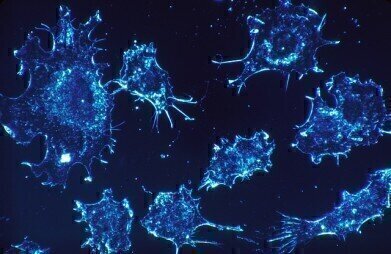
Despite cutting edge advancements and next-generation technology, an in-depth understanding of cancer still eludes both scientists and doctors alike. Now, a team of researchers is claiming to have made a breakthrough discovery, with new studies suggesting that suicide evading cells may play a key role in the spread of post-chemotherapy cancer.
New research reveals suicidal cells can self-resurrect
According to a team of researchers from Santa Barbara’s University of California, most cells are programmed to ‘commit suicide’ after receiving signals from a deadly executioner molecule called a caspase. This process is known as apoptosis, and plays an important role in helping living organisms maintain healthy cell development and maturation cycles. Initially, scientists believed that apoptosis was a one-way ticket to the cellular graveyard.
However, following closer analysis on the behaviour of cancerous cells, biologists have uncovered a death-defying process called anastasis. It actively revives cells on the brink of dying, which prevents them from completing apoptosis. Instead, it could trigger the mass embryo development that sees cancerous cells continue to spread through the body after chemotherapy.
Cancerous cells “hedging bets”
Preliminary results from the study indicate that while cells do commit suicide, they also hold onto a lifeline in case conditions improve. This process is called anastasis, which is drawn from the Greek term meaning “rising to life.”
It essentially arms cancerous cells with the ability to recover and duplicate, even after being hammered with the intense chemotherapy drugs or radiation treatments that trigger apoptosis. The survival instinct of the cells is remarkable, with regeneration genes simultaneously being created as cells prepare to undergo the fatal apoptosis process.
“Dying cells are actually hedging their bets. They’re on the brink of death. They don’t know if things are going to get better or get worse,” explains Denise Montell, a cell biologist at the University of California.
Once they’ve bought themselves back to life, reanimated anastasis cells can go on to function just as well as any normal cell. They’re able to move, stimulate blood vessel production and rapidly divide, which makes tumorous cells hugely dangerous.
One step closer to a cure?
The latest findings were presented by Montell at the annual meeting of the American Society for Cell Biology, and could represent the medical sphere gaining one more step towards finding a cure for cancer.
Modern medicine is continually advancing, with conferences playing a key role in sharing and celebrating milestone findings. ‘The 13th Confocal Raman Imaging Symposium’ spotlights the latest event organised by German microscope manufacturer WITec, with CEO Dr Joachim Koenen describing it as “one of the most informative and interactive symposia of recent years.”
.jpg)
-(2).jpg)

Digital Edition
Lab Asia Dec 2025
December 2025
Chromatography Articles- Cutting-edge sample preparation tools help laboratories to stay ahead of the curveMass Spectrometry & Spectroscopy Articles- Unlocking the complexity of metabolomics: Pushi...
View all digital editions









Events
Jan 21 2026 Tokyo, Japan
Jan 28 2026 Tokyo, Japan
Jan 29 2026 New Delhi, India
Feb 07 2026 Boston, MA, USA
Asia Pharma Expo/Asia Lab Expo
Feb 12 2026 Dhaka, Bangladesh




