Microscopy & microtechniques
What Does a Criminal’s Brain Look Like?
Apr 26 2017
How can you tell if somebody did something on purpose? It’s a problem for parents across the globe, determining whether the drink was spilt or thrown over the floor. However, it becomes more serious when the police have to decide whether or not a criminal act was committed on purpose. Read on to see how neuroscience might be able to help.
Why does intention matter?
Intention is one of the many factors in deciding a culprit’s punishment. The sentence for death by dangerous driving, for instance, is far less harsh than that for purposefully driving into somebody with the intention of killing them. It’s the same for lesser crimes. Reckless behaviour is almost always considered more excusable than intentional criminality. But how can the court determine a culprit’s intention? That’s where neuroscience comes in.
Smuggling suitcases
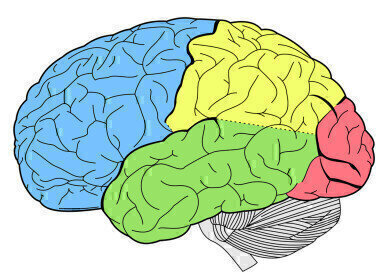
An article in the Proceedings of the National Academy of Sciences investigates how brain scans can reveal patterns of criminal intent. Researchers got 40 participants to take part in a computer-based task where they were offered to smuggle suitcases across a border for a reward. In some cases, the participants were informed of the suitcases’ illegal contents, while in others it was unclear.
By scanning the brains of participants as they completed the task, the researchers found patterns in the brain’s active areas. It indicated a different mental state for intentional criminality versus recklessness and gave them a highly accurate way of spotting the difference between the two.
What this means for the future
Of course, what this can’t provide is a replacement for the court in terms of determining intention. For one, because people don’t wear brain scanning equipment as they commit crimes. But it’s certainly a promising starting point for scientists. One potential development, outlined by the researchers, would be to examine whether images or footage from the crime scene can trigger similar brain activity.
Brain scanning is just one of the things made possible by high-tech facilities like Diamond. Diamond is the UK’s leading synchrotron facility, which accelerates electrons to near lightspeed, emitting light billions of times brighter than the sun. This is directed into laboratories in the form of beamlines, which enable researchers – including neurologists – to study a range of subject matters. For more information on the world-class facility, take a look at the article ‘JOEL TEM at Diamond’s Electron Physical Sciences Imaging Centre (ePSIC)’.
.jpg)
-(2).jpg)

Digital Edition
Lab Asia Dec 2025
December 2025
Chromatography Articles- Cutting-edge sample preparation tools help laboratories to stay ahead of the curveMass Spectrometry & Spectroscopy Articles- Unlocking the complexity of metabolomics: Pushi...
View all digital editions










Events
Jan 21 2026 Tokyo, Japan
Jan 28 2026 Tokyo, Japan
Jan 29 2026 New Delhi, India
Feb 07 2026 Boston, MA, USA
Asia Pharma Expo/Asia Lab Expo
Feb 12 2026 Dhaka, Bangladesh




