-
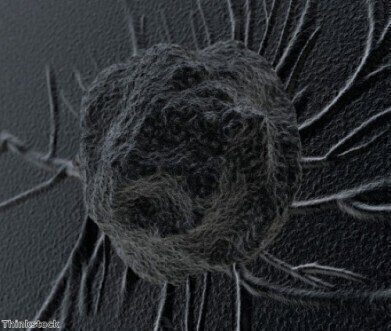 The nanoparticles attach to white blood cells to kill stray tumour cells on contact
Microscopy & microtechniques
'Sticky balls' could help stop spread of cancer
Jan 08 2014
Scientists have developed new 'sticky balls' that could help stop cancers from spreading by destroying tumour cells. Tumours are at their most deadly when they begin to spread around the body, as this then makes the cancer harder to treat. This new discovery could help to stop cancers developing further than the initial tumour.
Researchers from Cornell University, US, have developed nanoparticles that remain in the bloodstream. If any cancer cells begin to migrate to other areas of the body, the nanoparticles are able to kill them upon contact. This could help reduce the number of deaths that occur as a result of metastasis.
The scientists developed the 'sticky' nanoparticles by attaching a protein called TRAIL, amongst others, to spheres. TRAIL has been used in several other trials for cancer treatments. The nanoparticles are then injected into the bloodstream, where they attached themselves onto white blood cells.
Testing showed that the white blood cells that had nanoparticles attached would end up 'bumping' into tumour cells that are attempting to spread throughout the body. This would mean that the cancer cells come into contact with the TRAIL protein, which triggers cell death and so stopping the tumour reaching other areas.
Professor Michael King, lead researcher on the study, told the BBC: "The data shows a dramatic effect: it's not a slight change in the number of cancer cells.
"The results are quite remarkable actually, in human blood and in mice. After two hours of blood flow, they [the tumour cells] have literally disintegrated."
It is possible, continued Professor King, that the nanoparticles could be injected into a patient before they undergo radiotherapy or surgery. Both of these treatments can mean that cancer cells shed away from the main tumour, increasing the chance of them spreading. The treatment would also be beneficial for those with aggressive tumours.
Current information, published in the journal 'Proceedings of the National Academy of Sciences', has found that the nanoparticles do not damage blood vessels or blood cells and that they have no other effect upon the immune system. However, further research and laboratory testing is needed before the treatment progresses to human trials.
.jpg)
-(2).jpg)

Digital Edition
Lab Asia Dec 2025
December 2025
Chromatography Articles- Cutting-edge sample preparation tools help laboratories to stay ahead of the curveMass Spectrometry & Spectroscopy Articles- Unlocking the complexity of metabolomics: Pushi...
View all digital editions









Events
Jan 21 2026 Tokyo, Japan
Jan 28 2026 Tokyo, Japan
Jan 29 2026 New Delhi, India
Feb 07 2026 Boston, MA, USA
Asia Pharma Expo/Asia Lab Expo
Feb 12 2026 Dhaka, Bangladesh




