Microscopy & microtechniques
How to Deter Mosquitoes - With Your Blood
Apr 23 2019
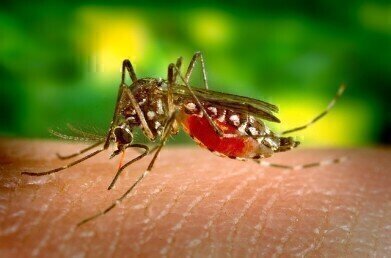
Malaria is one of the world's biggest killers, with the mosquito-borne disease claiming more than 400,000 lives in 2017. Now, a study claims that making human blood toxic to mosquitos could stop the spread of malaria and eventually wipe out the disease altogether.
While an increase in global prevention and control strategies has reduced malaria mortality rates by 29% since 2010, almost half of the global population are at risk of contracting the disease. Most cases are reported in Sub-Saharan Africa, though there's an ongoing risk that malaria could spread to other countries.
Everyday drug proves fatal to malaria-carrying mosquitos
In a breakthrough study, a team of researchers led by Dr Brian D Foy of Colorado State University discovered that malaria-carrying mosquitos immediately die after drinking blood containing traces of ivermectin, a drug used to treat parasite infestations like scabies, river blindness and headlice.
"Ivermectin reduces new cases of malaria by making a person's blood lethal to the mosquitoes who bite them, killing mosquitoes and therefore reducing the likelihood of infection of others,” explains Foy in a statement. “Because ivermectin has a unique mode of action compared to other malaria control insecticides and antimalarial drugs, it could be used alongside drugs that treat malaria to combat residual transmission of the disease."
A breakthrough in the fight against antimalarial drug resistance
The study involved a randomised trial of 2700 people, including 590 children. All participants were given a single dose of ivermectin, with 1,447 individuals administered with additional doses of ivermectin three times a week. The team recorded malaria cases over an 18-week period and found that extra doses of ivermectin translated to a 20% risk reduction of contracting the tropical disease. Furthermore, the number of children who didn't contract malaria at all increased by more than 50% in the group that received extra doses of ivermectin.
Foy stresses that in the wake of antimalarial drug resistance, the need for new disease prevention strategies is imminent. While death rates have been steadily declining for the past decade, he warns that the Plasmodium parasite is beginning to develop resistance to artemisinin, one of the most effective antimalarial drugs.
“Because of mosquitoes' ability to adapt to control tools, new methods of preventing the transmission of malaria are needed, in particular, those that target residual transmission," adds Foy. "Ivermectin is well tolerated and widely used so it could be a useful tool in disease reduction if further trials show similar results."
Next generation technology plays a key role in supporting laboratory experiments, powering human trials and fast-tracking medical breakthroughs. For a closer look at the latest sophisticated surveying equipment being used to inspect sites prior to system installation, don't miss 'Surveying Sites for Electron Microscopes'.
.jpg)
-(2).jpg)


Digital Edition
Lab Asia Dec 2025
December 2025
Chromatography Articles- Cutting-edge sample preparation tools help laboratories to stay ahead of the curveMass Spectrometry & Spectroscopy Articles- Unlocking the complexity of metabolomics: Pushi...
View all digital editions









Events
Jan 21 2026 Tokyo, Japan
Jan 28 2026 Tokyo, Japan
Jan 29 2026 New Delhi, India
Feb 07 2026 Boston, MA, USA
Asia Pharma Expo/Asia Lab Expo
Feb 12 2026 Dhaka, Bangladesh




