-
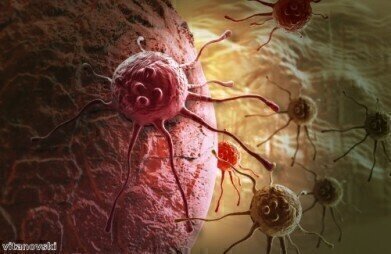 Cancer blood test edging closer
Microscopy & microtechniques
Cancer blood test edging closer
Apr 07 2014
New research suggests that soon doctors will be able to diagnose and track cancer through a simple blood test. In the latest of this type of study, scientists have used blood samples to determine whether people have lung cancer.
A team at the Stanford School of Medicine, led by Dr Maximilian Diehn, has been experimenting with the use of DNA to detect whether a cancer tumour is present or not. Dr Diehn has experience as a radiation oncologist treating patients with cancer, though he has been working on ways to spot DNA that has been shed from a tumour, ending up in a patient's blood.
Dr Diehn said that the main problem has been that there is usually only a small amount of DNA present, making it "very hard" to detect. However, new technologies have made finding tiny parts of DNA easier by scanning larger amounts to look for mutations that come from tumours. This opens up a number of possibilities for future cancer detection.
He said: "The initial impetus was having something I could use in my own patients ... as a blood test that would let us both detect the presence of cancer as well as monitor how a patient's cancer responds to various treatments."
Currently, cancer patients and their doctors often have to just wait and see whether a cancer treatment has worked or not, with it sometimes taking years to tell if it has been effective. However, Dr Diehn and his team say they've developed a far more sensitive DNA test that can tell patients immediately whether they have any tumour remaining.
"If there is cancer DNA in the body left, that suggests there are still cancer cells left, so that patient is probably not cured," he said, "whereas if the cancer DNA is gone, that suggests the patient is likely to be cured."
The study, published in the Nature Medicine journal, details the experimental test used, which is currently only used for non-small-cell lung cancers. The team were able to detect tumour DNA in every patient they studied with cancer of Stage Two or higher, with less advanced cancer they were able to detect it around half the time.
Dr Diehn and his researchers are confident that they can improve the test to detect early-stage cancers, and for it to be used to diagnose more types of the disease.
.jpg)
-(2).jpg)
Digital Edition
Lab Asia Dec 2025
December 2025
Chromatography Articles- Cutting-edge sample preparation tools help laboratories to stay ahead of the curveMass Spectrometry & Spectroscopy Articles- Unlocking the complexity of metabolomics: Pushi...
View all digital editions








Events
Jan 21 2026 Tokyo, Japan
Jan 28 2026 Tokyo, Japan
Jan 29 2026 New Delhi, India
Feb 07 2026 Boston, MA, USA
Asia Pharma Expo/Asia Lab Expo
Feb 12 2026 Dhaka, Bangladesh




