Mass spectrometry & spectroscopy
Since the pioneering work of German scientists Robert Bunsen (1811–1899) and Gustav Kirchhoff (1824–1887), who discovered that flame colour changes when elements are introduced, atomic spectroscopy has become one of the most widely used analytical techniques worldwide. Among the commonly applied methods, ICP-MS and ICP-OES are particularly successful for liquid analysis, both relying on an inductively coupled plasma source, either as an emission source or an ion source for mass spectrometry.
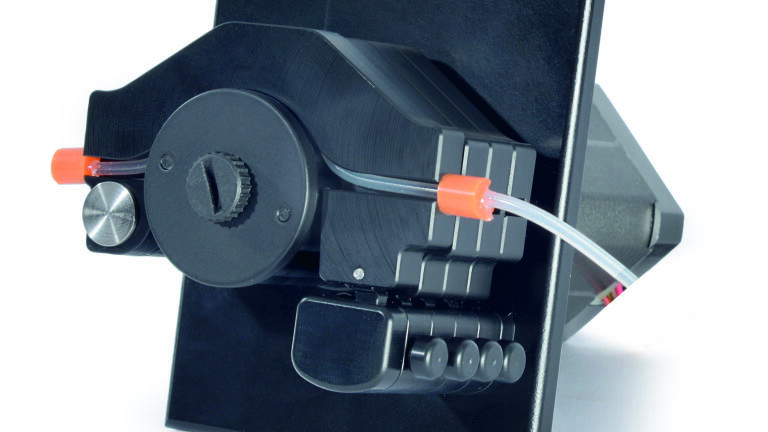
For precise transport of liquid samples, peristaltic pumps are the standard choice. They overcome changes in viscosity that could affect measurements and reduce matrix effects. The pump works by compressing and relaxing a volume of liquid within an elastic tubing, which is fixed in a roller head and pressed against a curved pressure plate. As the roller rotates, the liquid is continuously pushed toward the nebuliser. Because the sample only contacts metal-free tubing material, it can be transported over long distances to the ICP spectrometer without contamination.
The pumped volume can be controlled by the number of rollers, the rotation speed, and the tubing’s inner diameter. The tubing material can also be chosen based on the chemical properties of the sample, allowing even strong acids or organic solvents to be safely transported. However, with very sensitive devices, signal pulsations sometimes occur, traditionally requiring manual adjustment of the pressure plate.
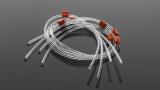
Spetec has addressed this with its new ‘Easy Click’ peristaltic pump. The pressure plate is pre-set with a spring mechanism, eliminating the need for manual adjustments. Users can start the analysis sequence immediately, and tubing changes are fast and tool-free.
In tests conducted at the Bundesanstalt für Materialforschung und -prüfung (BAM) in Berlin, two peristaltic pumps were evaluated on an ICP-OES instrument. Results showed that the analytical figures of merit, including limits of detection (LOD) and signal stability for ten elements (Al, Bi, Co, Cr, Cu, Fe, Mg, Mn, Ni, Se), were essentially identical across all pumps. LODs were in the lower µg/L range, with standard deviations below 1% for eight elements and under 2% for the remaining two.
The conclusion: the Easy Click pump matches traditional reference pumps in analytical performance, but excels in convenience, allowing quick and easy tubing changes without further adjustment.
More information online


.jpg)
-(2).jpg)