News
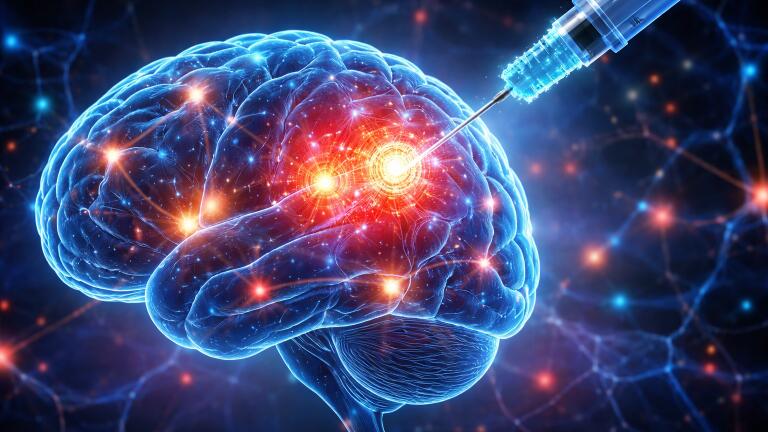
A preclinical study has reported a novel gene therapy that selectively dampens pain processing in the brain while avoiding the addictive pathways associated with opioid medicines, offering a potential route towards safer long-term pain management
In preclinical studies a novel gene therapy approach has been described that targets pain-processing centres in the brain while avoiding the addictive risks associated with opioid medicines. The findings have suggested a possible future alternative to narcotic pain treatments for the millions of people worldwide who live with chronic pain.
Chronic pain can be compared to an audio signal which is locked at maximum volume, with discomfort persisting regardless of attempts to suppress it. Opioid medicines such as morphine can reduce this signal by acting on the central nervous system, but they also influence reward and motivation pathways. This lack of specificity has contributed to serious side effects, tolerance and addiction in a significant proportion of patients.
Researchers from the University of Pennsylvania Perelman School of Medicine and School of Nursing, Philadelphia, Pennsylvania, USA working with collaborators at Carnegie Mellon University, Pittsburgh, Pennsylvania, USA and Stanford University, California, USA have now reported a strategy designed to lower pain perception alone, while leaving other brain functions unaffected. Their approach has aimed to reproduce the beneficial analgesic effects of morphine without engaging the neural circuits that drive dependence.
“The goal was to reduce pain while lessening or eliminating the risk of addiction and dangerous side effects,” said Dr. Gregory Corder, co-senior author of the study and assistant professor of psychiatry and neuroscience at the University of Pennsylvania.
“By targeting the precise brain circuits that morphine acts on, we believed this could represent a first step towards offering relief for people whose lives are disrupted by chronic pain,” he said.
The research team began by imaging specific populations of brain cells that encode pain states. This work has provided detailed insight into how morphine alters neural activity to reduce suffering. Using these data, the researchers developed a mouse behavioural platform driven by artificial intelligence. The system tracked natural behaviour and produced quantitative readouts that reflected pain intensity, allowing the team to assess how much intervention was required to restore normal activity.
This computational readout then served as a functional map to guide the design of a targeted gene therapy. The therapy delivered a molecular ‘off switch’ that acted only within defined pain circuits in the brain. When activated in animal models, this switch produced sustained pain relief without disrupting normal sensation or activating reward pathways associated with addiction.
“To our knowledge, this represents the world’s first central nervous system-targeted gene therapy for pain and provides a concrete blueprint for circuit-specific, non-addictive pain medicine,” Corder said.
The work has represented the culmination of more than six years of investigation, supported by funding sourced from a US National Institutes of Health New Innovator Award.
The study has been set against the backdrop of an ongoing opioid crisis. In 2019, approximately 600,000 deaths in the USA were attributed to drug use, with around 80 per cent linked to opioids. A 2025 survey by the respected, non-profit Pew Research, reported that nearly half of respondents in Philadelphia knew someone with opioid use disorder, while one-third knew someone who had died from an overdose.
The research team has indicated that the next phase of work will involve further preclinical development with Dr. Michael Platt, James S. Riepe University Professor and professor of neuroscience and psychology, as it moves towards eventual clinical trials.
“The journey from discovery to implementation is long … this represents a strong first step,” Platt said.
“Speaking both as a scientist and as a family member of people affected by chronic pain, the potential to relieve suffering without fuelling the opioid crisis is exciting,” he added.
While the findings remain at a preclinical stage, the authors have suggested that the study offers a conceptual and technical foundation for future pain therapies that act with far greater precision than existing opioid medicines.
For further reading please visit: 10.1038/s41586-025-09908-w




.jpg)
-(2).jpg)