Mass spectrometry & spectroscopy
How Do Medical Drones Work?
Mar 26 2018
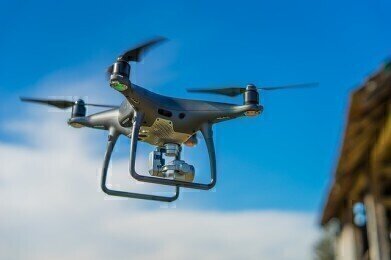
For most people, drones are a way to capture bird's eye footage or receive an Amazon package. Now, they could emerge as a lifesaving tool. The technology-driven health revolution is currently underway in Africa, where remote villages have limited access to blood supplies.
For example, while bleeding after labour is relatively easy to deal with in British hospitals, it could prove fatal for women giving birth in rural African communities. Until recently a life-saving transfusion would have been out of the question. Now, new drone technology is empowering doctors with the scope to order blood supplies by text. They're then delivered by 25lb, battery-powered drones that can cover distances of up to 50 miles in just 30 minutes.
From Silicon Valley to the skies of Africa
The movement was launched by Zipline, a Silicon Valley based company that's aiming to save lives by offering an instant, on-demand delivery service powered by small unmanned aircraft.
"More than two billion people lack adequate access to essential medical products, like blood and vaccines," asserts the company. To date, the company has delivered almost 1000 batches of blood and helped to mitigate hundreds of life-or-death situations. Vaccines are also on offer, with Zipline stressing that stopping an outbreak within days not only saves lives, but also slashes medical costs.
Over the next few months Zipline plans to launch a similar service in Tanzania. Within a year it hopes to deliver to 1000 remote clinics across the country, servicing a total of 12 million people.
African nations embrace drone technology
As well as saving lives, nations like South Africa and Zimbabwe are also using drones to fight poaching. Equipped with night-vision cameras, drones are used to actively detect and track poachers in national parks. Drones have even made it into the agricultural sphere, with farmers in Sudan using them to sow seeds.
Keller Rinaudo, co-founder and chief executive of Zipline, has praised Africa for its open-minded attitude towards drones. He maintains that it not only helps to save lives, but also gives them an edge over developed nations.
"People there are much more open-minded about the way technology can improve lives," he says. "The general paradigm people use is that advanced technology in robotics will start in the US or Japan and trickle its way down to developing economies. What’s happening right now with these services in Africa is upending that. It's showing that small countries can move much faster in seizing the benefits of disruptive technology.”
As proven by Zipline and its next generation drone delivery service, technology has the power to transform modern medicine. For a closer look at the latest techniques used to analyse cyanocobalamin content don't miss 'Using UV/VIS Spectroscopy for Different types of Vitamin B12 Analysis'.
Digital Edition
Lab Asia Dec 2025
December 2025
Chromatography Articles- Cutting-edge sample preparation tools help laboratories to stay ahead of the curveMass Spectrometry & Spectroscopy Articles- Unlocking the complexity of metabolomics: Pushi...
View all digital editions






Events
Jan 21 2026 Tokyo, Japan
Jan 28 2026 Tokyo, Japan
Jan 29 2026 New Delhi, India
Feb 07 2026 Boston, MA, USA
Asia Pharma Expo/Asia Lab Expo
Feb 12 2026 Dhaka, Bangladesh