Research news
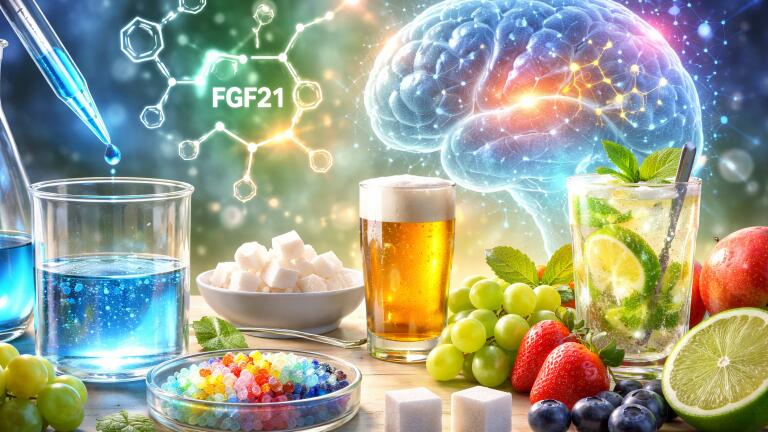
Researchers at Kyoto University have reported that rare sugars which induce fibroblast growth factor 21 signalling reduced alcohol consumption in mice, pointing to a potential dietary approach to down-regulate alcohol intake by acting on subconscious appetite regulation pathways
Researchers at Kyoto University, Japan, have reported evidence that a metabolic signalling pathway known to regulate sugar appetite may also play a role in the control of alcohol intake. While looking to investigate fibroblast growth factor 21–oxytocin–dopamine system – which regulates sugar appetite – the team noticed earlier reports suggesting that fibroblast growth factor 21, commonly abbreviated as FGF21, might influence alcohol ingestion.
The original aim of their research had been to address sugar appetite in lifestyle-related diseases. However, because alcohol is a fermented product of sugar, the researchers speculated that the body might contain a system that recognises both sugar and alcohol as the same biological entity.
Excessive alcohol consumption remains a major global health issue, yet effective strategies for prevention and treatment remain limited. Patients with alcohol dependence often show low adherence to pharmaceutical interventions, and many avoid drug-based treatment because it removes pleasure derived from drinking. The researchers therefore sought to identify an approach that could reduce alcohol intake without wholly eliminating reward.
“It was important that any intervention provided pleasure and acted as a substitute for alcohol,” said Dr. Sho Matsui, corresponding author of the study.
“We imagined that some functional sugars may be able to fill that role,” they said.
To test this hypothesis, the team developed a novel experimental protocol to model alcohol dependence in mice. Using this system, they examined how various food ingredients that induce FGF21 production influenced alcohol-related behaviour.
The experiments revealed that the FGF21–oxytocin–dopamine system acts as a repletion signal for alcohol intake. In mice with alcohol dependence, this signalling pathway was down-regulated, which led to excessive alcohol consumption. When the researchers stimulated the pathway using FGF21-inducing food ingredients – specifically rare sugars – alcohol intake decreased in both healthy mice and those with alcohol dependence.
The findings suggest that alcohol dependence may not solely represent a disorder of substance abuse. Instead, it may also arise from dysregulation of subconscious information processing mediated by FGF21 metabolic signalling within the central nervous system.
On this basis, the researchers proposed that it may be possible to regulate alcohol consumption by modulating the FGF21–oxytocin–dopamine system through targeted dietary interventions.
“Dietary therapy is effective to control appetite if you can stick to it, but most cannot. The same applies to excessive drinking,” said Dr. Tsutomu Sasaki, who led the research team.
“Our work demonstrates that there is a subconscious inter-organ crosstalk signal that regulates appetite for alcohol,” they added.
The researchers have indicated that their next steps will include confirmation of these findings in human studies and the development of foods and beverages designed to help to reduce alcohol consumption.
Potential applications include dietary supplements, nutraceutical products and non-alcoholic beverages. In parallel, the team has reported that work is under way to develop a potent drug that induces FGF21 signalling, with the aim to provide an additional therapeutic option for alcohol dependence.
For further reading please visit: ‘Negative feedback regulation of alcohol ingestion through the FGF21-PVH oxytocin-VTA dopamine system’



.jpg)
-(2).jpg)