Research news
Researchers have identified specific gut bacteria and metabolic pathways that drive endogenous alcohol production in people with auto-brewery syndrome, offering a potential route to improved diagnosis and treatment of the rare condition
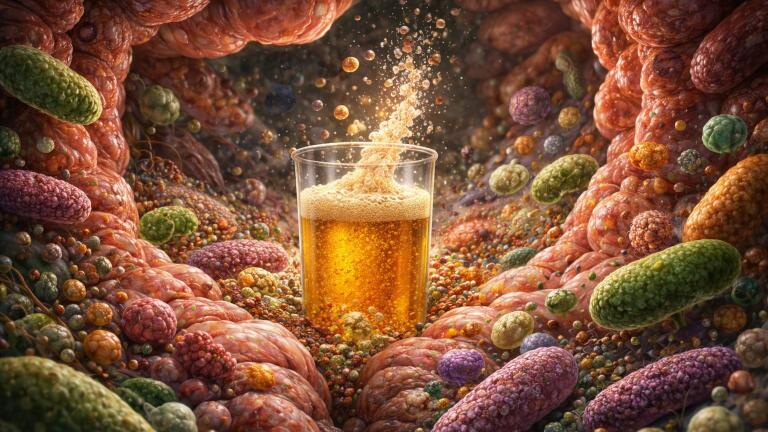
Researchers have identified specific gut bacteria and metabolic pathways that drove alcohol production in patients with auto-brewery syndrome, a rare and frequently misunderstood condition in which individuals experienced intoxication without consuming alcohol. The work, led by investigators at Mass General Brigham, Boston, USA in collaboration with colleagues at University of California San Diego, USA.
Auto-brewery syndrome arises when gut microbes metabolise dietary carbohydrates and convert them to ethanol that then entered the bloodstream. Although carbohydrate metabolism can produce small quantities of alcohol in all people, the levels observed in those with auto-brewery syndrome can reach concentrations sufficient to cause clinically apparent intoxication. The condition is considered extremely rare but is thought to be underdiagnosed because of limited clinical awareness, significant diagnostic challenges and social stigma.
Many affected individuals experienced years of misdiagnosis and faced social, medical and legal consequences before clinicians confirmed the condition. Definitive diagnosis has remained difficult, as the accepted gold-standard approach has required monitored blood alcohol testing under supervised conditions, which is not widely available and is burdensome for patients.
To investigate the biological basis of the syndrome, the researchers evaluated 22 patients with auto-brewery syndrome, 21 unaffected household partners and 22 healthy control participants. They compared gut microbial composition and functional activity across these groups. Stool samples obtained from patients during symptomatic flares produced significantly more ethanol under laboratory conditions than samples from either household partners or healthy controls, a finding that pointed towards the feasibility of a stool-based diagnostic test.
Until now, little had been known about the specific microbes responsible for the syndrome. Analysis of stool samples identified several bacterial species as likely drivers in affected patients, including Escherichia coli and Klebsiella pneumoniae. During symptomatic flares, some patients also showed markedly elevated levels of enzymes involved in fermentation pathways when compared with controls. The authors noted, however, that although these organisms were implicated, identifying the precise causative microbes in individual patients remained an arduous and time-consuming process.
The team also followed one patient who experienced symptom relief after undergoing faecal microbiota transplantation when other treatments had failed. Periods of relapse and remission corresponded with changes in specific bacterial strains and metabolic pathway activity, providing further biological support for the diagnosis. After a second faecal transplant, preceded by a different antibiotic regimen, the patient remained symptom-free for more than 16 months.
“Auto-brewery syndrome is a misunderstood condition with few tests and treatments. Our study demonstrates the potential for faecal transplantation,” said Dr. Elizabeth Hohmann, co-senior author of the study from the Infectious Disease Division in the Mass General Brigham Department of Medicine.
“More broadly, by determining the specific bacteria and microbial pathways responsible, our findings may lead the way towards easier diagnosis, better treatments and an improved quality of life for individuals living with this rare condition,” she said.
Hohmann has been working with colleagues at the University of California San Diego on a study that has evaluated faecal microbiota transplantation in eight patients with auto-brewery syndrome, with the aim to assess its safety and therapeutic potential in a larger group.
For further reading please visit: 10.1038/s41564-025-02225-y

.jpg)
-(2).jpg)