-
-
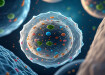
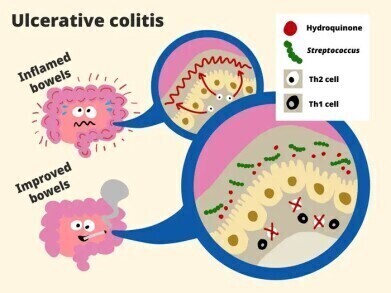 In ulcerative colitis, excessive Th2 immune activity drives intestinal inflammation. Smoking generates aromatic compounds such as hydroquinone in the colonic mucosa, enabling oral bacteria like Streptococcus to colonise. These trigger Th1 cell activation, which suppresses Th2 activity and reduces inflammation. Credit: RIKEN
Research news
Scientists uncover how by-products of smoking protect against ulcerative colitis through mouth bacteria migration
Sep 12 2025
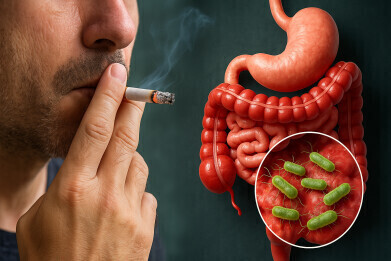
A team of researchers at the RIKEN Centre for Integrative Medical Sciences, Yokohama, Japan, has uncovered why smoking tobacco has been seen to alleviate symptoms in people with ulcerative colitis, a chronic inflammatory disease of the large intestine.
The study, led by Dr. Hiroshi Ohno has shown that smoking produces metabolites which encourage oral bacteria to colonise the gut where they trigger a beneficial immune response easing the symptoms of the colitis.
The findings suggested that protection against ulcerative colitis could be achieved through the use of prebiotics such as hydroquinone or probiotic therapy with oral bacteria including Streptococcus mitis.
Inflammatory bowel disease primarily occurs in two forms: Crohn’s disease and ulcerative colitis. Both cause chronic abdominal pain, diarrhoea, fatigue and weight loss, but differ in cause, type and location of inflammation. For more than 40 years scientists have been puzzled that smoking increased the risk of Crohn’s disease while apparently was protective against ulcerative colitis. Because gut immunity depends partly on the composition of the microbiome, Ohno and his colleagues set out to determine whether the contrasting effects of smoking could be explained by bacteria in the gut.
Using both human clinical data and experimental mouse models, the researchers observed that smokers with ulcerative colitis had oral bacteria, including Streptococcus, growing in the colonic mucosa – the inner lining of the gut. Ex-smokers did not display this effect. While humans continuously swallow saliva, which permits oral bacteria to pass through the digestive tract, the introduction of smoking appeared to allow these microbes to establish residence in the gut mucosa.
The team then investigated why this occurred. Analysis of metabolites – the small molecules generated by digestion and microbial activity – showed that several were elevated in smokers with ulcerative colitis compared with ex-smokers. In mice, one metabolite in particular – hydroquinone – promoted the growth of Streptococcus in the gut lining. This suggested that smoking-related metabolites enabled oral bacteria to colonise the intestine.
The researchers then isolated ten bacterial strains from the saliva of smokers and administered them to mouse models of Crohn’s disease and ulcerative colitis. Treatment with Streptococcus mitis produced similar effects to smoking itself: inflammation decreased in ulcerative colitis but worsened in Crohn’s disease.
Further analysis revealed that S. mitis stimulated the proliferation of helper Th1 immune cells. In Crohn’s disease this exacerbated inflammation, as the condition itself originated from Th1 activity. In ulcerative colitis, however, Th1 cells countered the initial Th2 response, thereby reducing inflammation.
Clearly smoking is not a viable therapy for ulcerative colitis, given its strong association with cancer, cardiovascular disease and other health risks.
“Our results indicate the relocation of bacteria from the mouth to the gut, particularly those of the Streptococcus genus, and the subsequent immune response in the gut, is the mechanism through which smoking helps protect against the disease.
“Logically, direct treatment with this kind of bacteria, or indirect treatment with hydroquinone, is thus likely to mimic the beneficial effects of smoking but avoid all the negative effects,” said Ohno.
For further reading please visit: 10.1136/gutjnl-2025-334922


Digital Edition
Lab Asia Dec 2025
December 2025
Chromatography Articles- Cutting-edge sample preparation tools help laboratories to stay ahead of the curveMass Spectrometry & Spectroscopy Articles- Unlocking the complexity of metabolomics: Pushi...
View all digital editions









Events
Jan 21 2026 Tokyo, Japan
Jan 28 2026 Tokyo, Japan
Jan 29 2026 New Delhi, India
Feb 07 2026 Boston, MA, USA
Asia Pharma Expo/Asia Lab Expo
Feb 12 2026 Dhaka, Bangladesh




